The European aviation sector is grappling with a sophisticated and unsettling wave of security threats that have disrupted commercial air travel twice within a single week. On Thursday, November 5, at least 14 commercial flights were subjected to bomb threats, forcing emergency diversions, the scrambling of fighter jets, and extensive security screening protocols across multiple nations. This incident follows a similar series of coordinated threats that occurred on Tuesday, November 3, highlighting a growing pattern of what security experts describe as a coordinated campaign of "hybrid warfare" targeting civilian infrastructure.
A Coordinated Wave of Disruptions
The chaos began early Thursday morning as a flurry of warnings hit air traffic control centers and airline operational hubs across the continent. While the initial reports from Agence France-Presse (AFP) suggested 12 affected flights, subsequent data aggregation by Reuters indicated that the total reached at least 14. These threats targeted a diverse range of carriers, including Aer Lingus, Finnair, LOT Polish Airlines, Wizz Air, and Ryanair.
One of the most high-profile incidents involved an Aer Lingus Airbus A320 operating flight EI402 from Dublin to Rome. Upon receiving a security alert, the aircraft was diverted to the Evreux airbase in France, approximately 100 kilometers west of Paris. Flight tracking data from Flightradar24 captured the aircraft deviating from its flight path and entering a holding pattern near Paris before executing an emergency landing. The French Air Force responded immediately, dispatching fighter jets to escort the commercial plane, underscoring the gravity with which authorities are treating these notifications despite their recurring nature.
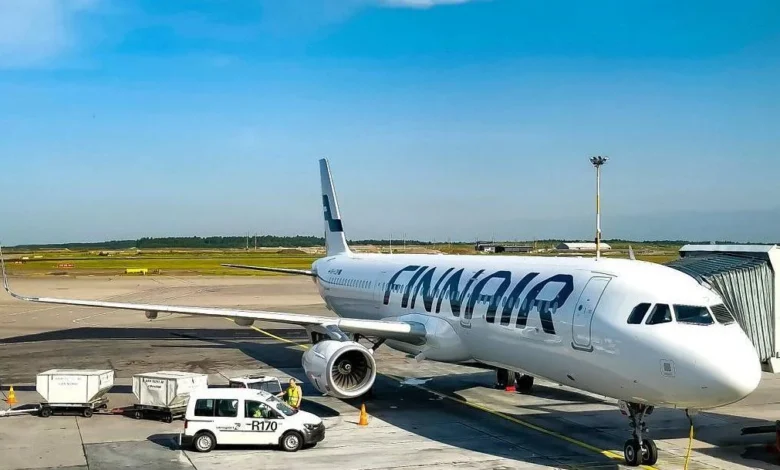
Similar scenes played out across the continent. In Finland, a Finnair flight operated by Jettime landed in Vienna after receiving a bomb threat, while another Finnair flight destined for Rome was intercepted by military aircraft and escorted to the Italian capital for a thorough search by bomb disposal units. In Belgium, a LOT Polish Airlines flight from Warsaw safely touched down at Brussels Airport, where local authorities determined that no supplemental security measures were required. Meanwhile, Bulgaria reported three separate emergency landings: two Ryanair flights from Copenhagen and Madrid were directed to Sofia, while a third flight arriving from London was diverted to Plovdiv.
A Pattern of Escalation
The Thursday incidents were not isolated, but rather part of a broader, rapid-fire sequence of disruptions. On Tuesday, November 3, approximately 10 flights—and even a cruise ship—were targeted by similar hoax threats. That day saw Warsaw’s airport temporarily suspended from operations, and in Rome, the Italian Air Force was forced to scramble jets to respond to potential airborne threats.
The escalation began as early as Monday, November 2, when a Wizz Air flight traveling from London to Sofia was forced to make an emergency diversion to Budapest. In a stark display of readiness, the Hungarian Air Force launched its JAS 39 Gripen fighter jets to escort the passenger plane to safety.
In every instance documented this week, subsequent forensic inspections of the aircraft by explosive ordnance disposal (EOD) teams yielded negative results. In the Czech Republic, where four separate flights heading to Prague received threats, local police confirmed that despite the high-stress nature of the diversions, no explosive devices were found. The Czech police noted that while the credibility of the threats was assessed as low, they were handled with full operational rigor to ensure passenger safety, maintaining that the impact on airport operations was kept to a minimum.
Analyzing the "Hybrid Warfare" Dimension
The timing of these incidents has prompted European officials to look beyond the immediate threats to identify a broader geopolitical motive. High-ranking security officials in several European capitals have publicly alluded to a campaign of "hybrid attacks" designed to destabilize public confidence and overwhelm the logistics of civil aviation. While no single state has been officially indicted as the architect of these specific threats, the accusations have increasingly centered on Russia and Iran.
Both Moscow and Tehran have categorically denied any involvement in these security disturbances. However, intelligence analysts argue that the scale and coordination of these threats suggest a level of sophistication that exceeds the capabilities of common cyber-criminals or lone-wolf actors. The objective of such "nuisance" attacks is often to generate fear, cause economic loss through fuel consumption and flight delays, and strain the military and law enforcement resources of NATO and European Union member states.
The repetitive nature of the threats—targeting specific airlines and flight corridors—suggests that the perpetrators are testing the responsiveness of European air defense systems. By forcing the deployment of fighter jets, the attackers are effectively mapping out the time required for military interception and the protocol responses of various national aviation authorities.
Economic and Operational Consequences
The economic impact of these events is significant. A single emergency diversion involves massive costs, including additional fuel burn, landing fees at secondary airports, passenger accommodation, rebooking logistics, and the temporary grounding of aircraft for safety inspections. When multiplied by 14 incidents in one day, the financial toll on airlines and airport operators reaches millions of euros.
Furthermore, the psychological toll on passengers and the disruption to global supply chains cannot be overlooked. As travelers become increasingly wary of air transit due to repeated security alerts, the broader tourism and aviation sectors face a crisis of confidence. Airport authorities are now faced with the difficult task of balancing the need for rigorous security screening with the imperative to maintain operational efficiency.
Official Responses and Future Outlook
As of now, there has been no official breakthrough in identifying the origin of the threats. European aviation safety agencies are working in close coordination with national intelligence services to trace the digital footprints of the communications sent to airlines and air traffic control centers.
The Czech police’s statement on the social media platform X reflects the current consensus among European authorities: "Although the credibility of the threats is low, we do not underestimate them." This philosophy of "maximum caution" is likely to remain the standard for the foreseeable future. Until the source of these threats is neutralized, the aviation industry remains on high alert.
For the European Union, these events serve as a critical stress test for the European Union Aviation Safety Agency (EASA) and the coordination between the air forces of member states. The ability to manage these incidents without allowing them to turn into genuine catastrophes has demonstrated the robustness of current emergency protocols, but it has also exposed vulnerabilities that bad actors are clearly intent on exploiting.
As investigations continue, the international community remains vigilant. The incident has reignited debates within the European Parliament regarding the need for more unified intelligence sharing and a more robust, collective response to hybrid threats. For now, passengers traveling across Europe are being warned that further delays and precautionary security measures should be expected as authorities work to dismantle this campaign of disruption. The coming days will be critical, as law enforcement agencies shift their focus from reactive security measures to the identification and prosecution of those behind this persistent, multi-day terror campaign against European skies.
Related posts: