Depok, a municipality within West Java province, boasts a history far richer and more complex than its current administrative status might suggest. While officially established as a city on April 27, 1999, evolving from its prior existence as a district within Bogor Regency, a lesser-known chapter of its past reveals Depok once operated as an independent nation, complete with its own president. This fascinating period, largely absent from popular historical narratives, underscores a unique socio-political experiment born from the will of a wealthy Dutch merchant and the aspirations of his emancipated enslaved population.
The genesis of this peculiar republic can be traced back to the late 17th century. Cornelis Chastelein, a prosperous Dutch merchant, acquired a substantial tract of land in Depok, spanning approximately 12.44 square kilometers, for a sum equivalent to 2.4 million Dutch guilders. This land was classified as "partikelir," meaning it was private property and fell outside the direct administrative purview of the Dutch East Indies government. By the 18th century, Depok had evolved into a distinct administrative region governed by its own "gemeente bestuur," or civilian administration, with Chastelein himself serving as its inaugural ruler and founder.
At the time of Chastelein’s acquisition, the Depok area was largely undeveloped wilderness. Through the diligent labor of his enslaved workforce, drawn from various ethnic groups across the archipelago, Chastelein systematically cleared the dense forests to establish agricultural lands. The territorial reach of this private domain was remarkably extensive, encompassing not only the present-day Depok region but also extending to Pasar Minggu in South Jakarta and even Gambir in Central Jakarta. Consequently, the initial inhabitants of Depok were the very enslaved individuals who toiled to transform its landscape.
The Emergence of a Sovereign Entity
The transition from private land to an autonomous state was a gradual process, rooted in Chastelein’s profound religious beliefs and his commitment to his enslaved people. A devout Catholic, Chastelein demonstrated considerable benevolence towards those he held in bondage. Prior to his death on June 28, 1714, he drafted a will that was nothing short of revolutionary for its time. He bequeathed his land, homes, livestock, and farming equipment to his enslaved population, crucially granting them their freedom upon his demise. To preempt potential disputes and ensure an orderly transition, he appointed Jarong van Bali to oversee and manage the newly freed community.

However, the freed enslaved individuals harbored anxieties about future power struggles after Jarong van Bali’s leadership concluded. To address this concern and establish a stable governance structure, they collectively agreed to implement a democratic system for selecting their leader. This led to the establishment of a presidency, with elections held every three years. The concept of a vice-presidency was absent; instead, the president was assisted by a secretary in carrying out their duties. This unique form of governance, meticulously drafted by a Batavian lawyer, was formally implemented in 1913, marking Depok’s de facto transition into a self-governing republic.
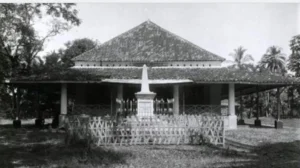
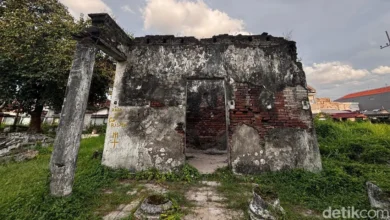
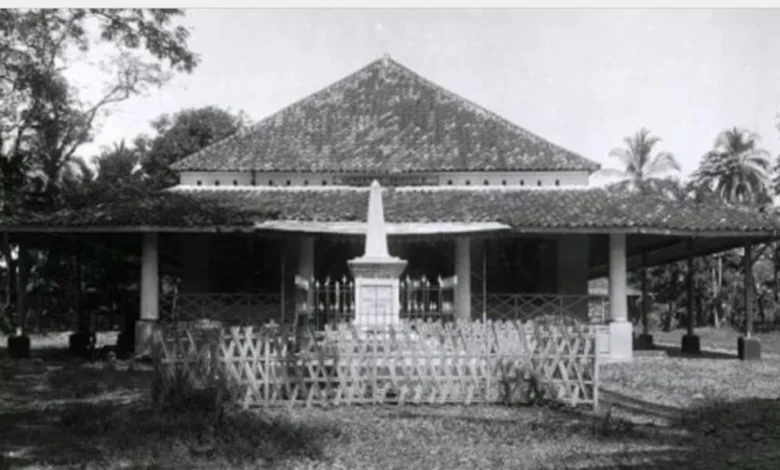
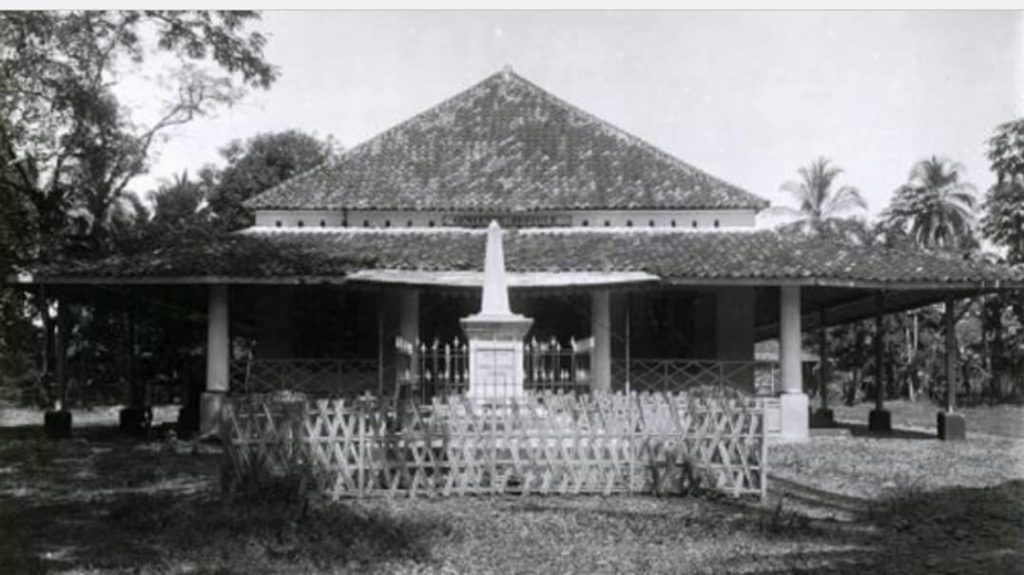
The official name of this government was Het Gemeente Bestuur van Het Particuliere Land Depok, translating to "The Municipal Administration of the Private Land of Depok." The presidency, a position elected by the people, became the highest office. The administrative heart of this nascent republic was situated at Kilometer 0, symbolically marked by the Depok Monument. Adjacent to this landmark stood the former government building, which today serves as the Harapan Hospital. The presidential term was strictly limited to three years, ensuring a regular cycle of leadership and accountability.
A Lineage of Presidents
The first democratically elected president of Depok was Gerrit Jonathans, who assumed office in 1913. His presidency was followed by a succession of three other leaders who steered the republic through its existence. Martinus Laurens served in 1921, followed by Leonardus Leander in 1930. The final president of Depok was Johannes Matjis Jonathans, who took office in 1952. Despite the existence of these presidential figures and their terms, regrettably, detailed historical records or comprehensive accounts of their specific achievements and the intricacies of their administrations remain scarce, leaving many aspects of their governance shrouded in historical obscurity.
The Legacy of a Private Domain
Cornelis Chastelein’s vision for Depok was deeply intertwined with his personal values and his understanding of community building. His will was not merely a legal document but a testament to his humanitarian principles. By emancipating his enslaved workforce and granting them the means to sustain themselves, he laid the foundation for a society that, in its own way, was pioneering for its era. The transition to a democratically elected leadership structure by the freed population demonstrated a collective desire for self-determination and a structured approach to governance, mitigating the potential for internal strife.
The legal framework for this self-governance was thoughtfully constructed, reflecting a practical understanding of administrative needs. The absence of a vice-president, with the president relying on a secretary, suggests a streamlined executive function designed for the specific context of the Depok community. The establishment of the Kilometer 0 point as the administrative center further solidified the republic’s identity and its connection to its foundational territory.
The End of an Era and Integration into Indonesia
The unique status of Depok as a private land and its subsequent self-governance came to an end in 1952. The final president, Matijs Jonathans, formally handed over the territory to the Indonesian government through an official deed of surrender for the private land. This act marked the cessation of Depok’s existence as an independent republic and its integration into the broader administrative structure of Indonesia.
From the perspective of Depok as a modern municipality, its official age is indeed young, having celebrated just over two decades since its elevation to city status. However, when considering its history prior to becoming part of West Java, Indonesia, its lineage stretches back over three centuries. This protracted history as a self-governing entity, established and nurtured by a Dutch merchant and its own populace, predates the formal independence of Indonesia itself. This fact offers a compelling perspective on the deep and multifaceted historical layers embedded within the region.
Broader Historical Context and Implications
The story of Depok’s republic offers a unique lens through which to examine the complexities of colonial Indonesia. It highlights instances where private land ownership and the dynamics between colonizers and the colonized led to the formation of distinct socio-political entities, albeit on a smaller scale. Chastelein’s actions, while rooted in his personal beliefs and his legal rights as a landowner, had far-reaching consequences, fostering a degree of autonomy and self-governance among a population that was otherwise systematically disenfranchised.
The establishment of a democratic presidential system in Depok, however limited in its scope and duration, stands as an intriguing historical anomaly. It raises questions about the agency of marginalized populations within colonial structures and their capacity to develop their own forms of governance. The fact that this system persisted for decades, even after Chastelein’s death and the emancipation of his enslaved people, speaks to the enduring legacy of his will and the community’s commitment to self-determination.
The eventual surrender of Depok to the Indonesian government in 1952 signifies the consolidation of national sovereignty and the integration of all territories within the newly independent nation. While Depok’s status as a republic ended, its historical significance as a self-governing entity remains a compelling chapter in the broader narrative of Indonesian history, demonstrating the diverse pathways through which communities navigated the colonial era and shaped their destinies. The narrative of Depok’s forgotten republic serves as a reminder that the history of any region is rarely a simple, linear progression, but often a tapestry woven with unexpected threads of autonomy, legacy, and self-governance.