The political landscape in Indonesia has recently experienced a wave of symbolic protest, culminating in an unprecedented incident at the Regional People’s Representative Council (DPRD) building in the Special Region of Yogyakarta (DIY). The action, carried out by a collective known as the Yogyakarta National Forum, involved the deliberate removal of Vice President Gibran Rakabuming Raka’s official portrait from the wall of the Budget Board (Banggar) room. This provocative event has since ignited a national discourse regarding political legitimacy, public expression, and the evolving sentiment toward the current administration.
National political figures, including representatives from the National Awakening Party (PKB), have weighed heavily on the matter, characterizing the public demonstration not merely as an act of vandalism or petty defiance, but as a deeply symbolic representation of waning public confidence. As discussions surrounding the legal and ethical standing of the nation’s leadership continue to circulate, analysts and lawmakers are closely monitoring whether this localized protest will serve as a catalyst for broader, nationwide civil discontent.
Chronology of Events at the Yogyakarta DPRD Building
The unfolding of events began on Wednesday, November 4, 2026, inside the official offices of the Yogyakarta DPRD. Prior to the commencement of a scheduled public hearing, tension filled the room as members of the Yogyakarta National Forum entered the premises. Witnesses and recorded accounts indicate that a small group of demonstrators approached the wall where the official portrait of Vice President Gibran Rakabuming Raka was prominently displayed to the right of the podium.
Without warning, the individuals reached upward and detached the framed photograph from its mounting. The action immediately galvanized the rest of the gathered crowd, who erupted into cheers and vocal expressions of triumph. Amid the commotion, one of the primary participants raised their voice to rally the crowd, shouting a religious invocation combined with a sharp political denunciation before lowering the portrait to the floor.
Despite the charged atmosphere, organizers and senior figures within the crowd exercised a degree of crowd control, explicitly instructing participants to refrain from physically destroying the frame or the photograph itself. "Do not damage it, do not damage it," voices from the assembly could be heard cautioning, ensuring that the act remained strictly symbolic rather than destructive. Once the portrait rested on the floor, several participants gathered around it, posing for photographs with the displaced image.
The Forum Behind the Protest
The Yogyakarta National Forum is not a fly-by-night organization; rather, it comprises a network of prominent local activists, elder statesmen, and community figures. Among its leadership are well-known regional personalities, including former Yogyakarta Deputy Mayor Syukri Fadholi, who serves as the protector of the forum, and academician Muhammad Chirzin, who acts as the group’s pembina or advisor.
Following the incident, Muhammad Chirzin articulated the explicit rationale behind the forum’s actions. He noted that the deliberate removal of the vice presidential portrait within the official halls of the regional legislature was designed to send an uncompromising message. According to Chirzin, the group views the removal as a direct manifestation of their stance that the ouster or stepping down of Gibran Rakabuming Raka is a non-negotiable demand, which they frame as a "price that must be paid" (harga mati).
The framing of the protest carried deep cultural and political undertones. By targeting the official symbol of state authority at the regional level, the forum sought to challenge the administrative normalcy that accompanies executive tenures, utilizing public theater to communicate deep-seated grievances regarding the legitimacy of the current vice-presidency.
PKB Response and the Symbolism of "No Longer Fit to Be Above"
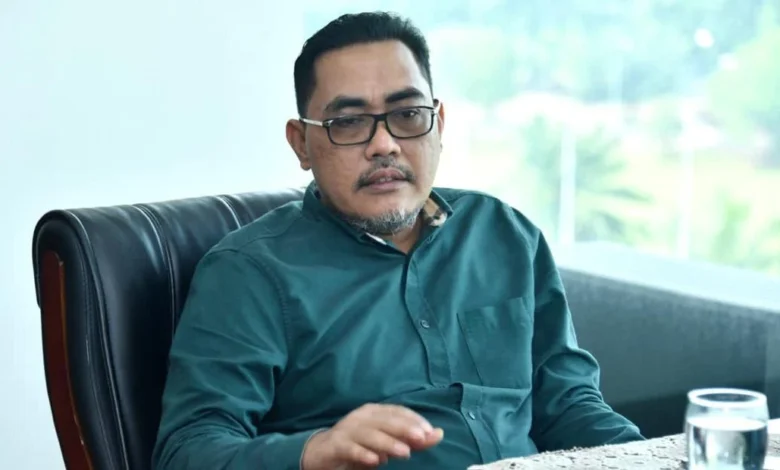
In the wake of the incident, the central leadership of the National Awakening Party (PKB) provided a candid assessment of the public demonstration. Speaking to journalists on Friday, November 6, 2026, PKB Deputy Chairperson Jazilul Fawaid interpreted the actions of the Yogyakarta National Forum as a potent societal barometer. He suggested that the protesters’ behavior reflected a widespread sentiment that the country’s second-highest official has lost the moral and political standing required to hold such a high position.
"Jogja is a cultural city. Our cry to bring down the ‘idol’ is a symbolic language indicating that the Vice President is no longer fit to be placed at the top," Jazilul stated firmly.
Jazilul further contextualized the protest by linking it to broader legal and administrative controversies that have continuously dogged the administration. He pointed to what he described as a de facto expression rooted in public interpretations of judicial rulings and administrative requirements. According to Jazilul, the grievances expressed in Yogyakarta are indicative of underlying vulnerabilities within the current executive structure, which many critics argue suffer from foundational legal flaws stemming from past constitutional and electoral controversies.
Broader Regional Implications and Potential Spillover Effects
One of the most pressing concerns raised by political observers following the Yogyakarta incident is the potential for copycat actions across other provinces and municipalities in Indonesia. Jazilul Fawaid explicitly warned that the events witnessed in the cultural heartland of Yogyakarta may not remain an isolated occurrence.
"It is entirely possible that the incident in Jogja will spread to other regions," Jazilul cautioned.
If similar demonstrations occur in other regional legislative buildings, local governments and security apparatuses may face heightened pressure to manage public spaces where state symbols are displayed. The DPRD building, as an extension of the state apparatus and a representation of the people’s voice, occupies a delicate position. When citizens utilize these official chambers to voice systemic dissent against national leaders, it complicates the relationship between local legislative bodies and the central government in Jakarta.
Contextualizing the Controversy: Legal and Political Background
To fully understand the gravity of the protest in Yogyakarta, one must examine the persistent controversies that have surrounded Gibran Rakabuming Raka’s ascent to the vice presidency. From the initial controversial ruling by the Constitutional Court regarding age limits for presidential and vice-presidential candidates to ongoing debates over political nepotism and procedural ethics, the administration has faced intermittent challenges from civil society groups, legal scholars, and opposition factions.
Although the government continues to exercise its constitutional duties with the backing of a substantial legislative coalition, pockets of intense resistance persist among academic circles, student bodies, and grassroots organizations. These groups frequently utilize constitutional arguments, ethical appeals, and symbolic protests—such as the one seen in Yogyakarta—to register their ongoing dissatisfaction with the political status quo.
The invocation of Supreme Court decisions and legal technicalities by political elites like Jazilul Fawaid demonstrates how localized acts of civil disobedience are quickly integrated into the broader national political narrative. By framing the removal of the portrait as an expression tied to administrative nullification, critics seek to elevate the protest from a localized stunt into a referendum on executive legitimacy.
Implications for Legislative Oversight and Public Discourse
The incident at the Yogyakarta DPRD building also raises administrative questions regarding the protocols of regional government offices. State buildings are traditionally mandated to display official portraits of the President and Vice President as a standard protocol of governance and national identity. When citizens bypass security or leverage public hearings to alter the physical arrangement of these state symbols within official government chambers, it forces local authorities to reevaluate security measures and protocol enforcement.
Moreover, the restraint shown by the protesters—who specifically commanded one another not to destroy the property—highlights a calculated approach to civil disobedience. By preserving the physical integrity of the portrait while publicly stripping it of its elevated status, the activists aimed to maximize symbolic impact while minimizing the legal liabilities associated with criminal damage or destruction of state property.
As Indonesia navigates its complex political terrain, reactions from major political parties like the PKB indicate that the tensions surrounding the executive branch will remain a focal point of public debate. Whether the Yogyakarta protest remains an isolated expression of regional discontent or serves as the opening salvo in a broader wave of symbolic challenges against national leadership will largely depend on the responsiveness of the administration, the trajectory of ongoing legal debates, and the shifting dynamics of public opinion across the archipelago.