Ministry of Trade Denies Import Restrictions Caused Tapioka Price Surge Amid Ongoing Government Coordination

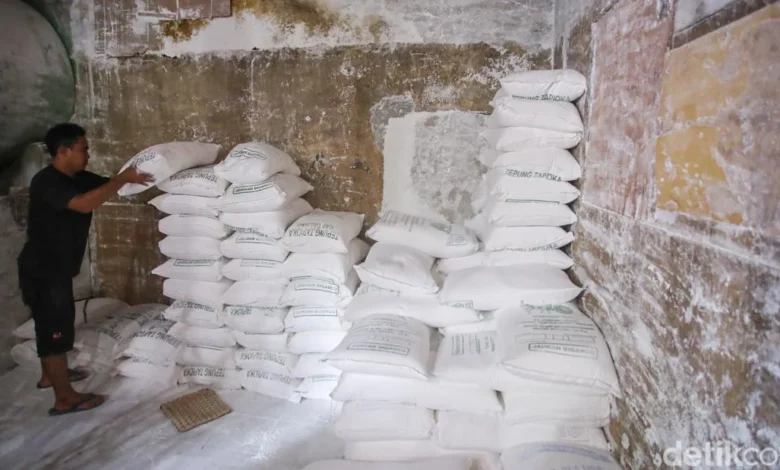
The soaring price of tapioca flour in Indonesian markets has become a pressing economic concern for consumers, micro-enterprises, and food manufacturers alike. In response to mounting public complaints regarding the steep cost of this essential commodity, the Ministry of Trade has officially stepped forward to clarify its stance. According to the Ministry, the recent price hikes are entirely unrelated to the government’s restrictive trade policies—specifically the prohibition and limitation (lartas) measures imposed on tapioca flour imports implemented in late 2025.
The clarification was delivered by Tommy Andana, the Director General of Foreign Trade at the Ministry of Trade, following a high-level strategic meeting at the Office of the Coordinating Ministry for Economic Affairs in Central Jakarta. While acknowledging the financial burden placed on households and small businesses due to the inflated market prices, the Ministry maintains that external or domestic supply chain dynamics independent of import quotas are the primary drivers, rather than the protective trade policies enacted to safeguard domestic agricultural producers.
The Background of Import Restrictions and Market Dynamics
To fully understand the current debate surrounding tapioca flour prices, it is necessary to examine the regulatory landscape that shifted dramatically in the latter half of 2025. The root of the import limitation policy dates back to a decisive announcement made by Minister of Agriculture Andi Amran Sulaiman on Friday, September 19, 2025. At the time, the Ministry of Agriculture faced a severe crisis characterized by plummeting farm-gate prices for locally harvested cassava. Farmers across major production centers were suffering from a severe lack of market absorption, leaving massive surpluses of cassava rotting in fields or selling at prices that failed to cover production costs.
To rescue domestic farmers from financial ruin and stabilize the agricultural economy, the government intervened by imposing strict import controls on tapioca flour and its raw derivatives. This protective stance received formal execution and backing from the Ministry of Trade through the rapid formulation and issuance of two key ministerial regulations, known locally as Peraturan Menteri Perdagangan (Permendag).
The first regulatory instrument, Permendag Number 31 of 2025, fundamentally restructured the import mechanism for cassava and its derivatives, including tapioca. Under this policy, international shipments of these commodities were restricted and subjected to mandatory Import Approvals (Persetujuan Impor or PI). Crucially, these approvals were restricted exclusively to holders of the API-P (Producer Importer Identification Number) license, and they required strict technical recommendations from either the Ministry of Industry or the official Commodity Balance framework.
Simultaneously, the government enacted Permendag Number 32 of 2025, which introduced stringent controls on ethanol imports. This parallel regulation was designed to protect domestic sugarcane farmers by preserving price stability for molasses, thereby supporting broader national goals of achieving sugar self-sufficiency and advancing green energy initiatives. Both ministerial decrees were designed with immediate implementation mandates, taking full effect within 14 days of their official promulgation.
Official Stance and Ongoing Inter-Ministerial Coordination
Despite the clear protectionist intentions behind Permendag 31/2025, consumers and downstream food industries began feeling the squeeze as market supplies tightened, culminating in sharp price increases for retail and commercial tapioca flour. When questioned directly about whether the lartas policy triggered this inflationary trend, Director General Tommy Andana firmly rejected the causal link.
"There is nothing, absolutely nothing," Tommy stated bluntly when pressed by reporters regarding the connection between import curbs and current market prices.
Nevertheless, the government is not turning a blind eye to the reality on the ground. Tommy revealed that the executive branch is actively addressing the issue through comprehensive inter-ministerial discussions. These deliberations are coordinated under the newly established Coordinating Ministry for Food, reflecting the government’s holistic approach to food security and price stabilization.
The ongoing talks involve multiple ministries and state agencies, focusing heavily on evaluating the root causes of the price spikes and recalibrating the 2027 commodity balance sheets for both cassava and tapioca flour. "It is currently in the process of discussion under the Coordinating Minister for Food," Tommy elaborated. "Within the framework of the commodity balance, we are discussing matters related to the importation of raw materials. This is still an ongoing process; after all, the issue has only recently emerged."
The Paradox of Export Plans Amid Domestic Shortages
Adding complexity to the public discourse are simultaneous government plans regarding the international export of Indonesian cassava. The juxtaposition of skyrocketing domestic tapioca prices and official aspirations to export raw and processed cassava has triggered skepticism and confusion among consumers and economic analysts.
Addressing this paradox, Minister of Agriculture Andi Amran Sulaiman previously defended the export strategy by pointing to underlying data indicating robust domestic production capacity. According to Amran, the initiative to explore foreign markets is a logical response to a surplus in domestic harvest yields, which naturally creates opportunities to secure higher profit margins in lucrative international markets.
"If that happens, it probably means our cassava production is abundant," Amran explained in statements previously covered by regional media outlets. "Exporting means there is a surplus. The domestic producers want to export because the prices in destination countries are surely much better. Right? Most certainly better."
However, this rationale has exposed a delicate policy dilemma. While export-oriented strategies benefit upstream agricultural producers by capitalizing on favorable global pricing, they can simultaneously tighten domestic supplies of raw cassava. If domestic processing mills struggle to secure sufficient local raw materials—or if import bottlenecks restrict the inflow of supplementary foreign raw materials—downstream production of tapioca flour drops, inevitably driving up domestic retail prices for end-users.
Economic Implications and Future Outlook
The current situation surrounding tapioca flour highlights the delicate balancing act required in agricultural governance. On one hand, the state bears a moral and economic responsibility to protect millions of smallholder cassava farmers from the volatile fluctuations of global commodity prices and unfair foreign competition. Without protective measures like import restrictions, local farmers risk abandonment by domestic industries that historically preferred cheaper imported starches.
On the other hand, protective trade policies can inadvertently create supply bottlenecks that disadvantage urban consumers, traditional street food vendors, and small-to-medium enterprises (SMEs) that rely on affordable tapioca flour as a fundamental production ingredient. When retail prices surge, profit margins for micro-enterprises evaporate, and household food budgets face unnecessary inflationary pressures.
As the Coordinating Ministry for Food, the Ministry of Trade, and the Ministry of Agriculture continue their collaborative evaluations, market participants and consumers await concrete policy adjustments. The upcoming finalization of the 2027 commodity balance sheet will serve as a crucial test for the government’s ability to harmonize competing interests—ensuring fair remuneration for agricultural producers while simultaneously maintaining price stability and food affordability for the broader Indonesian public.