Tragic Rail Safety Incidents Highlight Persistent Dangers Across Indonesian Commuter and Intercity Networks

Railway safety remains a critical public concern in Indonesia despite extensive preventative measures, strict signage, and ongoing public awareness campaigns implemented by transportation authorities. The persistent occurrence of preventable accidents near tracks and platforms underscores a deeply rooted challenge in public commuter discipline and infrastructure safety. In mid-November 2023, two separate, fatal railway incidents occurred within hours of each other on the island of Java—one at a busy commuter rail station in Tangerang Selatan, Banten, and another at a railway crossing in Surabaya, East Java. These tragic events have reignited urgent discussions regarding commuter vigilance, platform safety management, and the indispensable necessity of strictly adhering to established rail transit protocols.
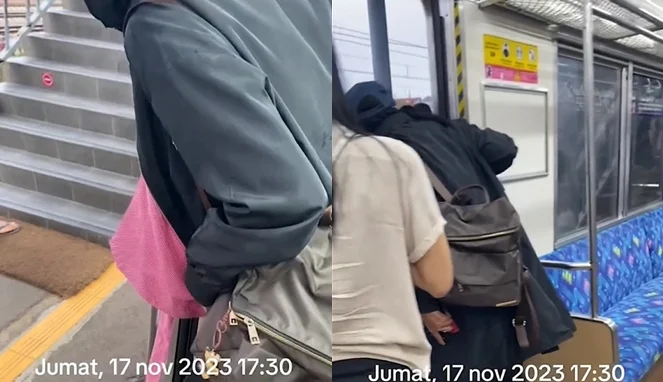
The first incident took place on Friday, November 17, 2023, at approximately 17:30 Western Indonesia Time (WIB) at the Serpong Commuter Line Station in Tangerang Selatan, Banten. According to preliminary reports and viral video footage circulated widely across social media platforms—including a widely viewed post by the Instagram account @jalur5—a young commuter lost his life after being dragged by a moving KRL (Kereta Rel Listrik) commuter train. The incident instantly drew widespread public attention, prompting commuters inside the halted train cars to look out windows and observe the emergency unfolding on the platform.
Chronology of the Serpong Station Tragedy
The sequence of events leading up to the tragedy at Serpong Station began as the evening rush hour peaked. KA 1773, a commuter train operating on the Parung Panjang to Tanah Abang route, was approaching the station and preparing to decelerate and come to a complete stop. On the crowded platform, a group of teenage passengers was walking toward their boarding area while engaged in conversation and playful banter.
Eyewitness accounts and initial investigations indicate that the victim was distracted while talking and laughing with his companions. Unaware of the approaching train and failing to pay attention to the critical yellow safety boundary line—which designates the safe distance passengers must maintain from the platform edge—the teenager moved too close to the tracks. Reports from station personnel noted that warnings had previously been issued to the group regarding boisterous behavior near the platform edge.
As the KRL series JR 205 rolled past, the victim’s hand inadvertently brushed against the side of the moving train. The momentum caught him off balance, pulling him directly into the narrow gap between the station platform and the moving carriages. He suffered severe trauma and was immediately dragged before falling into the void. Station personnel rushed to the scene to administer immediate first aid. Although witnesses reported that the victim showed faint signs of life immediately following the rescue, his injuries proved catastrophic, and he tragically succumbed to his conditions shortly thereafter.
A Concurrent Incident in Surabaya
Coincidentally, on the very same day, Friday, November 17, 2023, at approximately 16:00 WIB, another fatal railway accident occurred thousands of kilometers away in Surabaya, East Java. This incident involved a pedestrian struck by an intercity train rather than a commuter line platform accident.
The tragedy unfolded at the railway crossing located along Jalan Ahmad Yani No. 16, within the Wonokromo district of Surabaya. The victim, identified as a 46-year-old male bearing the initials D, resided in Dukuh Kramat, Jajar Tunggal village, within the Wiyung sub-district of Surabaya.
Unlike the platform accident at Serpong, where the victim was a distracted commuter, this incident involved a pedestrian walking directly on the active railway track. According to statements gathered from eyewitnesses and local gatekeepers, railway crossing attendants and nearby residents had repeatedly shouted warnings at the man as he walked along the tracks, seemingly oblivious to the approaching locomotive.

Despite frantic efforts by bystanders and railway personnel to alert him, the victim was struck by the oncoming Dhoho Intercity Train. The impact hurled him and dragged his body several meters from the primary point of impact. The force of the collision resulted in fatal injuries. Local authorities and emergency medical services swiftly secured the scene, covering the remains before transporting the victim to Dr. Soetomo Regional General Hospital (RSUD Dr. Soetomo) for post-mortem examinations and subsequent release to his grieving family.
Broader Safety Implications and Infrastructure Challenges
These dual tragedies, occurring within hours of each other, highlight systemic safety challenges plaguing Indonesia’s expanding rail transportation networks. As passenger volumes swell—driven by urbanization, economic growth, and government investments in modernized public transit systems—the interface between pedestrians, commuters, and high-speed or heavy rail continues to present high risks.
Statistically, railway accidents in Indonesia frequently stem from human error, lack of situational awareness, and unauthorized trespassing on active rail corridors. Despite continuous efforts by PT Kereta Api Indonesia (KAI) and PT Kereta Commuter Indonesia (KCI) to secure active corridors with perimeter fencing, warning sirens, and automatic crossing gates, pedestrian crossings and station platforms remain vulnerable points of failure.
At railway stations, the physical gap between platforms and train doors—along with high passenger density during peak commuting hours—creates dangerous environments when basic safety rules are neglected. The yellow safety line painted on every station platform is not merely advisory; it is a critical engineering boundary designed to prevent aerodynamic suction effects and physical contact with passing or arriving trains. When commuters congregate too close to the edge while distracted by mobile devices, conversations, or horseplay, the margin for error narrows to zero.
Similarly, open rail crossings and informal tracks in densely populated urban areas like Surabaya present persistent hazards. Many residents utilize railway tracks as informal shortcuts, often ignoring acoustic warnings, lowered safety barriers, and basic pedestrian caution. The sheer braking distance required for heavy locomotives—which can weigh hundreds of tons and require up to a kilometer or more to come to a complete stop—makes last-minute evasive maneuvers by train engineers entirely impossible.
Official Responses and Preventive Measures
In the wake of these incidents, transportation safety advocates and transit authorities have reiterated calls for heightened vigilance across all levels of the public transportation ecosystem. PT Kereta Commuter Indonesia and PT Kereta Api Indonesia routinely conduct safety awareness campaigns, utilizing social media, station public address systems, and on-ground personnel to educate the public on fundamental safety rules.
Transport analysts emphasize that infrastructural enhancements alone cannot eliminate casualties without a parallel shift in public behavior. Recommended countermeasures include increasing the physical presence of security personnel during rush hours to actively police platform boundaries, enforcing stricter penalties for reckless behavior near tracks, and expanding public education initiatives in schools and community centers. Furthermore, technological interventions—such as platform screen doors (PSDs) utilized in modern metro systems—are increasingly being discussed as long-term solutions for high-density commuter rail stations, though their implementation across sprawling legacy networks remains financially and logistically demanding.
Conclusion
The heartbreaking incidents at Serpong Station and Wonokromo serve as somber reminders of the unforgiving nature of heavy rail transit. As millions of Indonesians continue to rely on trains for daily mobility, these events underscore that safety is a shared responsibility. Absolute adherence to safety regulations—such as respecting yellow platform lines, remaining vigilant around active tracks, and avoiding distractions—remains the most effective defense against preventable tragedies. Only through a combined commitment to strict operational discipline, infrastructure modernization, and uncompromising personal caution can the nation’s railway networks fulfill their promise of safe, reliable mass transit for all.