From Haunted Legend to Culinary Destination: The Transformation of Bandung’s Iconic Roemah Kentang 1908

For decades, the mere mention of Roemah Kentang in Bandung, West Java, was enough to evoke shivers among locals and thrill-seekers alike. Steeped in urban legends of phantom potato aromas and tragic historical lore, the eerie, abandoned Dutch colonial structure stood as one of the city’s most notorious haunted sites. However, the narrative surrounding this century-old landmark has undergone a remarkable metamorphosis. Transformed from a dilapidated symbol of urban myth into a vibrant, high-end dining establishment known as Roemah Kentang 1908, the property now represents a successful intersection of historical preservation and modern adaptive reuse in Indonesia’s burgeoning culinary capital.
Historical Background and the Evolution of a Landmark
Constructed in 1908 during the Dutch colonial era, the building originally served as a gathering place historically referred to as Lochea Hermes. For generations, the structure was defined by its neglect. Overgrown with dense, shadowy foliage, the ancient edifice gradually deteriorated, fostering an atmosphere of abandonment that naturally birthed local folklore. The prevailing moniker, "Rumah Kentang" (Potato House), originated from persistent neighborhood legends claiming that passersby would frequently catch an inexplicable, heavy scent of boiling potatoes emanating from the empty grounds—a phenomenon that local storytellers tied to various macabre tragedies said to have occurred on the premises.
Despite its ominous reputation, the physical asset possessed immense intrinsic value. Situated on a prime heritage plot in one of Bandung’s most strategic zones, the aging architecture retained classic structural integrity that appealed to urban developers seeking unique spaces rather than standard commercial real estate. Recognizing the potential to repurpose a historic liability into a cultural asset, management initiated a comprehensive revitalization project, ultimately reopening the doors to the public in December 2020 as a sophisticated lifestyle destination.
Chronology of Adaptive Reuse and Architectural Preservation
The transition from a derelict haunted house to a premier culinary hub required a delicate balance between modernization and historical conservation. The chronology of the site’s revitalization highlights a deliberate strategy to honor its architectural heritage:
1908: The original Dutch colonial structure is built, serving early social functions under colonial administration.
Decades of Abandonment: The building falls into disuse, accumulating dense overgrowth and inspiring decades of urban legends regarding paranormal activity and olfactory anomalies.
December 2020: Following strategic structural evaluations and interior refurbishments, the property reopens commercially as Roemah Kentang 1908, effectively shedding its status as an abandoned ruin.
2021–Present: The establishment integrates itself into Bandung’s competitive culinary scene, drawing a steady stream of domestic and international visitors through a combination of historical intrigue, aesthetic preservation, and diverse gastronomy.
Architecturally, the restoration team made a conscious decision to leave the exterior facade virtually untouched. The weathered masonry, classic window frames, and historical silhouette remain intact, preserving the visual heritage of early-twentieth-century Bandung. Inside, while necessary modern upgrades were implemented to accommodate a commercial kitchen and comfortable dining spaces, numerous vintage elements were carefully retained. Original architectural features, structural pillars, and period-appropriate decor—such as a classic piano positioned strategically in the corner—provide an authentic vintage ambiance. These carefully curated spaces have quickly transformed the venue into a favored location for architectural photography and social media engagement, often described by patrons as highly "instagenic."

Culinary Offerings and the Peranakan Gastronomic Concept
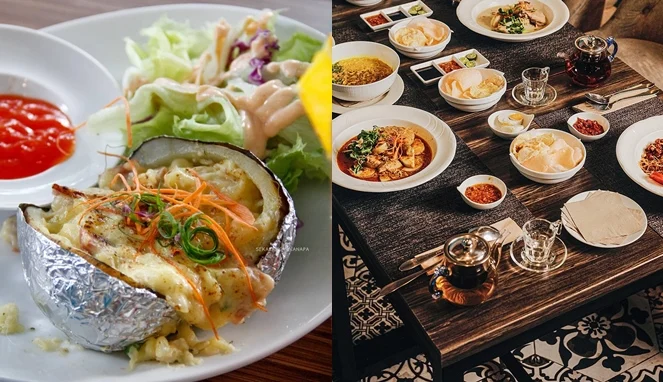
Moving far beyond its novelty as a former haunted site, Roemah Kentang 1908 has established a robust reputation centered on its culinary identity. The restaurant adopts a distinct "Peranakan" fusion concept, blending traditional Indonesian flavors with Western, oriental, and Middle Eastern culinary traditions. This eclectic menu is designed to appeal to a wide demographic of local food enthusiasts and culinary tourists visiting Bandung.
Paying homage to the building’s historic namesake, the menu features an array of potato-centric dishes, with the signature baked potato variants standing out as primary customer favorites—particularly the Moza Beef Baked Potato, which combines savory meat profiles with melted mozzarella. Other notable offerings include the Ayah Karuhun, a specialized dish fusing traditional Indonesian spices with Western cooking techniques, and the Bubur Bakar Roeken, a modernized take on classic comfort food tailored for breakfast and morning dining. Traditional Indonesian kudapan (snacks) like Pisang Goreng 1908, alongside international staples such as gourmet burgers, round out a menu that deliberately bridges historical nostalgia with contemporary palate preferences.
Operational Logistics and Visitor Information
Strategically located in front of the Saparua Gymnasium at Jalan Banda No. 18, Bandung, West Java, Roemah Kentang 1908 enjoys high visibility and accessibility. The establishment operates on an extended schedule to accommodate both daytime diners and evening crowds, opening daily from 10:00 AM to 10:00 PM on weekdays, and expanding its hours from 8:00 AM to 10:00 PM on weekends to capture the lucrative weekend tourism market from neighboring cities such as Jakarta.
Broader Impact and Implications for Urban Tourism
The successful transformation of Roemah Kentang 1908 offers significant insight into urban planning and tourism development within historic Indonesian cities. Bandung, frequently celebrated as the Paris van Java, possesses a rich inventory of colonial-era architecture that often faces the threat of demolition or terminal decay due to high urban land values.
By repurposing a stigmatized, derelict heritage site into a commercially viable and socially engaging culinary space, the project demonstrates how adaptive reuse can simultaneously achieve historical preservation, neighborhood revitalization, and economic stimulation. Analysts note that such initiatives effectively neutralize negative urban folklore by reintroducing public access and positive community engagement. As Bandung’s hospitality sector navigates intense competition among hundreds of contemporary cafes and restaurants, venues that successfully synthesize authentic historical architecture with high-concept gastronomy—such as Roemah Kentang 1908—are uniquely positioned to capture shifting consumer demands for experiential and culturally rich tourism products.