PT MRT Jakarta to Replicate Blok M Urban Regeneration Model in Kota Tua While Preserving Historic Heritage Identity

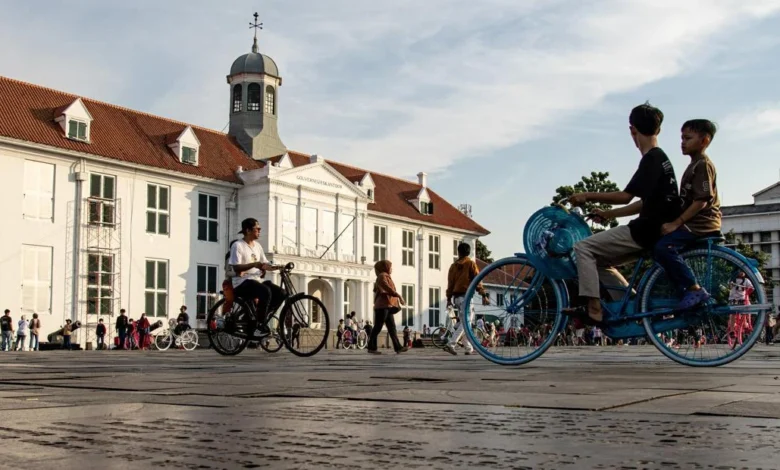
The revitalization of historic urban centers in Southeast Asia’s rapidly developing megacities often presents a delicate balancing act between modernization and heritage preservation. In the Indonesian capital, PT MRT Jakarta (Perseroda), the city-owned mass rapid transit operator, is preparing to embark on an ambitious urban renewal project for the iconic Kota Tua (Old Town) district. By applying the successful placemaking framework previously deployed in the Blok M district of South Jakarta, transport planners aim to inject economic and social vitality into the historic core while strictly safeguarding its centuries-old cultural footprint.
The initiative is intrinsically linked to the ongoing expansion of Jakarta’s mass rapid transit infrastructure. As the North-South rail line extends deeper into the historic heart of the city, urban planners are seizing the opportunity to transform transit nodes into vibrant community hubs. This strategy moves beyond traditional transit-oriented development (TOD), which typically focuses on high-density physical construction, emphasizing instead the creation of dynamic public spaces that cater to contemporary urban lifestyles.
The Philosophy of Urban Placemaking and Community Integration
At a recent industry workshop held at Wisma Nusantara in Jakarta, R. Samuel Ryan Pradipta Pranowo, Head of Business Planning & Expansion at MRT Jakarta, detailed the strategic vision behind the upcoming revitalization. According to Pranowo, developing a transit-connected urban area requires far more than concrete and steel; it demands functional, meaningful spaces that resonate with the public.
"The Kota Tua area will be revitalized with the hope of keeping it vibrant while preserving its heritage identity," Pranowo stated. "The Chinatown heritage and the Little Amsterdam elements will not be lost. Instead, the area will be brought to life through a careful combination of retail, community engagement, and other dynamic activities."
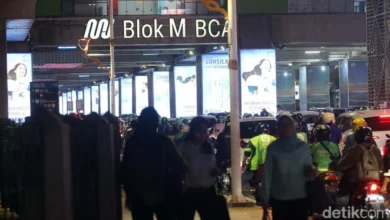
Placemaking, in this context, is defined as a multi-faceted approach to the planning, design, and management of public spaces. By capitalizing on a location’s unique assets, history, and demographic makeup, urban planners aim to cultivate a distinct "soul" for each neighborhood. In Blok M, this philosophy manifested in the creation of an urban youth hub that seamlessly bridges generational gaps—offering contemporary lifestyle and culinary spots for younger demographics while evoking nostalgia for older generations.
In Kota Tua and the adjacent Glodok commercial district, the placemaking strategy will pivot toward honoring the area’s rich tapestry of Chinese, Dutch colonial, and indigenous Betawi history. Furthermore, planners intend to weave in modern and futuristic elements—a nod to Glodok’s historical status as Jakarta’s premier electronic and trade center.
"Heritage and modern are two opposing sides, but they will be combined within this area," Pranowo explained, noting that the synergy between old and new will form the cornerstone of the district’s modern appeal.
Strategic Roadmap and Chronology of the MRT Expansion
The timeline for the Kota Tua revitalization is tied directly to the construction milestones of the MRT Jakarta North-South line phase extensions. Currently, infrastructural development remains concentrated on the central business district segments, specifically the construction of Thamrin and Monas stations.
According to current projections, the Thamrin and Monas underground stations are scheduled to commence commercial operations in December 2027. These stations will represent the immediate testing grounds for early placemaking initiatives adjacent to the transit concourses.
Following the completion of the central business district stations, engineering efforts will push further north toward the historic harbor district. The overarching target for the full integration of the MRT line into Kota Tua is set for 2029. Consequently, large-scale physical and community-based revitalization within the Old Town will unfold progressively in tandem with the civil engineering timeline, culminating around the projected station opening year.
Socio-Economic Implications and Activity Generation Partnerships
A critical component of MRT Jakarta’s urban renewal blueprint is the reliance on "activity generation partnerships." Rather than imposing a top-down commercial model, the transit operator intends to collaborate directly with local grassroots organizations, artists, and cultural groups.
In Kota Tua, initial outreach will target creative communities deeply rooted in the arts, such as visual artists, painters, and live performance groups. By anchoring the district’s early revitalization phases around cultural expressions like historical reenactments, indie filmmaking, and fine arts, planners hope to establish a magnetic cultural identity before scaling up commercial retail participation.
This methodology mirrors the organic growth observed in Blok M, where pre-existing subcultures and creative communities organically transformed underutilized commercial spaces into bustling cultural epicenters. Analysts observing Jakarta’s urban evolution note that integrating community voices early in the planning process significantly mitigates the risks of sterile gentrification, ensuring that historic districts remain accessible and relevant to a broad spectrum of society.
Broader Economic and Urban Planning Impact
The integration of transit expansion with heritage conservation represents a paradigm shift in Jakarta’s urban planning methodology. Historically, massive infrastructure projects often resulted in the displacement of traditional commercial ecosystems or the erasure of historical context. By leveraging the Transit-Oriented Development (TOD) framework alongside structured placemaking, MRT Jakarta is attempting to pioneer a sustainable model for heritage-dense megacities.
The economic implications for small and medium enterprises (SMEs) operating within Kota Tua and Glodok are expected to be substantial. Improved rail connectivity will drastically reduce travel times from Jakarta’s sprawling suburban peripheries, injecting a steady stream of domestic tourists, daily commuters, and international visitors into the historic district.
Furthermore, combining retail incentives with cultural programming aims to extend the average dwell time of visitors. While Kota Tua has historically functioned primarily as a daytime weekend destination, the injection of modern lifestyle amenities and well-lit, transit-connected public spaces could transform the district into a thriving day-and-night economy.
As Jakarta transitions into a globally integrated metropolis, the success of the Kota Tua revitalization will likely serve as a benchmark for future transit-led urban renewal projects across the archipelago. By proving that high-density modern transportation can coexist with, and even enhance, fragile historical districts, MRT Jakarta’s initiative offers a compelling glimpse into the future of urban living in Southeast Asia.