Saudi Arabia Intercepts Houthi Ballistic Missiles Targeting Vital Oil Refineries in Yanbu Amid Escalating Regional Tensions

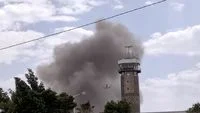
Saudi Arabian air defense forces successfully intercepted two ballistic missiles launched from Yemeni territory on Wednesday, thwarting a high-stakes attempt by Houthi rebels to disrupt the Kingdom’s critical energy infrastructure. According to security reports and diplomatic sources, the missiles were targeted at the industrial city of Yanbu, located on the Red Sea coast in the western part of the country. The interception was reportedly carried out by advanced air defense systems operated by Greek military personnel stationed in the Kingdom, highlighting the increasingly internationalized nature of Saudi Arabia’s border and infrastructure defense strategies.
The attempted strike follows a series of sharp warnings issued by Saudi authorities to residents in the southern city of Jizan and the western hub of Yanbu. These warnings were prompted by a vow from the Iran-affiliated Houthi movement to retaliate against recent Saudi-led coalition airstrikes. The escalation marks a significant flare-up in the protracted conflict, threatening the stability of global energy markets and the safety of commercial shipping lanes in the Red Sea.
Strategic Significance of the Yanbu Targeting
Yanbu is a cornerstone of Saudi Arabia’s economic diversification and energy export strategy. As home to several major refineries, petrochemical plants, and the terminus of the East-West Pipeline, any successful strike on the city’s industrial zone would have catastrophic implications for the global oil supply. The East-West Pipeline is particularly vital as it allows Saudi Arabia to export crude oil from its eastern fields via the Red Sea, bypassing the volatile Strait of Hormuz.
Security analysts suggest that by targeting Yanbu, the Houthi movement is attempting to demonstrate its reach and capability to strike deep within Saudi territory, far beyond the immediate border regions. This move is interpreted as a direct challenge to the "Vision 2030" initiative, which relies heavily on maintaining a secure environment for foreign investment and industrial expansion.
The Role of Greek Air Defense Systems
A notable detail in the recent interception is the involvement of Greek-operated air defense batteries. In 2021, Athens and Riyadh signed a status-of-forces agreement that saw Greece lend a battery of its U.S.-made Patriot PAC-3 missiles to the Kingdom, along with approximately 120 personnel to operate the system. This cooperation was born out of a shared concern for regional security and the protection of critical infrastructure.
The Greek involvement underscores a broader shift in Saudi defense policy, which has sought to bolster its domestic protection through diverse international partnerships. While the United States remains the Kingdom’s primary security partner, the deployment of Greek assets in Yanbu provides a crucial layer of redundancy. The successful interception on Wednesday serves as a validation of this multilateral defense framework, proving that the integrated air defense network is capable of identifying and neutralizing high-velocity ballistic threats before they reach their targets.
Chronology of the Recent Escalation
The current spike in hostilities did not occur in a vacuum. It follows a week of intensified military operations on both sides of the Yemeni-Saudi border.
- Early Week: The Saudi-led coalition conducted a series of precision airstrikes targeting Houthi military installations in Northern Yemen, including drone assembly sites and missile launch pads.
- Mid-Week Warnings: In response to these strikes, Houthi military spokesperson Yahya Saree announced a shift in strategy, declaring a "blockade for blockade" campaign. The group warned that Saudi economic hubs would be held at risk until the coalition lifted restrictions on Houthi-controlled ports.
- The Launch: Shortly after the announcement, Houthi forces launched two ballistic missiles from the Sanaa region.
- The Interception: Saudi early-warning systems detected the launches. The Greek-operated Patriot batteries in Yanbu were engaged, successfully destroying both projectiles in mid-air. No casualties or significant ground damage were reported.
- Official Statements: Following the interception, Houthi chief negotiator Mohammed Abdulsalam accused Riyadh of using "economic terrorism" and military escalation to cover for "eight years of failure" in the Yemeni theater.
The "Blockade for Blockade" Strategy
The Houthi movement’s recent rhetoric centers on what they term a "blockade for blockade" policy. This strategy aims to leverage their missile and drone capabilities to disrupt Saudi Arabia’s maritime and industrial sectors as a countermeasure to the coalition’s control over Yemen’s airspace and sea access.
Mohammed Abdulsalam, the lead negotiator for the Houthis, emphasized that the group views the Saudi-led coalition’s control over the port of Hodeidah and the Sanaa International Airport as an act of economic warfare. He argued that the recent targeting of Kamaran Island and the airport vicinity by coalition jets left the Houthis with "no choice but to respond in kind."
The group’s strategy appears designed to create a sense of insecurity for international shipping in the Red Sea. By targeting Yanbu, a major maritime hub, the Houthis are signaling that the cost of maintaining the status quo in Yemen will be an ongoing threat to the Kingdom’s most profitable sectors.
Economic and Humanitarian Context
The conflict in Yemen, which began in late 2014 when the Houthis seized the capital, Sanaa, has evolved into one of the world’s most complex geopolitical crises. The Saudi-led intervention, which began in 2015, sought to restore the internationally recognized government but resulted in a long-term stalemate.
According to United Nations data, the war has created the world’s worst humanitarian crisis, with millions of Yemenis facing famine and a lack of basic medical services. However, the conflict is also a war of attrition regarding infrastructure. The Houthis have increasingly relied on "asymmetric warfare," using low-cost drones and Iranian-designed missiles to target high-value Saudi assets like Aramco facilities.
From an economic perspective, these attacks create volatility in the energy markets. Even an unsuccessful attack, such as the one in Yanbu, requires Saudi Arabia to maintain a high state of military readiness, which incurs massive financial costs. Furthermore, insurance premiums for shipping in the Red Sea often spike following such reports, affecting the global supply chain.
Analysis of Regional Implications
The interception of these missiles has several layers of regional and international significance:
1. Iran-Saudi Relations
Despite recent diplomatic overtures and the restoration of ties between Riyadh and Tehran mediated by China, the Houthi attacks suggest that the "proxy" element of the conflict remains active. While the Houthis maintain a degree of autonomy, their arsenal is widely believed by UN experts to be derived from Iranian technology. The persistence of these attacks could strain the fragile detente between the two regional powers.
2. The Role of International Partners
The success of the Greek-operated systems may encourage Saudi Arabia to seek further defense collaborations with European and Asian partners. It also places Greece in a unique position within the Middle Eastern security architecture, potentially complicating its own diplomatic relations with other regional actors.
3. Impact on Peace Negotiations
The UN-led peace process has been in a state of suspended animation for months. While a formal ceasefire has largely held in terms of major ground offensives within Yemen, the cross-border missile and drone war threatens to derail any progress toward a permanent political settlement. The Houthi "blockade for blockade" stance suggests they are seeking more leverage at the negotiating table by threatening the Saudi economy.
4. Energy Security
With the global energy market already under pressure due to the conflict in Ukraine and production cuts by OPEC+, the security of Saudi refineries is a matter of international concern. Yanbu’s refineries serve not only domestic needs but are vital for exports to Europe and Asia. A successful strike would likely lead to an immediate jump in Brent crude prices.
Official Responses and Future Outlook
While the Saudi government has not issued an exhaustive official report on the specific technical details of the interception, state media emphasized the Kingdom’s "unwavering capability" to defend its sovereignty. The Saudi-led coalition reiterated that it reserves the right to respond to Houthi provocations in accordance with international law, stressing that military targets in Yemen are chosen based on intelligence regarding imminent threats.
On the other side, Houthi officials have remained defiant. Mohammed Abdulsalam’s statements suggest that the group is prepared for a long-term campaign of economic disruption. "The security of the Kingdom is tied to the security of Yemen," Abdulsalam stated, implying that the attacks will continue as long as the Houthis feel economically strangled.
As the situation develops, the international community will be watching closely for any signs of a larger Saudi retaliatory strike or a potential de-escalation through diplomatic channels. For now, the successful interception in Yanbu has prevented a major disaster, but the underlying tensions in the region suggest that the threat to the Kingdom’s "Red Sea Gateway" is far from over.
The persistence of these aerial threats highlights the need for a comprehensive political solution in Yemen. Without a lasting peace agreement that addresses the security concerns of Saudi Arabia and the humanitarian and economic needs of the Yemeni people, the cycle of "blockade for blockade" is likely to continue, leaving the world’s energy heartland in a state of perpetual vigilance.