Krakatau Park Lampung Emerges as a Premier Family Entertainment and Educational Destination in Southern Sumatra

The landscape of tourism in Lampung Province has undergone a significant transformation with the establishment of Krakatau Park, a modern theme park and educational hub situated strategically in the southern tip of Sumatra. Officially opened to the public in April 2023, the 4.5-hectare attraction represents a collaborative effort to boost regional tourism, combining recreational thrills with interactive learning experiences. Managed by the renowned Jatim Park Group—an entity widely recognized for developing large-scale, high-standard recreational parks across Indonesia—Krakatau Park has quickly positioned itself as a cornerstone for family-oriented leisure and regional economic stimulation in Bakauheni, South Lampung Regency.
Strategic Location and Background Context
The genesis of Krakatau Park is closely tied to infrastructural developments aimed at enhancing connectivity between Java and Sumatra, particularly the operationalization of the Bakauheni-Terbanggi Besar toll road and the modernization of the Bakauheni Port. Recognizing the potential of the area as a major transit and tourist hub, regional stakeholders and developers conceptualized a family-friendly destination that could capture the attention of travelers arriving via the Sunda Strait.
Located a mere 2.8 kilometers—or approximately a nine-minute drive—from the Bakauheni Executive Terminal, the park offers seamless accessibility for visitors arriving from Merak via ferry or those traversing the Trans-Sumatran Highway. This strategic positioning has turned what was traditionally a transit zone into a destination in its own right, encouraging tourists to extend their stay in Lampung rather than merely passing through.
Chronology and Development Timeline
The development of Krakatau Park began gaining substantial momentum in late 2022, culminating in its grand opening in April 2023, just in time for the Eid al-Fitr holiday exodus. The project was expedited to leverage the anticipated influx of domestic travelers during the holiday season. Upon its launch, the park immediately drew considerable interest, serving as a pilot project for modern themed entertainment in the region.
In the months following its inauguration, management continuously rolled out new features, expanding the roster of rides and refining its educational zones. By late 2023, the park had integrated more than 20 distinct attractions, ranging from adrenaline-pumping rides to sophisticated science galleries, thereby solidifying its dual identity as a playground and a center for informal education.
Diverse Attractions and Recreational Offerings
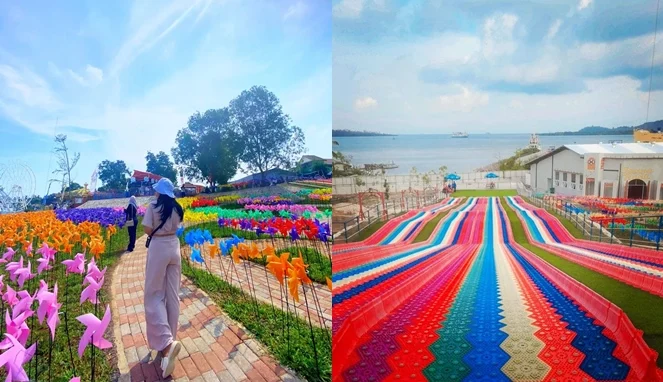
Krakatau Park features a comprehensive array of more than 20 rides and attractions designed to cater to a broad demographic, spanning toddlers, teenagers, and adults. Among the standout features is "Lava Seluncur," a vibrant, multi-colored slide that descends from a notable height. The ride offers participants an immersive experience, combining the thrill of high-speed descent with panoramic views of the adjacent blue waters of the Sunda Strait and the bustling Bakauheni Port.
For younger visitors, the park provides a variety of classic and modern amusement rides, including bumper cars ("Tutuk Mobil"), flying horses ("Kuda Terbang"), combat tiger rides ("Macan Tempur"), and traditional carousels. Conversely, adult thrill-seekers can test their nerves on attractions such as the bull-riding simulator ("Tunggang Banteng") or the immersive haunted house.

In addition to mechanical rides, the park capitalizes on contemporary aesthetic trends with the inclusion of the "Tiktok Garden," an expansive, highly photogenic landscape adorned with thousands of colorful, spinning pinwheels. This area has emerged as a focal point for visitors seeking visually engaging content for social media platforms.
Integration of Education and Recreation
A defining characteristic of Krakatau Park is its deliberate integration of educational elements into the recreational framework. The facility houses a dedicated science gallery divided into five distinct zones covering fundamental disciplines: physics, chemistry, zoology, botany, and human biology. These zones utilize interactive displays and hands-on exhibits to translate complex scientific principles into accessible, engaging formats for school-aged children.
Furthermore, the complex includes dedicated waterpark facilities tailored for both children and adults, ensuring that aquatic recreation complements the dry-land rides and educational galleries.
Infrastructure, Amenities, and Operational Guidelines
To ensure visitor comfort across its 4.5-hectare expanse, Krakatau Park provides a robust suite of supporting infrastructure. Guests experiencing fatigue from walking can utilize an e-bike rental service to navigate the grounds efficiently. Dining options are centralized within a dedicated food court offering a variety of culinary selections at accessible price points, alongside retail outlets specializing in regional souvenirs and merchandise.
Operational protocols and pricing structures are standardized to accommodate varying visitor traffic patterns. The standard admission fee is set at IDR 200,000 for weekdays and IDR 220,000 for weekends, granting access to the majority of internal attractions, though promotional pricing is periodically implemented. Daily operating hours commence at 09:00 Western Indonesia Time (WIB) and conclude at 17:00 WIB on weekdays, with closing hours extended to 18:00 WIB during weekends and national holidays.
Broader Economic and Tourism Implications
The establishment of Krakatau Park carries notable economic and sociological implications for South Lampung Regency. By diversifying the provincial tourism portfolio—which has traditionally relied heavily on natural attractions such as beaches, national parks, and volcanoes—the theme park introduces a structured, urban-style leisure model to the region.
Industry analysts note that projects of this scale generate localized employment opportunities, stimulate micro, small, and medium enterprises (MSMEs) through supply chains and souvenir sales, and enhance the overall competitiveness of Lampung as a primary tourism destination in western Indonesia. As regional infrastructure continues to mature, destinations like Krakatau Park are expected to play a pivotal role in retaining tourist expenditures within the local economy and encouraging longer average lengths of stay for visitors entering Sumatra.