Elderly Man Fatally Stabbed with Agricultural Fork by Neighbor Following Confrontation in OKU Selatan

A fatal altercation between two neighbors in South Ogan Komering Ulu (OKU Selatan) Regency, South Sumatra, has left one senior citizen dead and sparked renewed concern over community conflict resolution and public safety in rural Indonesian regions. The incident, which escalated rapidly from a domestic disturbance into a lethal physical confrontation, highlights the unpredictable and devastating consequences of localized disputes involving improvised weapons and sudden violence.
Local law enforcement agencies have moved quickly to secure the crime scene, apprehend the primary suspect, and initiate a comprehensive criminal investigation to determine the exact legal and circumstantial boundaries of the homicide. As community leaders and local authorities grapple with the aftermath of the tragedy, the event serves as a grim reminder of the fragile nature of neighborly relations and the critical need for effective mediation channels in remote regencies.
Main Facts of the Incident
The violent encounter took place in OKU Selatan, South Sumatra, claiming the life of 65-year-old Johan. The primary suspect in the stabbing is identified as 37-year-old Ifri Okpiter. According to police reports, the fatal altercation occurred within the confines of the suspect’s residence, culminating in severe puncture wounds inflicted by an agricultural fork—locally referred to as a "garpu"—which the suspect carried on his person.
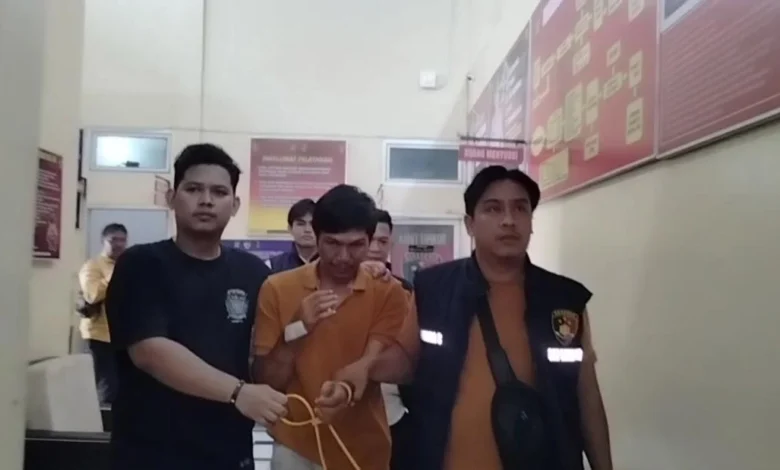
Following the incident, both men were rushed to a nearby medical clinic for emergency treatment. Despite medical intervention, Johan succumbed to his injuries due to significant blood loss and trauma from the puncture wounds. Ifri sustained defensive injuries during the initial stages of the struggle, specifically to his right hand, before being restrained by local residents and subsequently handed over to law enforcement personnel from the Kisam Tinggi Sector Police.
Detailed Chronology of Events
To understand how a domestic disturbance escalated into a fatal confrontation, investigators have reconstructed a detailed timeline based on witness testimonies, physical evidence, and statements provided by the surviving suspect.
The sequence of events began when Ifri Okpiter was visiting the home of a local neighbor. While inside, he reportedly heard loud noises originating from the direction of his own residence. Upon closer inspection through auditory cues, he recognized the sounds of someone aggressively striking and gesticulating toward his home, accompanied by raised voices and shouting.
Alarmed by the disturbance, Ifri hurried back to his property to investigate the source of the commotion. Upon reaching the front of his house, he discovered that the situation had escalated beyond a mere verbal disturbance. Johan, a fellow resident and neighbor, had already breached the threshold and was standing inside the house. According to subsequent police findings, Johan was visibly agitated and armed with a sharp machete, commonly known locally as a parang.
Realizing the immediate threat to his safety, Ifri attempted to de-escalate the physical space by retreating and warding off the incoming advances. However, the confrontation turned physical almost immediately. Johan swung the machete toward Ifri, forcing the younger man to defend himself. In an attempt to block the descending blade, Ifri raised his right arm, sustaining defensive lacerations from the sharp edge of the parang.
The force of the exchange and the suddenness of the attack caused Ifri to lose his footing and fall to the floor. Pinned or cornered in a vulnerable position and facing continued aggression from an armed intruder wielding a bladed weapon, Ifri reached for a makeshift weapon he had tucked into the left side of his waistband—an agricultural fork.
In a frantic bid to neutralize the threat, Ifri thrust the tool upward and outward, striking Johan in the left side of his back and near his right ear. The puncture wounds inflicted severe internal and external trauma. Realizing the gravity of the injuries sustained by both parties, bystanders and responding community members intervened to separate the two men, terminating the active phase of the conflict and notifying local health and police authorities.
Official Statements and Law Enforcement Response
The local police department has assumed full jurisdiction over the case, ensuring that due process is strictly followed while the investigation proceeds. AKP Aston L Sinaga, the Head of Criminal Investigation at the OKU Selatan Police, provided the initial official confirmation of the arrest to regional media outlets.
"The suspect has already been secured and taken into custody to undergo further legal examination and interrogation," stated AKP Aston L Sinaga, addressing the press regarding the ongoing status of the judicial proceedings.
Law enforcement officials have emphasized that the investigation will thoroughly examine all contributing factors, including the precise sequence of events leading up to the forced entry, the nature of the prior relationship between the two neighbors, and the legal proportionality of the self-defense claims raised during initial questioning. Forensic teams have processed the crime scene, recovering the parang and the agricultural fork as primary material evidence to be presented in court.
Furthermore, local police forces are coordinating with community leaders in the Kisam Tinggi district to maintain public order and prevent any potential retaliatory cycles or emotional flare-ups between extended families of the victim and the suspect.
Background Context and Socio-Legal Environment
Incidents of sudden, localized violence in rural Indonesian regencies like OKU Selatan often point to underlying socio-economic pressures, historical grievances, or unresolved personal conflicts that simmer beneath the surface of tight-knit agricultural communities. OKU Selatan, characterized by its rugged terrain, agrarian economy, and dispersed settlements, relies heavily on traditional community structures for social regulation.
In many remote Indonesian villages, access to formal legal mediation, psychological counseling, or conflict resolution services is limited. When personal disputes arise over property boundaries, livestock, domestic matters, or perceived slights, residents frequently attempt to resolve issues independently. The presence of traditional agricultural tools—such as machetes, sickles, and multi-pronged forks—readily accessible in homes and fields creates an environment where volatile arguments can rapidly escalate into lethal encounters before cooling-off periods or mediation interventions can take effect.
Criminologists and sociologists studying rural violence in South Sumatra emphasize that the availability of lethal instruments in domestic settings significantly increases the lethality quotient of interpersonal disputes. While urban areas rely on law enforcement patrols and rapid response units, remote villages depend primarily on social cohesion. When that social fabric frays, the results can be catastrophic.
Broader Impact and Implications
The tragic death of Johan and the subsequent arrest of Ifri Okpiter carry profound implications for the local community of OKU Selatan. Beyond the immediate grief experienced by the families involved, the incident prompts a re-evaluation of how neighborhood disputes are managed at the grassroots level.
-
Community Policing and Conflict Mediation: Local authorities are facing increased pressure to enhance community policing initiatives and establish active village-level mediation boards (known locally as tiga pilar desa—comprising the village head, local police representative, and military babinsa). Strengthening these structures is seen as a vital step in intercepting personal disputes before they manifest as physical violence.
-
Legal and Judicial Considerations: The case will test the legal boundaries of self-defense under Indonesian criminal law (Kitab Undang-Undang Hukum Pidana or KUHP). Defense counsel will likely argue that Ifri acted under duress and in proportional defense of his life after being cornered by an armed intruder within his own home. Conversely, prosecutors will scrutinize whether the use of an agricultural fork to inflict fatal puncture wounds exceeded the legal threshold of necessary defensive force. The court’s ruling will establish an important precedent regarding homeowner defense rights in rural jurisdictions.
-
Public Awareness and Mental Health: Incidents of this nature underscore the broader necessity for public education campaigns focusing on emotional regulation, anger management, and non-violent conflict resolution. Mental health professionals note that rural populations often lack adequate support systems to cope with chronic stress, economic hardships, and interpersonal tensions, leaving individuals ill-equipped to handle high-pressure confrontations constructively.
As the legal process moves forward, the residents of OKU Selatan are left to reflect on the high cost of a momentary lapse in peaceful dispute resolution. The tragic outcome serves as a solemn reminder of the fragility of community harmony and the enduring importance of constructive dialogue in preventing senseless loss of life.