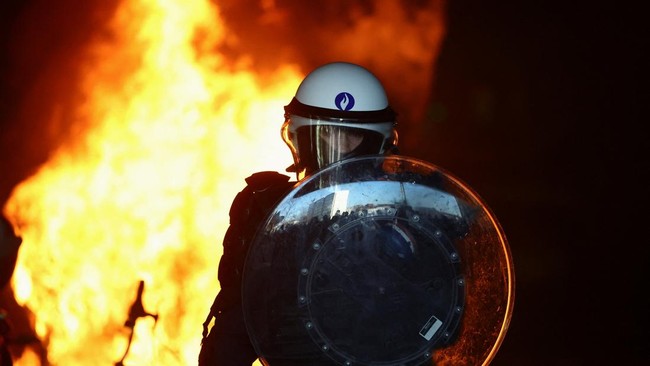
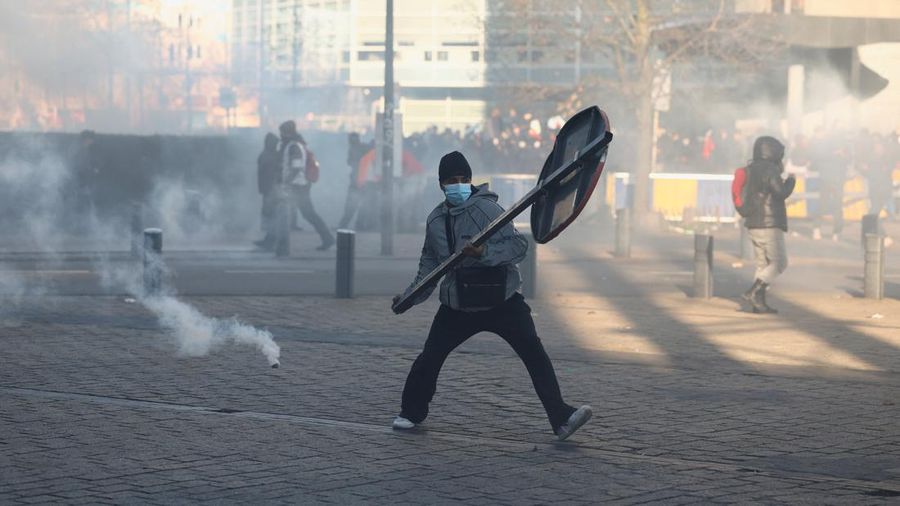
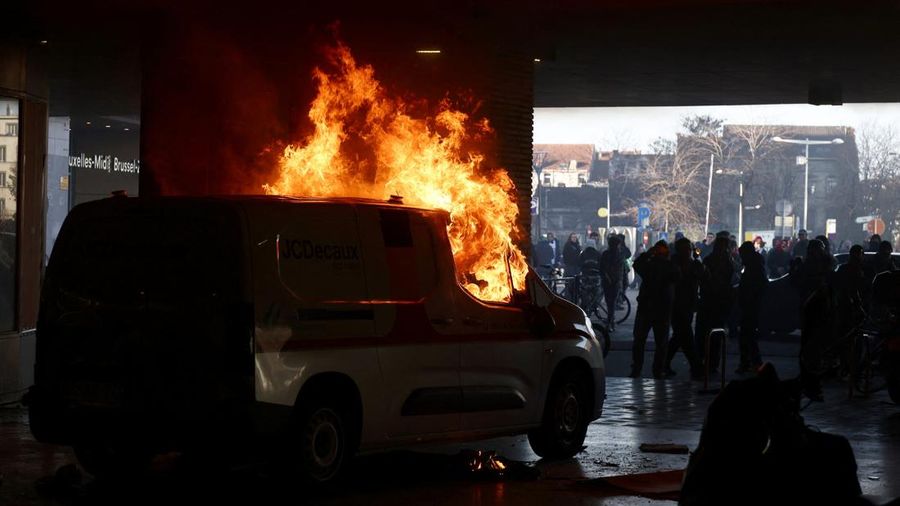
Brussels was engulfed in turmoil on Monday, November 23, 2026, as a nationwide protest against the Belgian government’s austerity measures descended into violent clashes between demonstrators and riot police. The streets surrounding the capital’s central transport hubs, particularly near Brussels-Midi station, became the epicenter of a confrontation that saw vehicles set ablaze, clouds of tear gas choking the air, and police deploying high-pressure water cannons to disperse increasingly aggressive crowds.
The protest, which brought together thousands of disgruntled citizens, workers, and labor union representatives, serves as a flashpoint in the ongoing national debate over the economic policies of Prime Minister Bart De Wever’s government. As the administration faces mounting pressure to consolidate the national budget, the social cost of these reforms has sparked the most significant wave of civil unrest seen in Belgium in recent years.
The Roots of Dissent: A Crisis of Austerity
The primary driver behind the massive mobilization is a deep-seated opposition to the government’s proposed budgetary overhaul. Prime Minister Bart De Wever’s administration is currently navigating a precarious path, attempting to address a widening budget deficit while maintaining the cohesion of a fragile ruling coalition. The proposed reforms, which target key areas such as pension structures, public sector wage indexing, and general social spending, have been met with fierce resistance from labor unions and civil society organizations.
Critics argue that the austerity package unfairly places the burden of economic adjustment on the working class and the most vulnerable segments of society. The unions contend that these cuts will erode living standards, reduce the purchasing power of public servants, and dismantle the social safety net that has historically defined the Belgian model of welfare. Conversely, the government maintains that these measures are essential to ensuring the long-term fiscal stability of the nation and meeting European Union budgetary requirements.
Chronology of the November 23 Unrest
The day began with a unified call for a national strike, which effectively crippled the country’s infrastructure. By the early hours of Monday, the impact of the strike was felt nationwide:
- 06:00 AM: Public transportation systems, including buses, trams, and metro services in Brussels and other major cities, ground to a halt. Thousands of commuters found themselves stranded.
- 09:00 AM: The national aviation sector reported severe disruptions. Brussels Airport and other regional hubs canceled hundreds of flights, leaving tens of thousands of travelers in limbo as ground staff and air traffic controllers joined the strike.
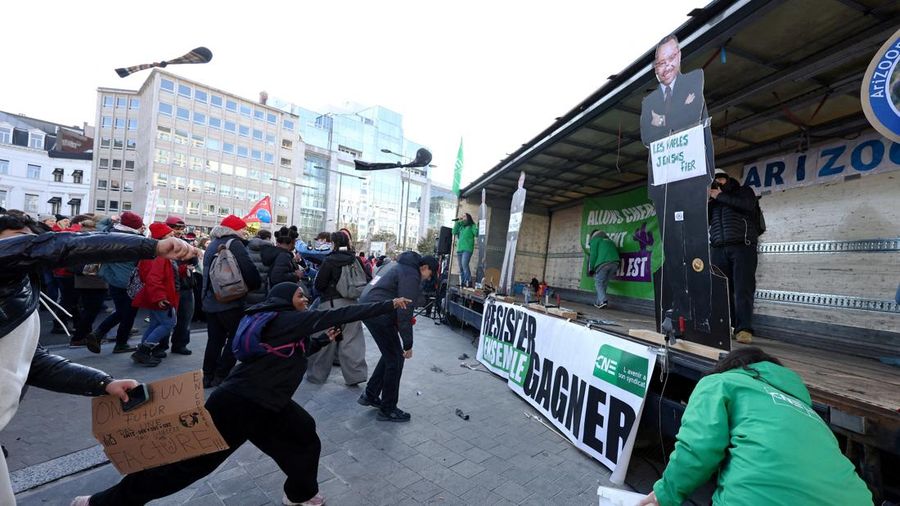
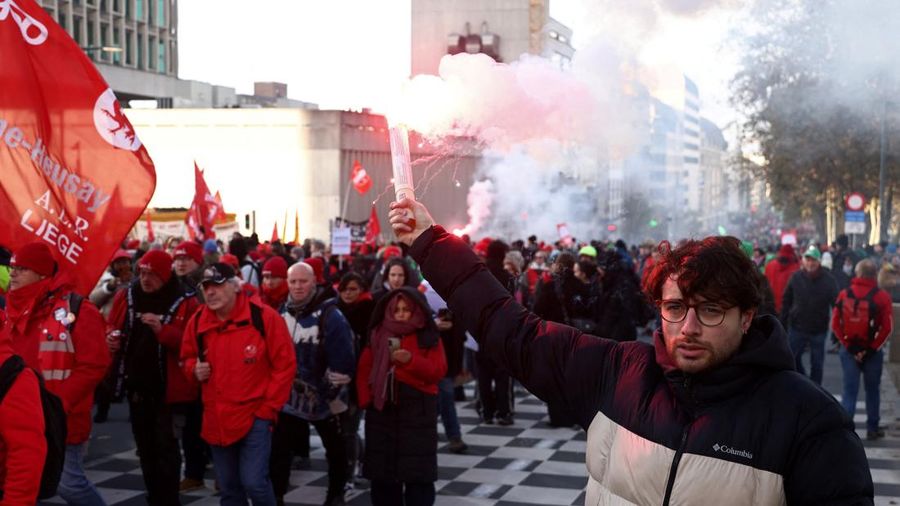
- 11:00 AM: Large columns of protesters began marching through the center of Brussels. Initial scenes were characterized by peaceful chanting and the display of banners mocking government officials, including caricatures of Prime Minister De Wever.
- 02:00 PM: As the protest neared its peak, tensions escalated. Near the Brussels-Midi station, a group of demonstrators set fire to a van, sending plumes of thick, black smoke into the sky. This act of violence acted as a catalyst for the police to intervene with force.
- 03:30 PM: Police authorities declared the demonstration a security risk. Riot squads began advancing, utilizing tear gas and water cannons to clear the streets. The atmosphere shifted from a political demonstration to an active combat zone, with protesters and police engaging in running skirmishes through the city’s historic thoroughfares.
Impact on Infrastructure and Public Life
The sheer scale of the protest paralyzed Belgium’s core logistics. Beyond the immediate chaos in Brussels, the nationwide nature of the strike meant that postal services, healthcare facilities, and manufacturing plants reported significant operational delays. Economists suggest that the economic toll of such a widespread strike could run into the tens of millions of euros, further complicating the government’s fiscal calculations.
The disruption to the aviation sector was particularly acute, highlighting the vulnerability of Belgium as a transit hub within Europe. For many businesses, the unpredictability of the labor landscape is becoming a major concern. The Belgian Federation of Enterprises has voiced frustration, noting that while the right to protest is fundamental, the current level of disruption is damaging the country’s international reputation as a reliable business partner.
Government Response and the December 31 Deadline
In the wake of the violence, Prime Minister Bart De Wever addressed the nation, reiterating the necessity of the reforms while condemning the acts of vandalism. "We are committed to a dialogue with the social partners, but we cannot ignore the mathematical reality of our public finances," a government spokesperson stated.
Crucially, the Prime Minister has set a hard deadline of December 31 for his government to reach a consensus on the 2027 budget. This ultimatum is widely viewed as a test of the survival of the current coalition. Internal divisions within the governing parties, exacerbated by the public outcry, have made negotiations increasingly fractious. If no agreement is reached by the end of the year, the administration faces the prospect of a severe political crisis, potentially triggering early elections or a government collapse.
Analytical Perspective: The Challenge of Reform
The events in Brussels are emblematic of a broader trend across Europe, where governments are struggling to balance fiscal consolidation with social stability. Following years of post-pandemic recovery and inflation-driven cost-of-living crises, the threshold for public tolerance regarding austerity has diminished significantly.
From an analytical standpoint, the Belgian government is caught in a "trilemma":
- Fiscal Sustainability: The need to bring the deficit under control to satisfy European creditors and stabilize the national debt.
- Political Cohesion: The need to maintain a fragile coalition that holds differing views on economic management.
- Social License: The need to maintain public support and prevent the kind of mass unrest that occurred on November 23, which can undermine the legitimacy of the reforms themselves.
The decision to utilize water cannons and tear gas, while seen as a necessary tactical response by the police to protect public safety, carries long-term political risks. It reinforces the narrative held by protesters that the government is "deaf" to the struggles of the people, potentially radicalizing future demonstrations and making future negotiations with labor unions more difficult.
Future Implications
As the December 31 deadline looms, the eyes of the European Union will be on Brussels. Belgium’s fiscal performance is monitored closely by Brussels-based institutions, and a failure to pass a responsible budget could lead to formal reprimands or punitive measures under EU fiscal rules.
For the citizens, the focus remains on the tangible outcomes of the budget. Labor unions have indicated that if the government does not alter its trajectory, further strikes and protests are likely to follow. The presence of dummies representing the Prime Minister and the symbolic burning of symbols of government authority suggest a deep-seated anger that goes beyond simple wage negotiations; it is a fundamental challenge to the current governing philosophy.
The coming weeks will be characterized by intense, behind-closed-doors negotiations. Whether the government can find a middle ground that provides fiscal relief without triggering another round of national paralysis remains to be seen. For now, the streets of Brussels are quiet, but the underlying tensions that led to the violence of November 23 remain unresolved, casting a shadow over the end of the year for the Belgian political establishment.
The incident serves as a stark reminder of the fragile balance between state-level economic policy and the lived reality of its citizens. As Europe navigates an era of economic transition, the Belgian experience may well serve as a cautionary tale for other nations contemplating similar austerity measures. The government must now decide if the cost of its current reform path—both in terms of social unrest and potential political instability—is a price it is willing to continue paying as it approaches the final weeks of 2026.