From Haunted Legend to Culinary Destination: The Transformation of Bandung’s Historic Roemah Kentang 1908

Bandung, the vibrant capital of West Java renowned for its Dutch colonial architecture and thriving culinary scene, has successfully redefined one of its most notorious urban legends. The infamous "Rumah Kentang" (Potato House), a dilapidated heritage building on Jalan Banda long whispered by locals to be haunted by supernatural entities and the lingering aroma of potatoes, has been given a new lease on life. Established as a commercial dining establishment in December 2020, the historic structure now operates as Roemah Kentang 1908, merging architectural preservation with contemporary gastronomy to reshape the urban landscape of Indonesia’s "Paris van Java."
Historical Background and Architectural Heritage
Constructed in 1908 during the Dutch colonial era, the building originally served as a gathering space known as Lochea Hermes. For decades, the edifice stood as a silent witness to the city’s shifting eras, eventually falling into a state of abandonment. Over the years, thick foliage, overgrown vines, and minimal maintenance shrouded the exterior in darkness, contributing to its reputation as a haunted landmark within local folklore.
Urban legends surrounding the property frequently cited the phantom scent of roasting potatoes emanating from the grounds after dark, a phenomenon that spawned various local myths. Despite its eerie reputation, urban planners and real estate analysts noted that the property possessed inherent structural and commercial advantages, notably its prime location on a designated heritage site within the city center. Recognizing the potential to revitalize a neglected landmark, property managers undertook a strategic adaptive reuse initiative, transforming the century-old structure into a high-end restaurant while retaining its historical integrity.
Chronology of Adaptive Reuse
The transition from abandoned relic to modern hospitality venue followed a meticulous conservation and commercialization timeline spanning several years:
- 1908: The Dutch colonial building is constructed, initially serving as the Lochea Hermes social gathering venue.
- Decades Following Independence: The property becomes vacant, gradually deteriorating and acquiring a notorious reputation as a haunted site characterized by dense vegetation and local folklore.
- December 2020: Following extensive interior modifications and exterior preservation efforts, the building officially reopens to the public as Roemah Kentang 1908, shifting its primary function from a vacant heritage site to a commercial dining destination.
- Present Day: The establishment operates as a prominent culinary hub in Bandung, balancing vintage aesthetics with modern multi-cultural dining concepts and attracting both domestic and international tourists.
Architectural Preservation and Interior Design
The adaptive reuse project prioritized the preservation of the building’s historical façade, leaving the exterior virtually untouched to maintain the structural integrity of the 1908 architecture. Inside, the design philosophy balances modernization with historical nostalgia. While certain interior spaces were optimized for commercial kitchen operations and guest seating, original architectural elements and vintage ornaments were deliberately preserved.
Patrons frequenting the establishment encounter a distinct vintage ambiance, featuring preserved wooden doors, antique furnishings, and a classic piano positioned in a corner of the dining hall. These elements have transformed the formerly avoided ruin into a popular destination for interior photography and social media engagement, effectively neutralizing decades of negative psychological association through active placemaking and commercial activation.

Culinary Offerings and Menu Development
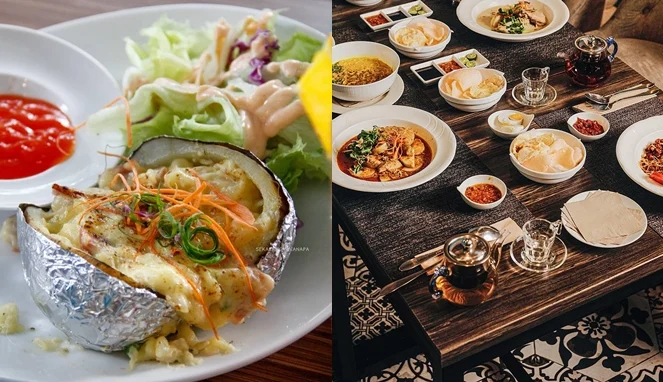
Roemah Kentang 1908 features a diverse culinary program categorized under "Peranakan" and fusion cuisines, reflecting a synthesis of Indonesian, Western, Oriental, and Middle Eastern culinary traditions. The menu development directly addresses the building’s historical moniker through signature potato-centric dishes, alongside traditional and contemporary offerings designed to appeal to a broad demographic.
Key menu highlights include:
- Baked Potato Variants: Signature dishes such as the Moza Beef Baked Potato pay homage to the property’s legendary name, combining European baking techniques with local flavor profiles.
- Ayah Karuhun: A specialized dish featuring a complex blend of traditional Indonesian spices paired with Western culinary influences.
- Bubur Bakar Roeken: A localized take on traditional congee, specifically tailored for the breakfast and morning dining market.
- Pisang Goreng 1908: A contemporary presentation of a classic Southeast Asian fried banana snack.
- Universal Comfort Foods: A selection of burgers and international comfort foods designed to cater to modern urban diners and international travelers.
Operational Details and Accessibility
Located strategically at Jalan Banda No. 18, directly opposite the Saparua Gymnasium (GOR Saparua) in Bandung, West Java, the restaurant benefits from high visibility and accessibility within the city’s commercial and recreational district.
Operating hours are structured to accommodate both weekday professionals and weekend leisure travelers:
- Monday to Friday: 10:00 AM – 10:00 PM WIB
- Saturday and Sunday: 08:00 AM – 10:00 PM WIB (featuring extended morning hours to capture the breakfast and brunch market).
Socio-Economic Implications and Urban Regeneration
The successful conversion of Roemah Kentang 1908 offers broader implications for urban management, heritage conservation, and economic development in Bandung. Urban development experts have increasingly advocated for the adaptive reuse of colonial-era buildings as a sustainable alternative to demolition or abandonment, which can otherwise contribute to urban blight and safety concerns.
By converting a stigmatized, underutilized asset into a tax-generating commercial enterprise, the project demonstrates how private investment can revitalize historic districts while preserving cultural heritage. Furthermore, the venue contributes to Bandung’s hyper-competitive food and beverage sector—often characterized by hundreds of modern cafes—by offering a unique selling proposition: the fusion of historical narrative, architectural preservation, and multi-cultural gastronomy.
As municipal authorities seek sustainable ways to manage colonial-era infrastructure, the transformation of Roemah Kentang 1908 serves as a pragmatic case study in mitigating urban decay through commercial adaptation, shifting public perception from fear and avoidance to appreciation and engagement.
Related posts: