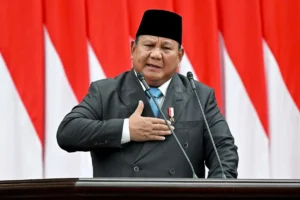
In a pivotal political development at the parliamentary complex in Senayan, Jakarta, President Prabowo Subianto officially submitted two high-profile candidates to the People’s Consultative Assembly (MPR) to fill the vacant office of the Vice President of the Republic of Indonesia. The submission took place on Monday, November 23, 2026, marking a critical step in finalizing the national leadership structure for the remainder of the 2024–2029 administrative term.
The two figures nominated by President Prabowo are Andi Amran Sulaiman, who currently serves as the Minister of Agriculture, and Sugiono, who holds the portfolio of the Coordinating Minister for Human Development and Cultural Affairs (Menko PMK). The sealed envelope containing their names was handed directly by the President to MPR Speaker Ahmad Muzani at the Nusantara IV building, setting in motion a constitutional process that will culminate in a plenary session next month.
The vacancy in the vice-presidential office arose following political realignments and subsequent transitions within the executive branch, necessitating the constitutional mechanism outlined in Indonesia’s fundamental laws to ensure governmental continuity. Under the framework of the 1945 Constitution and relevant statutory provisions governing the MPR, the legislature is tasked with electing a new vice president from candidates proposed exclusively by the sitting head of state.
Constitutional Foundations and Nomination Rationale
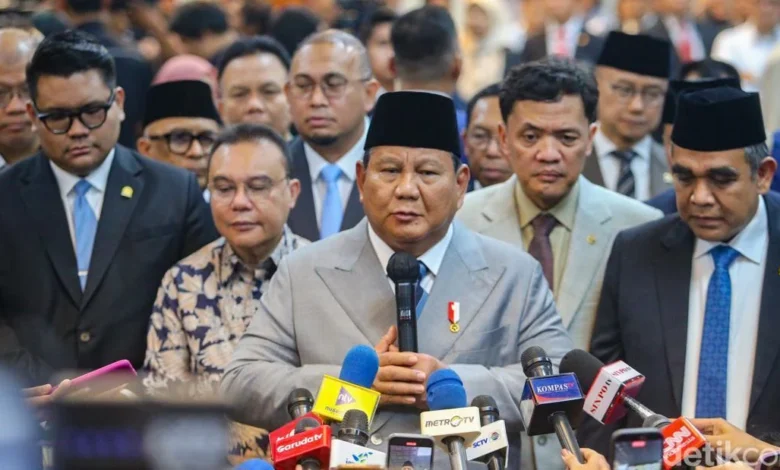
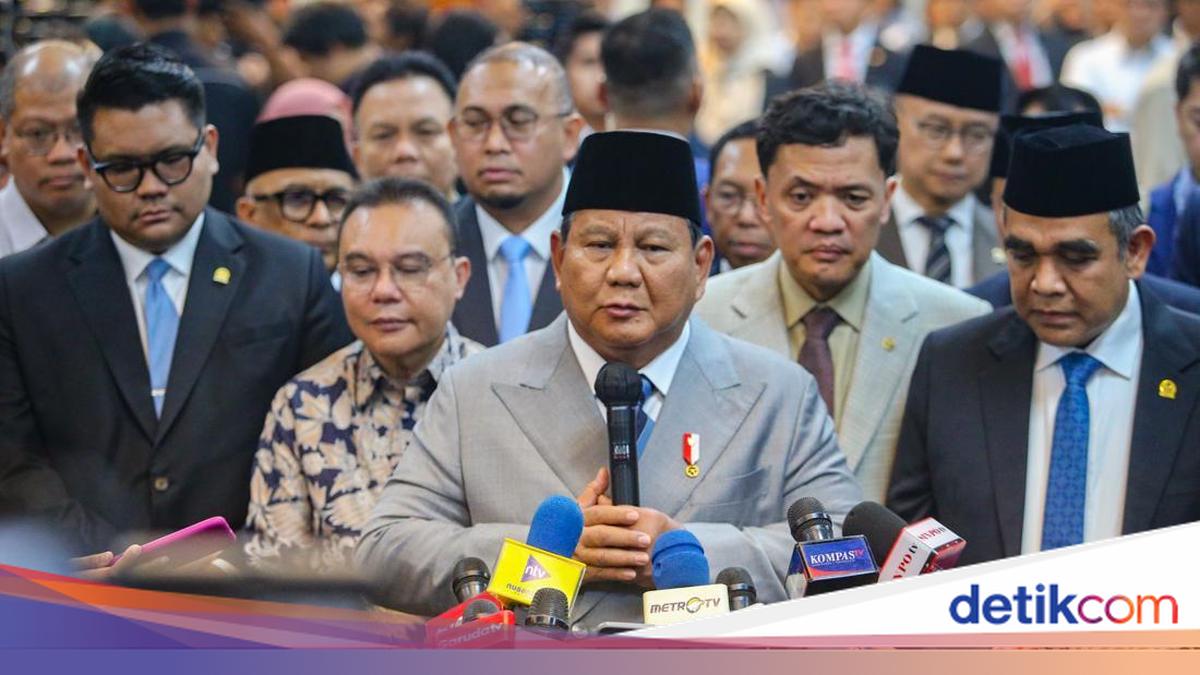
Addressing reporters following the handover ceremony, President Prabowo elaborated on the stringent criteria and meticulous considerations that guided his selection of Amran Sulaiman and Sugiono. The President underscored that the decisions were rooted fundamentally in objective metrics of merit, institutional performance, unwavering dedication, and demonstrated loyalty to the Indonesian state and nation.
"The considerations are purely a matter of achievement, service, loyalty to the state, and my conviction that they will work to the best of their abilities," President Prabowo stated to the press corps.
Prabowo was careful to acknowledge that the two nominees do not hold a monopoly on competence within the expansive political landscape of Indonesia. He noted that numerous qualified figures across the nation possess the necessary administrative acumen and leadership qualities to assume the vice presidency. However, he emphasized that constitutional parameters strictly limit the executive’s proposal mechanism to a maximum of two names, compounded by a compressed timeline for consultation and decision-making.
"I want to emphasize that it does not mean only these two individuals meet the requirements; there are many others. But our constitution dictates that I am only permitted to propose two names, and I was given a very limited timeframe," Prabowo explained.
The President further confirmed that the nomination process was not an isolated executive fiat. Prior to finalizing his choice, Prabowo engaged in extensive consultations with leaders of the political parties comprising the governing coalition in parliament, as well as the Supreme Council of the Gerindra Party. By securing backing from the parliamentary coalition, the administration aims to ensure a streamlined and predictable election process during the upcoming MPR plenary session.
MPR Schedule Adjustment: Responding to Public Scrutiny
The pathway to the vice-presidential election underwent a notable procedural adjustment shortly before the President’s formal submission. MPR Speaker Ahmad Muzani announced a revision to the timeline of the upcoming plenary session, shifting the date from the originally scheduled Wednesday, December 9, 2026, to Friday, December 11, 2026.
The rescheduling was prompted by an intense wave of public feedback, legal scrutiny, and expert critiques regarding the statutory calculation of the 14-day window mandated between the President’s submission of candidates and the convening of the MPR plenary session. Initially, the MPR leadership had calculated the 14-day period using calendar days, which would have required the submission deadline to fall on November 25, 2026.
However, constitutional law experts, civil society organizations, and parliamentarians raised concerns that this interpretation ran counter to the letter and spirit of the Law on the People’s Consultative Assembly, House of Representatives, Regional Representative Council, and Regional Legislative Councils (UU MD3), alongside the internal rules of procedure of the MPR. Critics argued that legal provisions mandating a 14-day preparation period traditionally infer working days rather than standard calendar days, ensuring adequate time for due diligence, background vetting, and legislative preparation.
Displaying institutional responsiveness, the MPR leadership convened an emergency joint meeting to evaluate the validity of these critiques. Muzani stated that the leadership chose to err on the side of caution to preempt any future legal challenges, jurisdictional disputes, or procedural anomalies that could undermine the legitimacy of the election process.
"The joint meeting of the MPR today decided that the MPR Plenary Session in the framework of filling the vacancy of the Vice Presidential office for the remaining 2024–2029 term will be shifted from Wednesday, December 9, to Friday, December 11, 2026," Muzani announced.
Profiles of the Nominees
The two candidates chosen by President Prabowo represent key pillars of the current executive cabinet, each bringing a distinct set of administrative experiences and policy achievements to the table.
Andi Amran Sulaiman has built a reputation as a technocratic leader with extensive experience in the agricultural sector. Having served multiple terms as Minister of Agriculture across different administrations, Amran is widely credited by supporters for steering national food security initiatives, advancing agricultural mechanization, and implementing structural reforms aimed at increasing domestic productivity. His inclusion is viewed as a nod to continuity in economic and agrarian self-sufficiency policies, which remain a cornerstone of the Prabowo administration’s development agenda.
Sugiono, meanwhile, brings a blend of legislative experience, party leadership, and high-level executive governance. As the Coordinating Minister for Human Development and Cultural Affairs, Sugiono oversees cross-sectoral policies touching upon education, health, social welfare, and cultural preservation. A long-time loyalist and senior figure within the Gerindra Party, Sugiono’s nomination underscores the importance of trusted political alignment and administrative coordination within the upper echelons of state power.
Implications for the Executive and Legislative Branches
The selection and impending election of a new vice president carry profound systemic implications for Indonesian governance. With global economic uncertainties, domestic infrastructure development goals, and social welfare programs requiring uninterrupted execution, the presence of a fully empowered vice president is vital for executive stability.
Political analysts note that the dual nomination of Amran Sulaiman and Sugiono offers the MPR a choice between two seasoned public servants who are already intimately familiar with the administration’s strategic blueprint. Because both candidates currently serve in ministerial capacities, their transition into the vice-presidency—whichever candidate secures the majority vote in the MPR—is expected to be structurally seamless, minimizing bureaucratic friction and policy disruption.
Furthermore, the transparent handling of the schedule revision by the MPR highlights a maturing democratic framework in Indonesia, where legislative bodies remain sensitive to public discourse and legal interpretations concerning procedural compliance. By adjusting the calendar to accommodate working-day computations, the MPR has fortified the procedural integrity of the upcoming vote against potential legal invalidation.
As the countdown to December 11, 2026, begins, attention shifts to the parliamentary floor in Senayan. The political parties represented within the MPR will deliberate on the two candidates, culminating in a democratic vote that will officially inaugurate the new Vice President of the Republic of Indonesia to complete the remainder of the 2024–2029 term alongside President Prabowo Subianto.