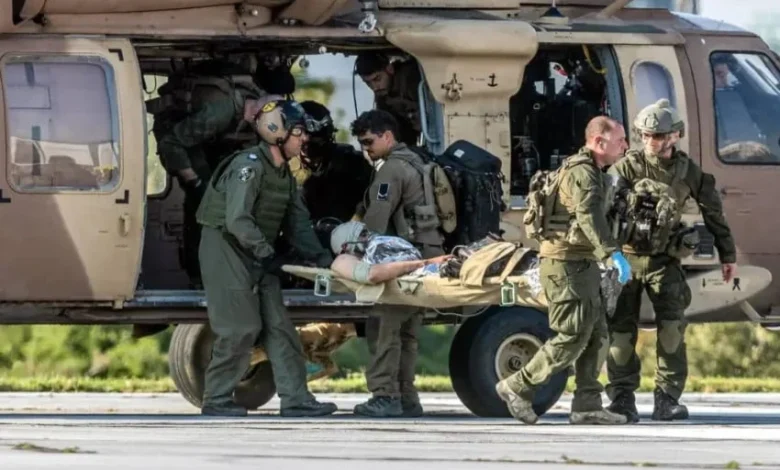
Two Israeli soldiers were killed and several others sustained injuries, including some in critical condition, following a malfunction involving an Israel Defense Forces (IDF) drone in the Gaza Strip on Thursday, September 24, 2026. According to reports from Hebrew-language media outlets, the incident occurred during an active operational deployment within the Palestinian enclave, marking yet another instance of "friendly fire" or technical failure in the ongoing and high-intensity conflict that has persisted for nearly three years.
The wounded personnel were immediately extracted from the field by military helicopters and transported to Barzilai Medical Center in Ashkelon. The incident, which the IDF has preliminarily classified as an accident, highlights the increasing reliance on unmanned aerial systems (UAS) in urban warfare and the inherent risks associated with operating complex weaponry in densely populated and volatile environments.
The Incident and Immediate Aftermath
Details regarding the specific model of the drone or the exact tactical circumstances surrounding its explosion remain limited as the military continues its investigation. Military spokespeople typically maintain a policy of silence regarding specific technical failures during active operations, citing operational security. However, reports from the ground indicate that the unit was operating in a sector where recent fighting had been intense.
The evacuation process was executed under heavy fire-support protocols to ensure the safety of the medical helicopters, which landed in Ashkelon to deliver the casualties to specialized trauma units. The incident has sent shockwaves through the ranks of the IDF, where, despite the technological superiority of the Israeli military, the toll of the protracted war continues to mount.
Chronology of the Conflict and Escalation
The war, which began on October 7, 2023, has evolved from a conventional military response into a prolonged war of attrition. Over the past three years, the Gaza Strip has been subjected to some of the most intensive aerial bombardment and ground maneuvers in modern history.
- October 2023: The conflict was ignited following the Hamas-led surprise attack on southern Israel, prompting a total declaration of war by the Israeli government.
- Late 2023 – 2024: The IDF initiated a massive ground invasion, aiming to dismantle the military infrastructure of Hamas. This period saw the highest concentration of urban combat, characterized by house-to-house fighting and the extensive use of surveillance and strike drones.
- 2025 – 2026: The intensity of the conflict shifted toward targeted raids and the maintenance of a security corridor within the Gaza Strip. The reliance on drone technology increased as the IDF sought to minimize soldier exposure to ground-level ambushes.
The death of these two soldiers brings the total number of Israeli military fatalities since the start of the war to 968, with 472 of those deaths occurring specifically during the ground offensive phase. These figures underscore the brutal reality of the campaign, which has seen the Israeli military sustain its highest casualty rates in decades.
Technological Dependency and Operational Risks
The use of drones has become a cornerstone of the IDF’s military strategy. From small, tactical quadcopters used for reconnaissance to larger, weaponized drones capable of precision strikes, these assets provide essential real-time intelligence. However, the reliance on these systems comes with significant risks. Technical malfunctions, signal interference in urban canyons, and human error in the operation of complex hardware are recurring challenges.
In previous incidents throughout the conflict, the IDF has reported "technical glitches" that resulted in drones crashing or failing to detonate properly before being recovered by enemy forces, or conversely, detonating prematurely. The specific nature of this latest explosion—whether it was a software failure, a mechanical defect, or a pilot error—remains a subject of internal inquiry.
Broader Context and Political Climate
This incident occurs against a backdrop of increasing international isolation for the Israeli government. Just one day prior to the drone tragedy, a significant diplomatic rebuke took place at the United Nations General Assembly, where 77 delegates walked out in protest before the speech of Israeli Prime Minister Benjamin Netanyahu.
The walkout, which garnered global attention, signals the growing impatience of the international community regarding the duration of the war and the mounting humanitarian crisis in Gaza. While the Israeli government maintains that its operations are necessary for national security and the return of hostages, the domestic and international pressure is intensifying. Within Israel, the government faces protests from families of hostages and a populace weary of a war that shows no clear sign of a conclusive end.
Analysis of Military Implications
The loss of personnel due to a malfunction of one’s own equipment creates a unique psychological and tactical challenge for the IDF. Beyond the tragic loss of life, such incidents often trigger a mandatory "stand-down" or a fleet-wide review of the affected drone model to prevent recurrence. This can temporarily degrade the military’s intelligence, surveillance, and reconnaissance (ISR) capabilities, potentially leaving other units more vulnerable in the field.
Furthermore, the public nature of these losses adds to the domestic discourse regarding the efficiency and safety of the military’s modernization efforts. Critics of the current government’s policy often point to these accidents as evidence of the "stretching" of military resources, arguing that after three years of continuous combat, both equipment and personnel are being pushed to their absolute limits.
Official Responses and Future Outlook
As of now, the IDF has not issued a detailed statement beyond confirming the deaths and the ongoing investigation. It is expected that a board of inquiry will be appointed to review the flight logs, maintenance records, and operational orders that led to the deployment of the drone.
The families of the deceased soldiers have been notified, and the military is providing support as per its standard protocol. For the soldiers remaining in the field, this incident serves as a grim reminder of the unpredictability of war. As the conflict in Gaza enters its fourth year, the IDF continues to struggle with the dual burden of high-intensity combat against insurgent forces and the technical challenges of sustaining a long-term, high-tech military occupation.
The incident is unlikely to change the overarching strategic objectives of the Israeli government in the immediate term. The administration remains committed to its stated goals, despite the mounting costs in lives and political capital. As investigations proceed, the focus will likely remain on whether the malfunction was an isolated incident or part of a wider trend of mechanical failure in equipment that has been operating under extreme environmental conditions for an extended period.
The war in Gaza has fundamentally altered the landscape of the Middle East, and for the Israeli military, the human and technical toll continues to climb. With nearly 1,000 soldiers dead, the IDF is confronting a reality where the "surgical" precision of its high-tech arsenal is often undermined by the chaotic, unpredictable nature of the battlefield. The tragic deaths of these two soldiers on Thursday are a stark manifestation of that reality.