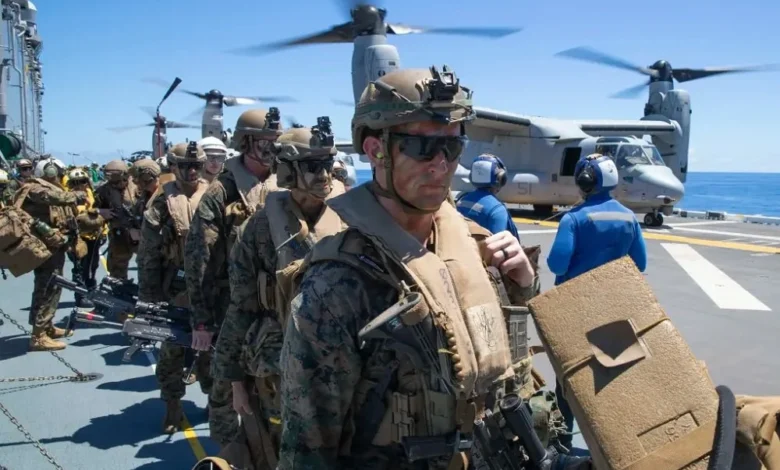
The financial burden of the ongoing conflict between the United States and Iran has reached a staggering milestone, with military expenditures surging to USD 43.6 billion, or approximately IDR 706 trillion, as of September 3, 2026. This figure, disclosed in the latest internal assessments provided to members of Congress, underscores the accelerating fiscal strain of the military campaign that commenced in late February. As the conflict enters its seventh month, the economic ramifications are reverberating far beyond the defense budget, impacting global markets and domestic political stability in the United States.
Data provided by the U.S. Central Command (CENTCOM), which maintains operational oversight over the Middle East theater, illustrates a consistent upward trajectory in resource allocation. The escalation is primarily driven by the intensive deployment of advanced munitions and the sustained presence of naval and aerial assets in the region. The Congressional Budget Office (CBO), in a report published on September 15, 2026, previously estimated the cost at USD 38 billion as of August 1. The rapid climb to USD 43.6 billion in just over a month highlights the high-burn rate of modern aerial warfare, where precision-guided missiles and interceptor technologies are utilized at an unprecedented pace.
Chronology of the Conflict
The current hostilities trace their origin to February 28, 2026, when a combined strategic operation was launched by the United States and Israel following a series of escalating regional tensions. The timeline of the conflict has been marked by several distinct phases:
- February 28, 2026: Commencement of military operations against strategic Iranian assets.
- March – April 2026: Initial phase characterized by extensive air campaigns and regional force projection.
- May 2026: Implementation of defensive naval cordons, significantly increasing fuel and logistics costs.
- August 1, 2026: CBO report indicates total costs have reached USD 38 billion, with a projected monthly sustainment cost of USD 3 billion.
- September 3, 2026: CENTCOM updates the total fiscal impact to USD 43.6 billion, reflecting an acceleration in ordnance expenditure.
Breakdown of Military Expenditures
A granular analysis of the spending reveals that the most significant portion of the budget is allocated to high-cost precision weaponry. As of the latest update, expenditures on munitions alone have skyrocketed to USD 28.1 billion, compared to the USD 21.7 billion cited in the mid-August CBO assessment. This increase of over USD 6 billion in just thirty days indicates that the conflict is consuming advanced inventory at a rate that is beginning to test the logistical limits of the U.S. defense industrial base.
Military analysts note that the cost of defending against asymmetric threats, such as drone swarms and ballistic missile salvos, requires the frequent use of high-end interceptors. These systems, while effective, are disproportionately expensive compared to the targets they neutralize. Furthermore, the operational tempo—involving continuous aerial refueling, carrier strike group rotations, and intelligence, surveillance, and reconnaissance (ISR) flights—maintains a high baseline for daily operational expenditure.
The Macroeconomic Ripple Effect
The war has not remained confined to the battlefield; it has exerted significant pressure on the global economy. Oil markets have experienced heightened volatility as traders factor in the risk of supply disruptions in the Strait of Hormuz and broader regional instability. Crude prices have seen consistent upward pressure throughout the third quarter of 2026, contributing to inflationary concerns in industrialized nations.
Equity markets have similarly reflected this anxiety. Defense sector stocks have seen gains, while consumer-facing sectors have struggled with the uncertainty surrounding global supply chains and energy costs. Economists suggest that if the conflict persists at the current "high-intensity" level, the cumulative impact on GDP growth in affected regions could be profound, potentially forcing adjustments in monetary policy to counteract the inflationary surge caused by energy price shocks.
Domestic Political Implications and the Midterm Elections
The fiscal burden of the conflict has emerged as a central pillar of debate ahead of the U.S. midterm congressional elections scheduled for November 2026. With the total cost exceeding USD 43 billion, critics of the current administration are increasingly focusing on the opportunity costs of the war. There is growing concern within legislative circles regarding the sustainability of funding this operation alongside domestic infrastructure and social security commitments.
Public sentiment polling indicates a growing fatigue regarding the conflict. The Republican Party has increasingly highlighted the "price tag of intervention," arguing that the resources deployed in the Middle East would be better utilized to address domestic challenges such as border security and economic stagnation. Conversely, the administration maintains that the military engagement is a vital component of national security, aimed at neutralizing long-term threats to regional stability and global trade routes.
The political fallout is expected to manifest in the upcoming elections, where candidates in competitive districts are being forced to take a definitive stance on the war. The perceived "unpopularity" of the ongoing campaign among key demographics could swing the balance of power in both the House and the Senate, potentially leading to legislative gridlock regarding future war funding requests.
Official Responses and Strategic Outlook
While the Department of Defense has not provided a specific "end date" for the operations, officials from the Pentagon have emphasized that the current budget figures reflect the necessary costs of protecting U.S. interests. In closed-door briefings, military leaders have reportedly characterized the expenditure as an "investment in deterrence," arguing that failure to act would result in significantly higher long-term costs.
International partners have expressed varying degrees of support. While some regional allies have provided logistical cooperation, others have called for an immediate de-escalation, citing the risk of a wider regional conflagration. The diplomatic front remains fragile, with efforts to broker a ceasefire or a mediated de-escalation currently yielding little progress.
Strategic Analysis: The Cost of Modern Warfare
The fiscal trajectory of this conflict serves as a case study for the realities of modern warfare in the 21st century. The shift from low-intensity counter-insurgency operations to high-intensity, state-on-state capability deployments carries a fiscal weight that is fundamentally different from the conflicts of the previous two decades.
The reliance on high-tech, expensive assets means that the rate of financial depletion is faster than ever. Furthermore, the political durability of such campaigns is inversely proportional to their cost; as the price tag rises, the window for domestic political consensus narrows. The CBO’s projection of a USD 3 billion monthly maintenance cost provides a sobering outlook for lawmakers. If the status quo continues, the United States could face a cumulative expenditure nearing USD 60 billion by the end of the year, a figure that would almost certainly necessitate a supplementary appropriations bill—a move that is likely to trigger intense debate in a polarized Congress.
Conclusion
As the conflict in the Middle East reaches this new fiscal threshold, the intersection of military strategy, economic reality, and political necessity has become the defining challenge for the U.S. government. The USD 43.6 billion spent to date represents more than just financial figures; it is a barometer for the duration and intensity of the engagement. As the November elections approach, the American public and its representatives will be forced to weigh the strategic necessity of the operation against the mounting fiscal and social costs, setting the stage for a pivotal period in U.S. foreign policy. Whether through diplomatic breakthroughs or a continued military path, the decisions made in the coming weeks will have lasting implications for the global geopolitical landscape and the domestic economic health of the United States.