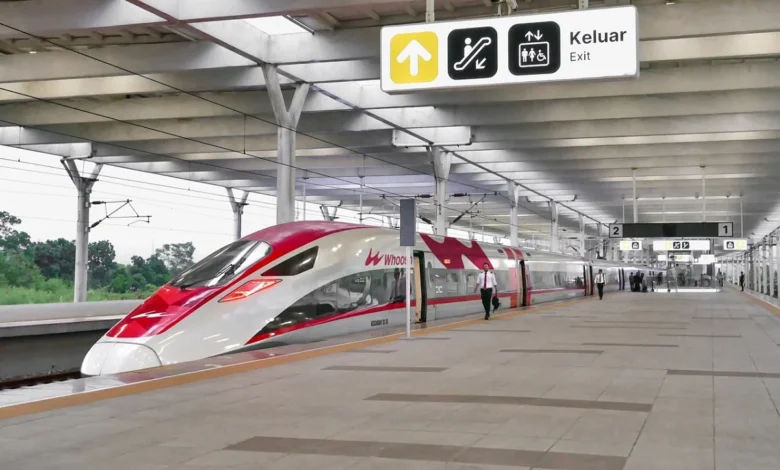
The Indonesian government has officially unveiled a revised framework for managing the financial obligations associated with the Jakarta-Bandung High-Speed Railway project, known as Whoosh. Following a strategic restructuring process, the repayment period for the project’s debt has been extended to an 80-year tenor, significantly altering the fiscal landscape of the nation’s premier infrastructure asset. Minister of Finance Purbaya Yudhi Sadewa confirmed that this adjustment effectively lowers the annual debt servicing burden to approximately Rp1 trillion, providing the state with greater flexibility in managing its long-term financial commitments.
Strategic Debt Restructuring and Fiscal Sustainability
The decision to extend the debt maturity to eight decades reflects a pragmatic shift in Indonesia’s approach to large-scale infrastructure financing. By stretching the repayment schedule, the government aims to alleviate immediate pressure on the national budget while ensuring the financial sustainability of the PT Kereta Cepat Indonesia China (KCIC) consortium.
Minister Purbaya emphasized that the restructuring process was essential to align the project’s cash flow capabilities with its debt obligations. "The restructuring makes the burden much lighter," he noted during a press briefing in Jakarta. "With an 80-year horizon, the fiscal pressure is significantly mitigated, allowing for more efficient management of assets and liabilities."
This long-term perspective is designed to prevent the Whoosh project from becoming a short-term fiscal bottleneck. By smoothing out the debt service payments, the government intends to maintain its commitment to infrastructure development without compromising other critical public sector expenditures.
Chronology of the Whoosh Project
The Jakarta-Bandung High-Speed Railway project has undergone a complex evolution since its inception. The project was initially conceived as a flagship initiative under the Belt and Road Initiative (BRI) cooperation between Indonesia and China.
- 2015: Indonesia officially selected China as the primary partner for the high-speed rail project, rejecting a competing proposal from Japan. The project was set to be funded through a mix of equity and commercial loans from the China Development Bank (CDB).
- 2016-2018: The project faced significant delays related to land acquisition and complex geological challenges along the 142.3-kilometer route.
- 2019-2022: The COVID-19 pandemic further exacerbated costs and logistics, leading to significant budget overruns. During this period, the Indonesian government decided to allow the use of the State Budget (APBN) to support the project, a move that stirred intense public and political debate regarding fiscal responsibility.
- October 2023: Whoosh was officially inaugurated, marking the first high-speed rail line in Southeast Asia.
- 2026: The government finalized the debt restructuring agreement, extending the tenor to 80 years to accommodate the operational realities and revenue projections of the line.
Financial Implications and Debt Servicing
The shift to an 80-year repayment window represents one of the longest debt tenors in modern Indonesian infrastructure history. With annual installments estimated at approximately Rp1 trillion, the debt service coverage ratio (DSCR) is expected to reach a more stable equilibrium.
Economic analysts suggest that while the long tenor reduces the annual fiscal impact, the total nominal cost of the interest over eight decades will be substantial. However, the government’s priority is immediate cash flow management. By limiting the yearly payment to Rp1 trillion, the Ministry of Finance ensures that the project’s revenue—generated through ticket sales and transit-oriented development (TOD)—can realistically cover a larger portion of the debt service without requiring constant injections from the state budget.
The Role of Transit-Oriented Development (TOD)
A critical component of the financial strategy moving forward is the monetization of land and commercial spaces around the high-speed rail stations, particularly in Halim, Karawang, Padalarang, and Tegalluar. The government’s long-term plan involves leveraging these stations as economic hubs.

Revenue from these commercial developments is intended to act as a secondary buffer, providing liquidity that can assist in fulfilling the annual Rp1 trillion debt commitment. The integration of property development with rail operations is a standard model for successful high-speed rail projects globally, such as those in Japan and Europe, and Indonesia is now pivoting toward this model to ensure the project’s long-term viability.
Official Stance and Public Reaction
The government’s transparency regarding the restructuring is an attempt to address concerns about the "debt trap" narrative that has periodically surfaced in public discourse. Minister Purbaya’s assertion that the new terms are "not as terrifying as imagined" serves as a signal to the financial markets that the project remains under control.
While some critics argue that the long-term burden remains a concern for future generations, the government maintains that the project’s role as an economic catalyst justifies the financial maneuvering. The Whoosh project has already begun to shift travel patterns between Jakarta and Bandung, significantly reducing transit time and fostering new economic corridors in West Java.
Broader Economic Implications for Indonesia
The Whoosh project serves as a test case for Indonesia’s ambition to modernize its national transportation infrastructure. The ability to successfully manage the debt associated with such a capital-intensive project will likely influence future infrastructure financing decisions.
- Fiscal Discipline: The restructuring proves that the government is willing to engage in proactive debt management rather than allowing financial distress to escalate.
- Investment Climate: By securing stable long-term terms, the government provides clarity to both domestic and international investors regarding the state’s commitment to its infrastructure assets.
- Regional Connectivity: The efficiency gains in passenger mobility are expected to drive GDP growth in the Jakarta-Bandung corridor, which remains the most densely populated and economically active region in the country.
Looking Ahead: Managing the 80-Year Horizon
Managing a debt obligation over 80 years requires institutional stability. The Indonesian government faces the challenge of ensuring that subsequent administrations maintain the same rigor in managing the KCIC consortium’s financial health.
The focus now shifts to operational efficiency. For the debt restructuring to truly succeed, Whoosh must achieve high ridership numbers and operational excellence. Every increase in operational revenue reduces the dependency on the state budget and strengthens the project’s independent financial standing.
The Ministry of Finance has indicated that it will continue to monitor the project’s performance closely. Periodic reviews of the debt structure and the consortium’s financial health will be standard procedure to ensure that any future volatility in interest rates or global economic shifts does not derail the repayment schedule.
Conclusion
The restructuring of the Whoosh project’s debt into an 80-year tenor is a calculated strategic move designed to stabilize the government’s fiscal position while preserving a vital piece of national infrastructure. While the total cost of the project remains a significant headline figure, the government’s new approach emphasizes manageable annual installments and long-term asset optimization.
As Indonesia continues to integrate its high-speed rail network into the broader national transportation strategy, the success of the Whoosh project will be measured not just by its engineering achievements, but by its ability to serve as a sustainable, self-funding contributor to the national economy. The government’s latest financial roadmap provides the necessary breathing room to allow the project to reach its full economic potential over the coming decades.