President Joko Widodo Formally Inaugurates Toraja Airport to Boost Regional Connectivity and Economic Growth in South Sulawesi

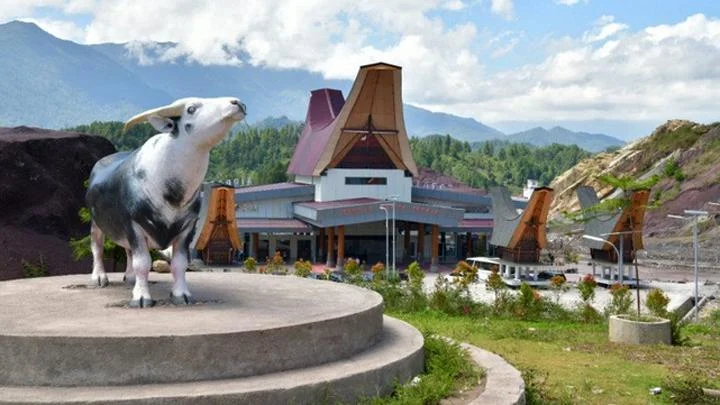
President Joko Widodo officially inaugurated Toraja Airport, formerly known as Buntu Kunik Airport, located in Tana Toraja Regency, South Sulawesi, marking a monumental milestone in the region’s infrastructure development. Broadcast live via the official YouTube channel of the Presidential Secretariat, the inauguration ceremony highlighted the central government’s ongoing commitment to bridging geographical divides in the archipelago, particularly in regions renowned for their rich cultural heritage and tourism potential. During his address, President Widodo expressed strong optimism that the newly operational facility would serve as a vital catalyst for local economic revitalization, create new employment opportunities for the surrounding communities, and stimulate the emergence of fresh economic hubs across the region.
The realization of Toraja Airport represents a long-awaited triumph over significant geographical and bureaucratic hurdles. Conceptualized to replace the aging and geographically constrained Pongtiku Airport in Ratentayo, the initial ground-shaking and construction phases of the project commenced in 2011. However, the development suffered prolonged delays and setbacks due to complex logistical challenges and shifting fiscal priorities. It was not until 2018, under the direct intervention and prioritization of President Widodo’s administration, that the construction was aggressively revived. The first phase of the revitalized project was spearheaded by the central government and successfully reached completion by mid-2020, paving the way for commercial operational readiness.
To ensure immediate integration into the national transportation network, the airport quickly secured regular flight services operated by prominent Indonesian carriers, namely Wings Air and Citilink. These airlines established crucial direct air corridors connecting Makassar, the capital of South Sulawesi, to Toraja, dramatically cutting down travel times that previously relied on grueling winding road journeys through mountainous terrain.
Engineering Feats and Technical Specifications
The development of Toraja Airport stands as one of the most challenging aviation infrastructure projects undertaken in Indonesia’s recent history, largely dictated by the extreme topography of the Tana Toraja region. Spanning a total area of approximately 141 hectares, the airport infrastructure was forged through an extraordinary engineering feat: the complete leveling and truncation of three separate hills to accommodate the stringent safety requirements of a modern runway. Minister of Transportation Budi Karya Sumadi previously emphasized the immense difficulty of the construction process, noting that engineers and heavy equipment operators had to navigate precarious cliffs and steep slopes to flatten the terrain.
In its initial operational phase, the airport features a runway measuring 1,600 meters in length, capable of accommodating narrow-body turboprop aircraft such as the ATR 72. Accompanying this is an apron measuring 94.5 by 67 meters and a taxiway spanning 124.5 by 15 meters. Subsequent development phases were mapped out to extend the runway to a total length of 2,000 meters, allowing the facility to safely handle larger commercial jet aircraft, such as the Boeing 737. Passenger processing is facilitated by a terminal building spanning 1,000 square meters, designed with an optimal passenger handling capacity of up to 150 visitors at any given time. Ongoing developmental adjustments in 2021 were further slated to address and eliminate remaining topographical obstacles surrounding the runway perimeter to guarantee absolute compliance with international aviation safety standards.
The Evolution of Buntu Kunik to Toraja Airport
Beyond its physical architecture, the naming of the aviation facility underwent a deeply collaborative administrative process that reflected the cultural identity of the local populace. Originally designated as Buntu Kunik Airport—referencing the specific local geographic area where it was built—the official designation was formally modified to Toraja Airport following intensive deliberations.
The name change was the culmination of a formal consensus reached between the regional government of Tana Toraja and esteemed traditional leaders representing 19 distinct sub-districts (kecamatan) across the regency. This grassroots cultural endorsement ensured that the airport would proudly bear a name resonant with the globally recognized heritage of the Toraja civilization. Following local community consensus, the proposed nomenclature was formally submitted to the Regional House of Representatives (DPRD) for ratification during a plenary session. Subsequently, the formal proposal moved through provincial bureaucratic channels before securing final authorization and legalization from the Ministry of Transportation.
Strategic Implications for Tourism and Regional Commerce
The opening of Toraja Airport carries profound socio-economic and tourism implications for South Sulawesi and the wider eastern region of Indonesia. Tana Toraja has long held international acclaim as a premier cultural tourism destination, drawing global travelers to its unique indigenous architecture, ancient cliffside burial sites, and elaborate traditional funeral ceremonies. However, for decades, the region’s vast economic potential was bottlenecked by infrastructure constraints. Previously, travelers wishing to visit Tana Toraja were forced to endure an arduous eight-to-ten-hour overland journey by bus or private vehicle from Makassar. This lengthy transit time frequently deterred short-term tourists and complicated the efficient transport of perishable goods and regional commodities.
By reducing travel time between Makassar and Toraja to under an hour by air, the airport effectively eliminates these historical barriers. Transportation and tourism analysts project that the influx of domestic and international visitors will increase exponentially, directly benefiting the hospitality sector, local artisan markets, culinary enterprises, and eco-tourism initiatives. Furthermore, the enhanced logistical efficiency is expected to facilitate the smoother distribution of local agricultural products to broader domestic markets, thereby raising regional income levels and fulfilling the central government’s mandate of equitable national development. As Toraja Airport continues to expand its route networks and operational capacity, it stands as a testament to infrastructural resilience and a beacon of renewed prosperity for the highlands of South Sulawesi.
Related posts: