Tragic Railway Incidents Highlight Urgent Need for Enhanced Passenger Safety and Strict Adherence to Platform Protocols Across Indonesia

The ongoing expansion and modernization of Indonesia’s rail networks have significantly improved urban and intercity mobility, carrying millions of commuters daily. However, this growth continues to be marred by preventable safety incidents. On Friday, November 17, 2023, two separate fatal accidents occurred within hours of each other, claiming lives and drawing renewed public scrutiny toward commuter safety, platform awareness, and discipline near active railway tracks.
The first incident, which quickly went viral across various social media platforms including Instagram, took place at Serpong Station in Tangerang Selatan, Banten. The event involved a young commuter who was dragged and subsequently trapped between the train and the platform edge. The second incident occurred in Surabaya, East Java, where a pedestrian was struck by a regional train at a busy railway crossing. These tragic events have reignited discussions among transportation experts, railway operators, and the general public regarding the critical importance of situational awareness around mass transit infrastructure.
The Serpong Station Incident: Chronology and Viral Video Footage
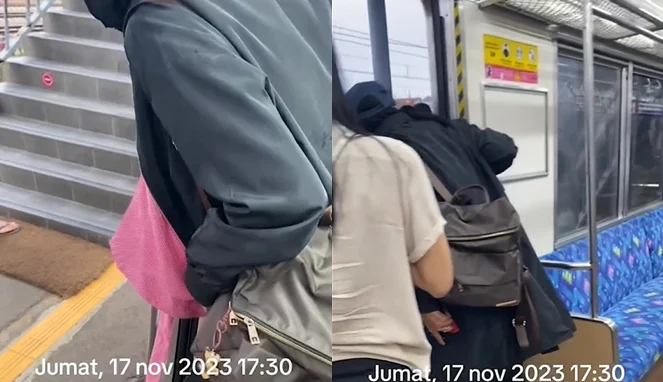
The tragedy at Serpong Station unfolded during the frantic evening rush hour on Friday, November 17, 2023, at approximately 17:30 Western Indonesia Time (WIB). According to reports and digital video footage circulated by transport monitoring accounts such as @jalur5, the incident involved Commuter Line (KRL) train number 1773, operating on the Parung Panjang to Tanah Abang route.
As the KRL series JR 205 approached and prepared to halt at Serpong Station, a teenage commuter—reportedly engaged in lighthearted conversation and joking with friends while waiting on the platform—failed to notice the oncoming train. Eyewitness accounts and preliminary findings indicate that the victim did not heed the yellow safety boundary line designed to keep passengers at a safe distance from moving rolling stock. Despite prior verbal warnings from station officers regarding platform horseplay and proximity to the edge, the victim’s hand inadvertently brushed against the side of the passing train.
The physical force of the moving carriage pulled the teenager into the narrow gap between the platform and the train, causing them to be dragged and subsequently fall. Station personnel rushed to the scene to administer immediate first aid. While initial reports indicated the victim was still breathing immediately following the extraction, the injuries sustained proved fatal, and the young commuter did not survive. Passengers inside the KRL carriages captured the chaotic aftermath, peering anxiously out of windows as railway staff worked desperately to manage the emergency situation.
Surabaya Crossing Fatality: A Simultaneous Tragedy
While commuters in the Greater Jakarta area reeled from the Serpong Station accident, a separate fatal railway collision occurred nearly 800 kilometers away in Surabaya, East Java, on the exact same day. At approximately 16:00 WIB, a 46-year-old local resident identified by the initials D became the victim of a devastating train accident at the Jalan Ahmad Yani No. 16 level crossing in the Wonokromo district.
The victim, a resident of Dukuh Kramat in the Jajar Tunggal sub-district of Wiyung, was struck by the Dhoho local passenger train and dragged several meters from the primary point of impact. According to testimonies gathered from local witnesses and railway crossing guards, the victim had been walking directly along the active railway tracks. Despite frantic verbal warnings issued by crossing operators and nearby residents, the individual failed to clear the path of the oncoming locomotive.

Emergency responders arrived shortly after the collision, confirming the fatality at the scene. The victim’s remains were subsequently transferred to Dr. Soetomo Regional General Hospital (RSUD) for formal identification, post-mortem examination, and further administrative processing before being released to the grieving family.
Broader Context of Railway Safety in Indonesia
These back-to-back tragedies underscore persistent challenges facing railway safety management in Indonesia. Despite continuous infrastructural upgrades implemented by PT Kereta Api Indonesia (KAI) and its subsidiary PT Kereta Commuter Indonesia (KCI)—such as automated signaling, upgraded stations, expanded platforms, and increased security personnel—human error and non-compliance with standard safety protocols remain the leading causes of railway-related fatalities.
Platform safety, in particular, has emerged as a critical vulnerability. High passenger volumes during peak morning and evening commuting hours create congested environments where platform edges become high-risk zones. The gap between platforms and train carriages, combined with passenger distraction from mobile devices, socializing, or rushing to board, frequently creates hazardous conditions. Similarly, at-grade level crossings—many of which remain unauthorized or difficult to secure comprehensively across dense urban corridors—continue to witness unauthorized pedestrian and vehicular crossings despite clear legal prohibitions and physical warning systems.
Official Responses and Preventive Measures
In the wake of these incidents, transportation authorities and railway operators have reiterated calls for heightened vigilance among the commuting public. Public awareness campaigns emphasizing the absolute necessity of respecting yellow safety lines, refraining from distractions near tracks, and strictly adhering to instructions from station staff are continually promoted across digital channels and public address systems.
Safety analysts emphasize that infrastructural modifications alone cannot eliminate accidents without a corresponding cultural shift in commuter behavior. Expanding platform screen doors (PSDs) on high-density commuter lines, similar to those utilized in modern mass rapid transit (MRT) systems, has been proposed by urban transit advocates as a long-term engineering solution to physically prevent falls and accidental contact with moving trains. However, retrofitting an extensive historical commuter network requires substantial capital investment and prolonged engineering works.
Implications for the Future of Commuter Transit
As Indonesia continues to prioritize rail-based mass transit as the backbone of sustainable urban mobility, ensuring passenger security from platform to destination remains an imperative operational challenge. The deaths at Serpong Station and Wonokromo serve as a grim reminder that safety margins in high-speed, heavy-rail environments are unforgiving.
The dissemination of such incidents via social media platforms plays a dual role in modern public safety discourse. While graphic or sensationalized footage can sometimes cause distress, viral documentation also serves to vividly illustrate the catastrophic consequences of complacency around heavy machinery. Moving forward, transit agencies face mounting pressure to balance expanding service capacities with uncompromising safety enforcement, ensuring that daily commuting does not carry the risk of irreversible tragedy.