Krakatau Park Lampung Emerges as a Premier Family Entertainment and Educational Destination in Southern Sumatra

The landscape of tourism in the Indonesian province of Lampung has undergone a significant transformation with the establishment of Krakatau Park, a modern theme park that successfully bridges the gap between recreational leisure and interactive education. Situated strategically within the bustling hub of Bakauheni in South Lampung Regency, this comprehensive attraction spans a vast expanse of 4.5 hectares. Opened to the public in April 2023, Krakatau Park was conceptualized to address the growing demand for diversified family-oriented holiday destinations outside the traditional confines of urban centers like Jakarta. Operated under the esteemed management of the Jatim Park Group—an industry leader renowned for its successful development of high-caliber theme parks across East Java—Krakatau Park brings a professional standard of entertainment, safety, and visitor management to the gateway of Sumatra.
Background Context and Regional Development
For decades, Lampung has been predominantly celebrated for its breathtaking natural landscapes, ranging from the majestic Mount Krakatau and the pristine shores of Pahawang Island to the dense rainforests of Way Kambas National Park. However, tourism stakeholders and regional planners recognized a distinct gap in the market for man-made, integrated leisure complexes that could retain travelers seeking structured entertainment and educational experiences.
The establishment of Krakatau Park is part of a broader infrastructure and economic master plan aimed at revitalizing the Bakauheni port area. Historically viewed merely as a transit point for commuters and cargo traveling between Java and Sumatra via the Sunda Strait, Bakauheni is actively transitioning into a destination in its own right. The proximity of Krakatau Park to the Bakauheni Executive Terminal—merely a 2.8-kilometer journey or an approximate nine-minute drive—positions the theme park as an ideal first stop for visitors arriving off the ferry, as well as a weekend getaway for residents of Lampung and neighboring South Sumatra provinces.
Chronology and Development Timeline
The genesis of Krakatau Park dates back to regional tourism initiatives aimed at leveraging the operational success of the Bakauheni Harbour City (BHC) development project. Construction and conceptualization began with the objective of creating a multi-faceted destination that combines cultural appreciation, scientific learning, and high-energy amusement.
In April 2023, the park soft-launched ahead of the Eid al-Fitr holiday season, a strategic move designed to capture the massive influx of homecoming travelers and holidaymakers traversing the trans-Sumamian corridor. Following initial operational adjustments, the management integrated more than 20 distinct rides, a state-of-the-art science gallery, and aquatic facilities. By late 2023, specialized zones such as the Lava Seluncur and the aesthetically striking Taman Tiktok had achieved viral status on social media platforms, significantly boosting regional tourism metrics and driving consecutive months of steady visitor growth.
Diverse Attractions and Recreational Offerings
Krakatau Park features an extensive array of attractions meticulously curated to cater to all age demographics, ensuring that toddlers, teenagers, and adults find engaging activities tailored to their preferences. The facility’s layout is strategically divided into distinct zones covering high-adrenaline rides, family-friendly attractions, educational galleries, and water-based recreation.
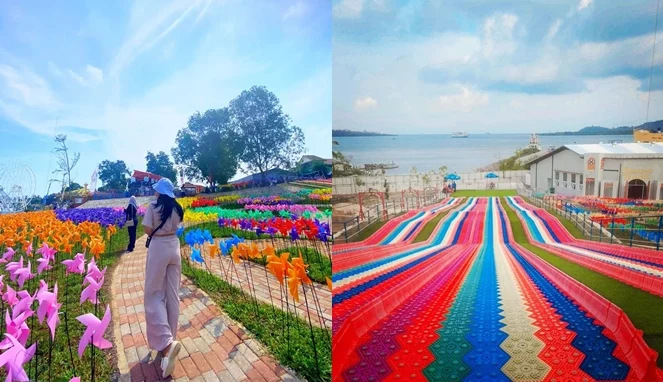
Among the standout features is the Lava Seluncur, a towering multi-lane rainbow slide that offers riders an exhilarating descent paired with panoramic vistas of the surrounding ocean and the bustling Bakauheni Port. For younger visitors, the park provides an array of classic yet modernized amusement rides, including the Tutuk Mobil, Kuda Terbang, Macan Tempur, and the traditional Komidi Putar. Meanwhile, thrill-seekers looking for an adrenaline rush can test their nerves on the Tunggang Banteng mechanical bull or navigate the immersive environment of the on-site Haunted House.
Beyond traditional amusement rides, the park emphasizes visual engagement through installations like Taman Tiktok. This meticulously landscaped zone features vibrant fields of colorful, wind-driven pinwheels, creating a highly photogenic environment that resonates with contemporary travel trends and social media documentation.

Integration of Educational Zones and Science Galleries
Recognizing the modern shift toward edutainment, Krakatau Park incorporates a comprehensive Science Gallery designed to supplement formal education with interactive exhibits. Divided into five distinct thematic zones, the gallery covers fundamental scientific disciplines including physics, chemistry, zoology, botany, and human anatomy.
Unlike traditional museum settings where exhibits are viewed passively, the science gallery at Krakatau Park encourages hands-on participation. Visitors are invited to conduct basic physical experiments, explore biological models, and interact with displays that simplify complex scientific principles for young learners. This educational component has garnered positive feedback from regional educational institutions, many of which have incorporated the park into their extracurricular study tour itineraries.
To complement the land-based activities, the park also features a dedicated waterpark equipped with aquatic facilities suitable for both adults and children. Complete with splash pads, wading pools, and water slides, the aquatic zone offers relief from the tropical climate of the region.
Operational Logistics, Pricing, and Visitor Amenities
Operational management at Krakatau Park places a strong emphasis on visitor comfort, accessibility, and convenience. Recognizing the expansive nature of the 4.5-hectare property, the management provides electric bicycle (e-bike) rental services, allowing visitors to navigate the park efficiently without experiencing physical fatigue.
Culinary needs are addressed by an expansive food court offering a diverse menu of local Indonesian specialties and international fast-casual options at accessible price points. Additionally, dedicated merchandise and souvenir outlets allow visitors to acquire locally crafted memorabilia before departure.
The park maintains a structured ticketing and operational schedule designed to accommodate peak travel periods:
- Regular Admission Fees: Rp200.000 for weekdays (Monday through Friday) and Rp220.000 for weekends (Saturday and Sunday), subject to periodic promotional adjustments by the management.
- Operating Hours: Daily from 09:00 to 17:00 WIB on regular weekdays, with extended hours until 18:00 WIB on weekends and national holidays.
Broader Economic Implications and Industry Analysis
From an economic perspective, the successful operation of Krakatau Park serves as a catalyst for regional development in South Lampung. Industry analysts note that integrated theme parks of this scale create significant multiplier effects, generating direct employment opportunities for local hospitality workers, food vendors, and administrative staff while stimulating indirect economic activity for nearby hotels, homestays, and transport providers.
Furthermore, the presence of Krakatau Park alters tourism consumption patterns in the region. Traditionally, travelers passing through Bakauheni treated the port strictly as a transit node. By offering a high-value, multi-hour recreational experience adjacent to the ferry terminals, the park successfully incentivizes tourists to extend their stays in Lampung, contributing to higher regional tourism expenditure and longer average length-of-stay metrics.
As domestic tourism within Indonesia continues its post-pandemic recovery and structural evolution, destinations like Krakatau Park exemplify the successful integration of regional natural appeal with modern, engineered entertainment infrastructure. Moving forward, the ongoing expansion and refinement of the park’s offerings are expected to solidify its status as a cornerstone of South Sumatra’s modern tourism sector.
Related posts: