The Ministry of Manpower of the Republic of Indonesia has officially initiated the distribution of the 2026 Wage Subsidy Assistance (BSU), a strategic fiscal measure designed to bolster the purchasing power of the workforce amidst evolving economic conditions. Eligible workers and laborers are set to receive a total disbursement of Rp900,000, structured as a monthly stipend of Rp300,000 over a three-month period. In a move to streamline financial support, the government has confirmed that the total amount will be paid out as a lump sum during the November and December distribution window.
This initiative is governed by the Minister of Manpower Regulation Number 16 of 2026, which serves as the second amendment to the original 2022 guidelines regarding government assistance for salary subsidies. By formalizing these regulations, the Ministry aims to ensure transparency, accountability, and accuracy in the selection of beneficiaries, mitigating the risks of data discrepancies that have historically challenged large-scale social assistance programs.
Eligibility Criteria and Verification Standards
To qualify for the 2026 BSU, individuals must strictly adhere to the criteria established by the Ministry. The primary prerequisite is that the applicant must be a citizen of the Republic of Indonesia (WNI), verified through a valid National Identity Number (NIK). Furthermore, the government has mandated that beneficiaries must be active participants in the BPJS Ketenagakerjaan (Social Security Agency for Employment) system, with their active status confirmed as of August 2026.
The integration of BPJS Ketenagakerjaan data is a critical component of the distribution mechanism. By utilizing the existing database, the Ministry of Manpower ensures that the assistance is directed toward individuals within the formal sector who have maintained consistent contributions. This serves both as a verification tool and as an incentive for workers to remain within the social security framework, thereby enhancing the overall reach of the national labor protection system.
Contextualizing the Wage Subsidy Program
The BSU program was first introduced as an emergency response during the global health crisis in 2020. Over the past six years, the program has evolved from a pandemic-era relief measure into a more refined tool for economic stabilization. The decision to implement the 2026 iteration reflects the government’s acknowledgment of persistent inflationary pressures and the fluctuating cost of living.
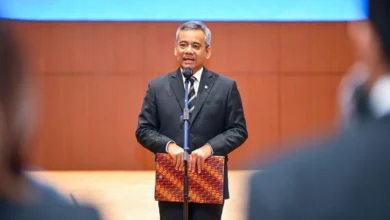
Indah Anggoro Putri, the Director General of Industrial Relations Development and Employment Social Security at the Ministry of Manpower, emphasized that the subsidy is intended to act as a buffer for the labor force. "Our objective is to ensure that this assistance is distributed precisely to maintain the economic resilience and purchasing power of Indonesian workers and laborers, keeping their standard of living stable," Indah stated in a recent press briefing.
This program acknowledges the reality that many workers in the industrial, manufacturing, and service sectors are susceptible to macro-economic volatility. By providing a direct cash injection, the state aims to maintain domestic consumption levels, which remains a primary driver of Indonesia’s Gross Domestic Product (GDP).
Chronology of Implementation
The rollout of the 2026 BSU followed a rigorous internal process designed to minimize administrative errors. The chronology of the initiative can be summarized as follows:
- Regulatory Foundation (Early 2026): Drafting and ratification of the Ministry of Manpower Regulation No. 16 of 2026 to update the legal framework for wage subsidies.
- Data Synchronization (Q2-Q3 2026): Collaboration between the Ministry of Manpower, BPJS Ketenagakerjaan, and banking partners to verify active participant data and cross-reference NIKs.
- Final Eligibility Audit (August 2026): The official cutoff date for determining active participation in the BPJS Ketenagakerjaan system, serving as the benchmark for recipient lists.
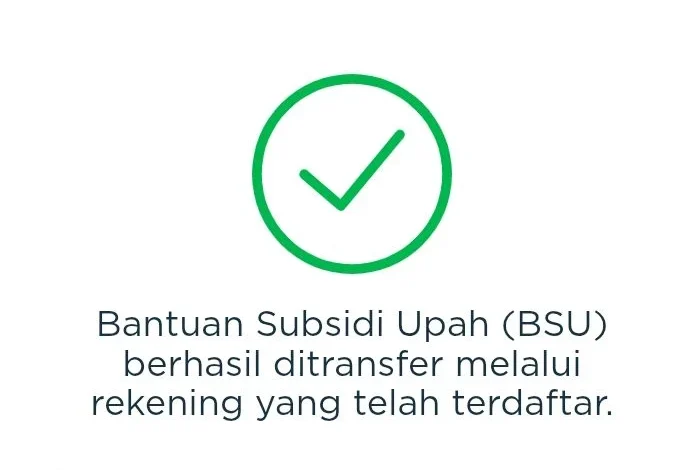
- Disbursement Phase (November–December 2026): The current phase, involving the direct transfer of funds to the verified accounts of eligible workers through designated government-linked banks (Himbara).
Economic Implications and Analysis
The disbursement of Rp900,000 per recipient represents a targeted fiscal stimulus. While the amount may seem modest on a per-capita basis, the aggregate impact of reaching millions of workers across the archipelago creates a significant ripple effect in local economies.
Economists observe that such subsidies are particularly effective in supporting the lower-to-middle income strata, who possess a higher marginal propensity to consume. When these funds are released, they are typically directed toward essential goods and services, effectively circulating capital back into the retail and essential services sectors.
However, the program also highlights the ongoing challenge of digitizing social assistance. The reliance on bank accounts and digital verification remains a hurdle for workers in remote or informal sectors. The government’s continued focus on strengthening the integration between the Ministry of Manpower and financial institutions is a testament to the effort to bridge this gap, ensuring that aid reaches the intended beneficiaries without intermediaries.
Challenges in Distribution and Fraud Prevention
One of the most complex aspects of the BSU program is the prevention of "double-dipping," where individuals might attempt to claim multiple forms of government assistance. To prevent this, the Ministry has integrated the BSU database with other social protection programs, such as the Family Hope Program (PKH) and the Pre-Employment Card (Kartu Prakerja).
The use of NIK-based identification is the cornerstone of this anti-fraud strategy. By linking each BSU recipient to a unique biometric and demographic profile, the Ministry can flag and remove duplicate entries. This technological approach has significantly improved the efficiency of the 2026 program compared to its predecessors, reducing the time required for data validation and speeding up the overall disbursement process.
Stakeholder Perspectives and Public Reaction
Labor unions have largely welcomed the continuity of the wage subsidy, citing the rising prices of basic commodities as a primary reason for the necessity of such aid. However, there have been calls from various advocacy groups to expand the eligibility criteria to include informal workers who do not fall under the traditional BPJS Ketenagakerjaan scheme.
Industry associations have also provided input, noting that the subsidy provides a welcome relief to the manufacturing sector, which has faced challenges in wage adjustments due to slowing export demand. By stabilizing the household income of workers, the government effectively reduces the potential for labor unrest and turnover, providing a more predictable environment for businesses to operate during the end-of-year fiscal cycle.
Future Outlook for Labor Protection
The 2026 BSU program serves as a model for future social protection schemes in Indonesia. As the nation moves toward a more digitized economy, the ability to rapidly identify, verify, and support segments of the population through data-driven initiatives will become a vital pillar of governance.
Looking forward, the Ministry of Manpower is expected to evaluate the efficacy of the 2026 distribution to determine the feasibility of future subsidies. While the government has not committed to a permanent wage subsidy structure, the infrastructure developed for the BSU provides a scalable framework that can be activated in response to future economic shocks or systemic crises.
Conclusion
The distribution of the 2026 BSU is a calculated government intervention aimed at maintaining the stability of the Indonesian workforce. By focusing on registered, active participants of the national social security system, the government ensures that aid is delivered to those who contribute to the formal economy. As the distribution continues through December, workers are encouraged to verify their eligibility status through official Ministry of Manpower channels and check their designated bank accounts regularly.
This program underscores the state’s commitment to social welfare as a means of fostering economic resilience. Through rigorous regulation, data integration, and clear communication, the government continues to refine the delivery of social assistance, ensuring that the benefits of national economic growth are felt by the workforce that sustains it. As the year concludes, the focus remains on the seamless completion of the disbursement process, providing a necessary financial cushion for millions of Indonesian households.