Mengenal 5G CPE: Perangkat Kunci Penunjang Internet Rumah Berkecepatan Tinggi Tanpa Kabel Fiber Optik

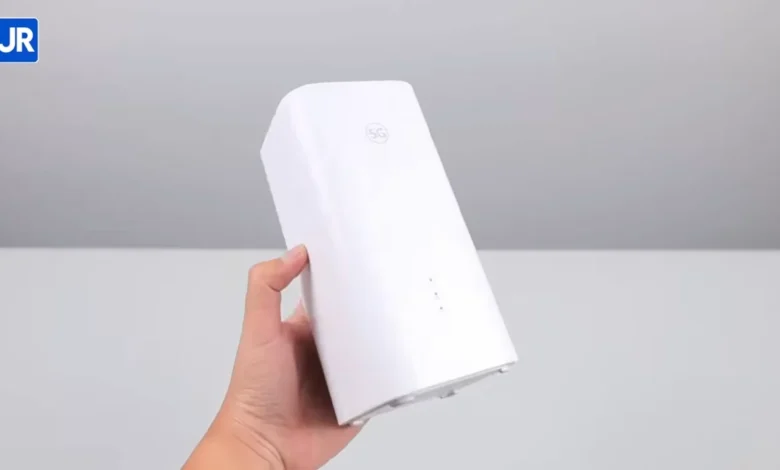
As global telecommunications infrastructure continues its rapid evolution toward next-generation connectivity, fixed-line broadband is increasingly sharing the spotlight with advanced wireless alternatives. Central to this paradigm shift is Customer Premises Equipment, specifically the 5G CPE (Customer Premises Equipment), a specialized hardware solution designed to bridge the gap between high-speed cellular networks and local home or office environments. In an era where remote work, high-definition streaming, and cloud computing demand robust, reliable bandwidth, understanding how 5G CPE functions has become essential for consumers and businesses alike navigating modern connectivity options.
Defining 5G CPE and Its Core Functionality
At its foundation, 5G CPE refers to a dedicated wireless gateway that integrates a high-performance cellular modem and a Wi-Fi router into a single enclosure. Unlike conventional modems that rely on physical infrastructure like copper lines or coaxial cables, a 5G CPE unit captures high-frequency cellular signals directly from nearby Base Transceiver Stations (BTS) deployed by mobile network operators.
Once these signals are captured via advanced internal or external antenna arrays, the device translates the cellular data packets into a localized wireless or wired network. Users can then connect standard consumer electronics—including smartphones, laptops, smart TVs, and Internet of Things (IoT) gadgets—to the network via Wi-Fi protocols or physical Ethernet cables using integrated LAN ports. By eliminating the necessity for fiber-optic installations to physically enter a building, 5G CPE dramatically lowers the barrier to entry for high-speed broadband, particularly in suburban regions or newly developed residential areas where fiber rollout is economically or logistically challenging.

The Historical Context of Fixed Wireless Access (FWA) and CPE Evolution
The genesis of CPE technology dates back to earlier generations of cellular networks, where 4G LTE routers provided localized internet access using standard SIM cards. However, these legacy systems frequently struggled to compete with the sheer throughput and low latency of traditional fiber-optic connections, often bottlenecked by bandwidth constraints and network congestion.
The commercial deployment of 5G networks, which began globally around 2019, transformed the capabilities of wireless CPE. Leveraging wide-band spectrums, including sub-6 GHz frequencies for broad coverage and millimeter-wave (mmWave) frequencies for ultra-high-speed capacity, modern 5G CPE devices can achieve multi-gigabit speeds. This technological leap catalyzed the commercial viability of 5G Fixed Wireless Access (FWA), a service model where telecommunications operators utilize cellular spectrums to deliver fixed broadband to homes and offices. Throughout the early 2020s, major global carriers began offering dedicated FWA plans bundled with advanced CPE hardware, positioning wireless broadband as a formidable competitor to traditional cable and DSL providers.
Indoor Versus Outdoor CPE: Architectural Variations and Deployment
To maximize signal reception and network performance, manufacturers divide 5G CPE devices into two primary categories based on installation methodology: indoor CPE and outdoor CPE.

Indoor CPE units are designed for straightforward, plug-and-play deployment. Resembling conventional desktop Wi-Fi routers, these devices are placed inside a home or office—ideally near a window or an area with clear line-of-sight to a cellular tower. They offer high user convenience, as they require no professional installation, complex cabling, or structural modifications. Users simply insert a compatible SIM card, power on the device, and connect their local network.
Outdoor CPE units, conversely, are engineered for exterior mounting on exterior walls, balconies, or rooftops. These robust devices feature high-gain directional antennas capable of capturing weaker or distant cellular signals much more effectively than indoor models. By placing the modem externally, outdoor CPE bypasses the significant signal attenuation caused by concrete walls, tinted glass, and modern insulation materials. While outdoor units generally require professional installation and run Ethernet cabling into the building to supply power and data to an indoor Wi-Fi router, they provide vastly superior connection stability and throughput in fringe coverage areas.
Comparative Analysis: 5G CPE Versus Traditional Wi-Fi Routers
A frequent point of confusion among consumers is distinguishing between a 5G CPE and a standard Wi-Fi router. While both devices serve the ultimate purpose of distributing a local network to multiple clients via Wi-Fi or LAN cables, their underlying architecture and data ingestion methods differ fundamentally.
A traditional Wi-Fi router does not possess cellular connectivity capabilities. It relies entirely on an upstream connection provided by a separate modem—such as an Optical Network Terminal (ONT) for fiber-optic internet or a cable modem for coaxial systems. The router takes this wired feed and broadcasts it locally.

In contrast, a 5G CPE is an all-in-one transceiver. It incorporates the modem functionality directly within the chassis, utilizing cellular network infrastructure rather than a physical wire to source its internet connection. Consequently, a 5G CPE functions autonomously once provisioned with an active data plan and a valid SIM card or electronic SIM (eSIM) profile.
Compatibility Dynamics: 5G CPE and FWA Services
A common technical inquiry involves whether a 5G CPE strictly requires a dedicated 5G FWA service subscription from a telecom operator. Technologically, the answer is nuanced.
While 5G CPE and 5G FWA are deeply intertwined—with operators frequently bundling the hardware specifically for FWA packages—the hardware itself is not inherently restricted to fixed service tiers. A 5G CPE is fundamentally a cellular data terminal. Provided the hardware supports the frequency bands utilized by a specific carrier, and the carrier permits data-only SIM cards or mobile broadband plans to be used in CPE devices, the hardware can theoretically operate on standard mobile data plans.
Nevertheless, users must exercise caution regarding firmware locks and carrier customization. Many telecom operators sell subsidized 5G CPE units locked to their specific network infrastructure or require specific Access Point Name (APN) configurations to optimize traffic routing for fixed-location broadband. Therefore, verifying device compatibility and network restrictions prior to purchase remains a critical step for consumers.
Implications, Market Outlook, and Future Considerations
The proliferation of 5G CPE and FWA technology carries profound implications for global digital equity and telecommunications market dynamics. For network operators, offering wireless broadband represents a cost-effective alternative to deploying capital-intensive fiber infrastructure across expansive suburban and rural topographies. By maximizing the utility of existing cellular towers, carriers can monetize unused network capacity efficiently.
For consumers, 5G CPE introduces unprecedented flexibility and choice. Households no longer bound by monopolistic local cable providers can access competitive broadband alternatives that are easily portable if the user relocates. Furthermore, businesses can deploy 5G CPE units as primary internet connections in temporary sites or as automated failover backups during primary fiber outages.
However, challenges remain. The performance of any 5G CPE deployment is inextricably linked to external environmental variables, including network congestion, distance from the nearest BTS, physical obstructions, and local weather conditions. Unlike dedicated fiber lines that offer symmetrical, guaranteed bandwidth, cellular networks fluctuate based on user density and spectrum availability.
As telecommunications standards continue to advance toward 5G-Advanced and preparatory phases for 6G, CPE hardware is expected to incorporate even more sophisticated antenna arrays, artificial intelligence-driven signal optimization, and enhanced Wi-Fi 7 capabilities. These improvements will further solidify 5G CPE as a cornerstone technology in the modern global connectivity landscape, ensuring robust digital access for homes and enterprises worldwide.
Related posts: