The race for longer smartphone battery life is entering a transformative phase as major original equipment manufacturers in China reportedly begin testing innovative battery architectures inspired by Apple. While smartphones equipped with massive 10,000mAh power reserves are no longer an anomaly in the Asian market, engineering teams are aggressively pursuing ways to push energy density thresholds even further. According to industry insiders, upcoming devices may soon feature steel-cased battery designs combined with stacked-cell technology, a structural evolution that promises to redefine mobile power solutions without compromising ergonomic form factors.
Main Facts and Technological Shifts
Recent supply chain intelligence shared by prominent industry leaker Digital Chat Station indicates that a leading Chinese smartphone brand is currently evaluating batteries housed in metal or steel enclosures. This approach breaks away from traditional manufacturing norms that rely heavily on conventional jelly-roll or wound configurations. By integrating a steel-case design with stacked-cell architecture, manufacturers can optimize internal chassis space with remarkable precision.
The structural integrity offered by a metal enclosure allows for denser energy packing, minimizing dead space within the smartphone’s interior. This methodology mirrors a path previously pioneered by Apple, which introduced a metal-encased battery structure beginning with the iPhone 16 Pro. Apple’s engineering implementation was designed to provide a more rigid structural backbone, enhancing thermal dissipation and allowing for higher energy density safely packed within a compact footprint. Subsequent roadmaps suggest that this technology will continue to mature, with anticipated models like the iPhone 18 Pro Max potentially housing a 5,391mAh power cell—representing an approximate 12 percent capacity increase over preceding generations.
Chronology and Background of Mobile Power Evolution

The pursuit of hyper-capacity smartphone batteries has accelerated dramatically over the past several years, driven by consumer demand for prolonged independence from wall chargers and the increasing power demands of advanced mobile processors, high-refresh-rate displays, and complex on-device artificial intelligence tasks.
For a long time, standard lithium-ion batteries hit a physical plateau constrained by traditional winding methods and safety regulations regarding volumetric expansion. However, the introduction of silicon-carbon anode technology marked a major turning point in the industry. Silicon-carbon anodes allow for significantly higher lithium-ion storage capacity per unit of volume compared to traditional graphite anodes.
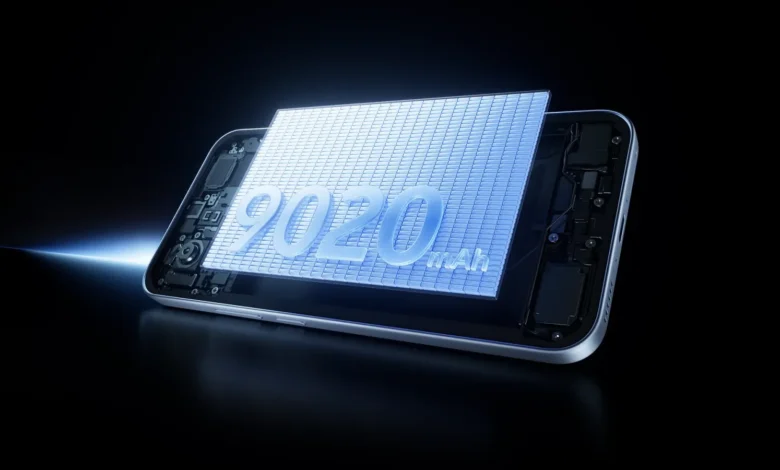
Capitalizing on this breakthrough, several prominent Chinese consumer electronics manufacturers—including Honor, Realme, iQOO, and Xiaomi—began releasing mainstream and performance-focused devices boasting battery capacities exceeding 7,000mAh, and in some specialized rugged or endurance models, pushing toward the 10,000mAh mark. Despite these impressive figures, these batteries often required thicker chassis designs or heavier builds. The ongoing experimentation with steel-cased stacked-cell architectures represents the next logical step in chronology, aimed at scaling capacities to the 9,000mAh to 10,000mAh range while maintaining slim, commercially viable device profiles.
Supporting Data and Engineering Mechanics
To understand the magnitude of this shift, one must examine the mechanics of stacked-cell technology. Traditional battery manufacturing uses a continuous strip of anode, cathode, and separator materials rolled tightly into a jelly-roll cylinder or flattened pouch. This method leaves microscopic gaps and inefficient corners within a rectangular smartphone housing.
Stacked-cell technology, conversely, cuts the battery materials into individual sheets and layers them precisely on top of one another. This maximizes the utilization of the available internal volume, mapping more closely to the contours of modern smartphone interiors. When enclosed in a rigid steel case, the stack is subjected to uniform pressure, which prevents internal shifting during drops or impacts and improves overall safety parameters.

When this structural layout is paired with advanced silicon-carbon chemistry, the theoretical energy density increases exponentially. Industry analysts project that if these tests transition successfully into commercial production lines, consumers could see mainstream flagship and mid-range devices offering multi-day battery life without the traditionally associated penalty of excessive weight or bulk.
Industry Responses and Market Implications
Although major brands have yet to officially confirm mass-production timelines for steel-cased, stacked-cell batteries, the leak underscores a broader trend of cross-pollination in mobile engineering and design philosophy. Historically, Apple has faced scrutiny for trailing behind Android counterparts in raw battery capacity numbers. However, Apple’s meticulous focus on volumetric efficiency, thermal management, and structural material science—such as utilizing rigid metal battery casings to reclaim internal space—has inadvertently provided a blueprint that competitors are eager to adapt and scale.
For the broader smartphone market, the implications of this technological convergence are profound. As brands race to integrate power-hungry generative AI applications directly into mobile silicon, hardware efficiency has become a primary competitive battleground. Processors are not only increasing in raw performance—with rumors swirling of upcoming flagship mobile platforms targeting clock speeds well beyond previous benchmarks—but they also demand more resilient power delivery systems.
Furthermore, the mainstream adoption of these advanced battery technologies could permanently alter consumer expectations regarding device longevity. If manufacturers can successfully merge silicon-carbon chemistry with steel-cased stacked cells, the industry standard for flagship battery capacity could comfortably stabilize above 8,000mAh or even 10,000mAh. As supply chains mature and production yields improve throughout the coming hardware cycles, the boundary between specialized rugged endurance phones and sleek everyday flagships will continue to blur, ushering in a new era of mobile endurance.