The Evolution of Indonesia’s Consumer Electronics Retail Landscape: From Electronic City to the Rise of Erablue

The Indonesian consumer electronics retail sector is undergoing a profound transformation, marked by the shifting dominance from legacy players to agile, tech-integrated newcomers. For over two decades, Electronic City (EC) stood as the undisputed benchmark for modern electronics retail in Indonesia. However, as of mid-2026, the market hierarchy has been reshuffled. The rapid ascent of Erablue, a joint venture between Erajaya Digital and Vietnam’s The Gioi Di Dong, has redefined the industry standard, reaching a milestone of 300 stores and effectively dethroning the long-standing incumbents. This shift reflects broader trends in consumer behavior, digital integration, and the necessity of customer-centric service models in an increasingly competitive economic climate.
A Quarter-Century of Electronic City: The Legacy Landmark
Electronic City’s narrative began in 2001, a pivotal year that saw the company establish its flagship store in the Sudirman Central Business District (SCBD), Jakarta. This standalone location served as more than just a retail outlet; it became an architectural landmark in what would eventually become Indonesia’s most prestigious financial hub. Under the management of industry veteran Tomi Winata, the SCBD development provided the perfect backdrop for EC to introduce the "modern retail" concept to the Indonesian public.
By moving away from traditional, fragmented electronics markets, EC offered a controlled, comfortable environment characterized by fixed, transparent pricing, professional product displays, and the security of official manufacturer warranties. This model resonated with the growing Indonesian middle class, facilitating the company’s expansion into major regional hubs, including Denpasar in 2004 and Medan in 2007. By August 2026, EC reached a total of 62 outlets nationwide, with the opening of its latest branch in Kiara Artha Park, Bandung. Despite its impressive longevity and brand equity, the company now faces a market where sheer store count is no longer the sole determinant of success.
Historical Context: The Rise and Fall of Predecessors
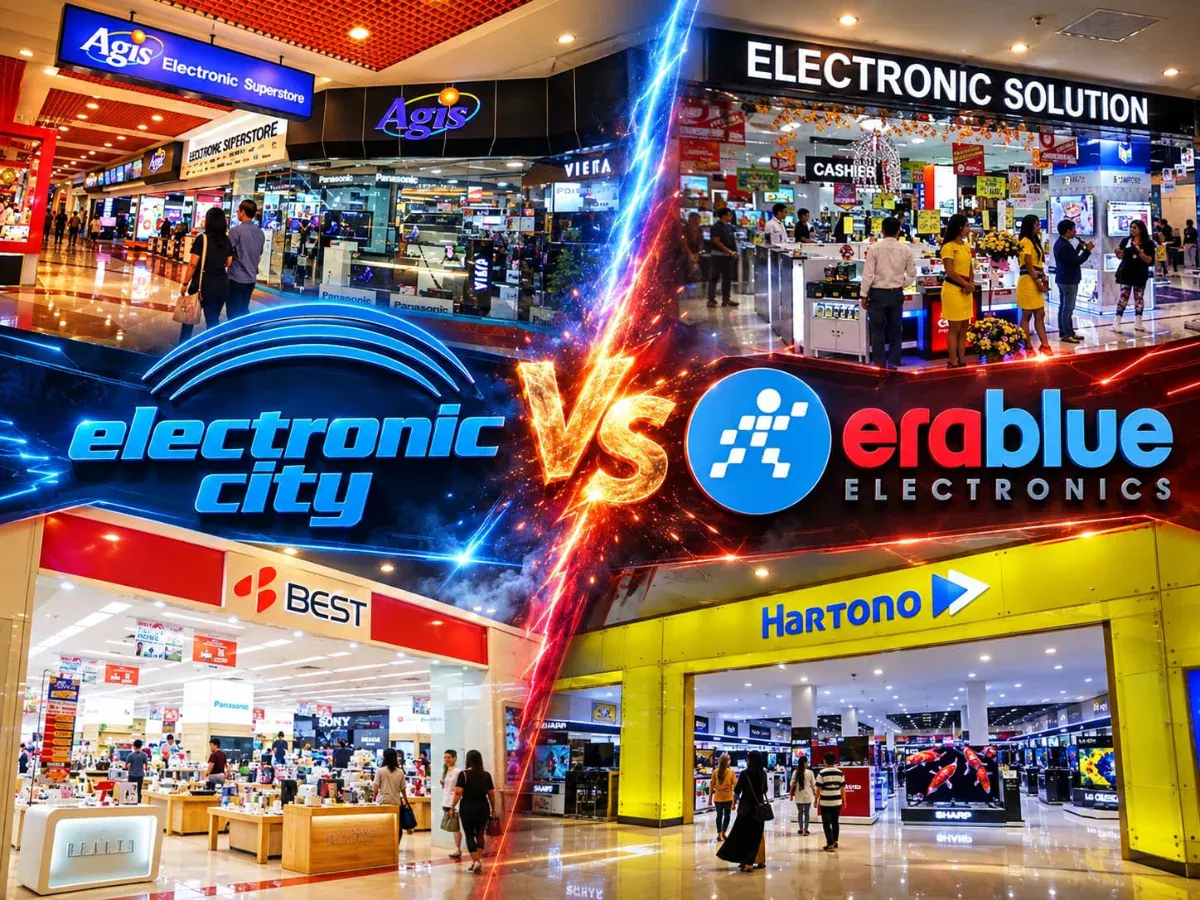
The retail landscape of the early 2000s was defined by intense competition. Before Electronic City’s dominance was solidified, Agis Superstore served as the industry pioneer, having entered the market in 1997. Between 2001 and 2005, a fierce "retail war" ensued between Agis and EC, which pushed both companies to refine their service standards and pricing strategies.
The market dynamics shifted again in 2006 with the entry of two international giants: Electronic Solution (ES), backed by Singapore’s TT International Ltd, and the Japanese retail powerhouse, Best Denki (BD). This period marked the expansion of the "retail battlefield" from Jakarta to secondary cities across the archipelago. The rivalry between EC and ES was particularly aggressive; by 2014, ES had grown to 54 stores while EC reached 64. However, the aggressive expansion strategy proved to be a double-edged sword for ES. Burdened by mounting debt and an inability to meet creditor obligations, PT TT International Indonesia was declared bankrupt in 2016, leading to the total cessation of ES operations.
Similarly, Best Denki, which focused on premium mall-based locations, struggled to maintain its footprint. The convergence of the COVID-19 pandemic in 2020, which forced the closure of many high-end shopping centers, and the rapid shift of consumer spending toward e-commerce platforms, severely weakened BD’s business model. In November 2022, PT Best Denki Indonesia was officially declared bankrupt by the Central Jakarta Commercial Court, effectively ending its decades-long tenure in the country.
The New Frontier: Why Erablue Now Rules the Market
As the market consolidated, a new challenger emerged with a business model tailored to the post-pandemic consumer. Erablue, the joint venture between Erajaya Digital and The Gioi Di Dong, officially launched its first store in Ciledug, Tangerang, in November 2022. In less than four years, the company has scaled to 300 stores, a pace of expansion that arguably eclipses any previous player in the history of Indonesian electronics retail.
The company’s growth is not merely a product of capital expenditure but a strategic alignment with market demand. According to data from Statista, the Indonesian consumer electronics market is projected to see significant growth between 2023 and 2028, with total revenue estimated to hit $23.66 billion by the end of that period, growing at a compound annual growth rate (CAGR) of 11.82%. Erablue has positioned itself to capture this growth by focusing on tier-two and tier-three cities, where the demand for modern, reliable electronics retail remains underserved.
Operational Excellence and Customer-Centric Innovation
Erablue’s success can be attributed to its "omni-channel" approach. By synchronizing its physical store network with a robust digital platform, the company ensures price transparency and stock availability. This integration allows consumers to conduct research online and finalize transactions in-store, or vice versa, bridging the gap between digital convenience and physical experience.
Furthermore, Erablue has introduced service standards that have raised the bar for the entire industry. These include:
- One-Day Fulfillment: Guaranteed free delivery and installation within 24 hours of purchase.
- 15-Day Replacement Policy: A one-to-one replacement guarantee for defective products within 15 days, providing customers with peace of mind.
- Streamlined Warranty Support: Close coordination with principals and manufacturers to expedite repair times, a traditional pain point for Indonesian consumers.
By leveraging the "customer-centric" culture of The Gioi Di Dong—which holds a dominant retail position in Vietnam—and combining it with Erajaya’s existing logistics and retail expertise, Erablue has effectively created a superior value proposition.
Market Implications and Future Outlook
The transition of market leadership from Electronic City to Erablue highlights a broader shift in the Indonesian retail ecosystem. Modern consumers are no longer satisfied with just having access to products; they demand seamless experiences, rapid fulfillment, and iron-clad post-purchase support. The failure of previous incumbents like Best Denki and Electronic Solution serves as a cautionary tale: rapid expansion without digital integration and efficient inventory management is unsustainable.
While other players like Yamada Best Electric (which entered the market in 2021) and legacy competitors like Hartono continue to operate, they currently lack the sheer reach and aggressive, data-driven expansion strategy that has characterized Erablue’s rise. The opening of Erablue’s 300th store in Cempaka Putih in August 2026 acts as a symbolic transition point.
For the Indonesian consumer, this competition is a net positive. It forces retailers to compete on service quality, price efficiency, and technological integration rather than mere physical presence. As the sector moves toward 2028, the battle for the Indonesian consumer’s wallet will likely be won by those who can best balance the physical retail experience with the speed and convenience of the digital era. The decline of the old guard and the ascent of the new reflect an industry that is maturing, becoming more resilient, and ultimately, more responsive to the needs of a rapidly digitizing nation.