Kementerian Sosial Berikan Bantuan Pemberdayaan Ekonomi bagi Eks Napiter di Poso untuk Perkuat Reintegrasi Sosial

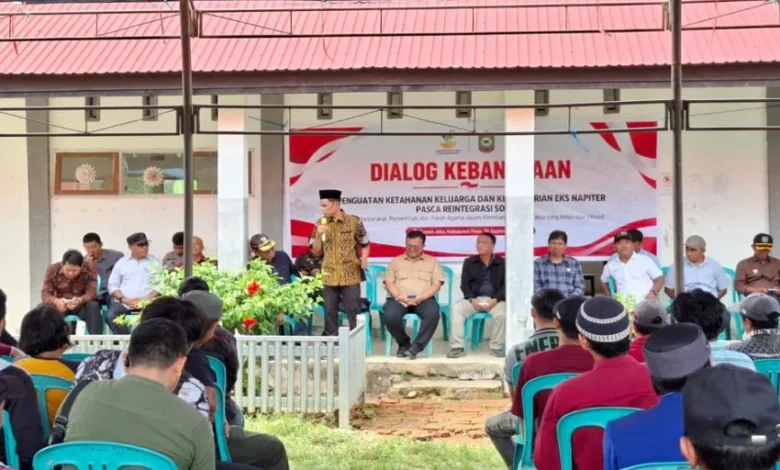
In a strategic move to facilitate the successful reintegration of former terrorism convicts into society, the Indonesian Ministry of Social Affairs has disbursed financial assistance to 21 individuals in Poso, Central Sulawesi. Each recipient was granted Rp5 million to support the development of sustainable economic activities tailored to their personal skills and interests. The initiative, announced during a National Dialogue session held in Tamanjeka, Poso, on Saturday, September 26, 2026, marks a pivotal effort by the government to stabilize the local economy and foster long-term social cohesion in a region historically impacted by radicalization.
The Context of Tamanjeka: A History of Transformation
The selection of Dusun Tamanjeka, located within the Masami Village of the Poso Pesisir district, as the venue for this event is highly symbolic. For years, Poso has grappled with the shadows of extremist activity, with Tamanjeka frequently appearing in national security reports as a flashpoint for conflict. By bringing together government officials, community leaders, and former inmates, the Ministry of Social Affairs sought to address the root causes of social fracture.
The event, titled "Strengthening Family Resilience and Independence of Former Terrorist Convicts Post-Social Reintegration," was facilitated by the Directorate of Social Rehabilitation for Socially Deviant and Victims of Human Trafficking (RSKPO). The core objective was not merely to provide financial aid, but to rebuild the bridge between those who have served their sentences and the communities that were once fractured by their actions.
Chronology of Government Intervention
The process of reintegration is multifaceted and long-term. Following their release from correctional facilities, former terrorism convicts often face significant obstacles, including social stigmatization, economic exclusion, and psychological trauma.
- Phase 1: Identification and Needs Assessment: The Ministry of Social Affairs, in coordination with local law enforcement and social workers, identified 21 individuals residing in the Poso area who demonstrated a genuine commitment to de-radicalization and social reintegration.
- Phase 2: Capacity Building: Before the disbursement of funds, the government engaged in consultative dialogues to understand the specific economic sectors the participants intended to enter, ranging from agriculture and small-scale trade to vocational services.
- Phase 3: The National Dialogue (September 26, 2026): The formal handover of the Rp5 million assistance packages served as the culminating point for this current cycle of support, emphasizing the government’s commitment to monitoring the participants’ progress.
- Phase 4: Ongoing Monitoring: The RSKPO has committed to providing periodic evaluations to ensure the financial aid is utilized for productive economic purposes, thereby reinforcing the family’s financial resilience.
Economic Empowerment as a Catalyst for Stability
Economic vulnerability is frequently cited by sociologists and security analysts as a driver of susceptibility to extremist ideologies. When individuals lack legitimate means of income, they become susceptible to the promises of radical groups that often prey on marginalized populations.
Director of RSKPO, Rachmat Koesnadi, highlighted that the provision of capital is a critical component of a broader strategy. "Local wisdom and social resilience are two vital pillars in viewing the life of a community amidst the rapid changes occurring today," Koesnadi stated during the dialogue. He emphasized that the assistance is designed to serve as a catalyst for independence, reducing reliance on external aid and fostering a sense of agency among the beneficiaries.
By enabling these 21 individuals to establish sustainable livelihoods, the government aims to create a ripple effect. A stable income contributes to family stability, which in turn reduces the likelihood of these individuals being re-recruited or marginalized by the local community.
Analyzing the Impact of Social Fragmentation
The broader implications of this program extend beyond the individual. The Ministry of Social Affairs acknowledges that rapid social and cultural changes have altered the way communities perceive one another. In many instances, these changes lead to friction, misunderstandings, and, if left unaddressed, violent conflict.
When social bonds are broken—often due to the influence of extremism—trust is the first casualty. The Ministry’s approach involves not only assisting the former convicts but also engaging the community at large to cultivate an environment conducive to reconciliation. This dual approach is essential for preventing the recurrence of violent incidents in regions like Poso.
Expert Perspectives on Reintegration
Security analysts studying the Poso region suggest that the government’s shift from a purely securitized approach to one focused on social rehabilitation is a positive evolution. While security operations are necessary to maintain law and order, they are insufficient to address the underlying psychological and social needs of individuals exiting the extremist ecosystem.
According to various studies on de-radicalization, the success of a former convict’s reintegration is highly correlated with the support they receive within the first 12 to 24 months of their release. The Ministry’s program is specifically designed to provide that safety net, ensuring that the transition from a prison environment to civilian life is supported by the state.
Challenges and Future Considerations
Despite the positive steps taken by the government, the road to full reintegration remains fraught with challenges. Stigma continues to be a formidable barrier. Even when a former inmate has completed their sentence and expresses remorse, local communities are often hesitant to accept them back into the fold.
To mitigate this, the government is focusing on:
- Community Engagement: Inviting local religious and community leaders to participate in dialogues to normalize the reintegration process.
- Skill Diversification: Ensuring the financial assistance is matched with market-relevant training to ensure the long-term success of the small businesses being launched.
- Psychosocial Support: Recognizing that economic aid is only one part of the equation; mental health and ongoing counseling are equally critical to address the trauma associated with their past affiliations.
Conclusion: A Path Toward Reconciliation
The disbursement of aid in Poso is a testament to the government’s evolving strategy in the fight against terrorism. By prioritizing the human element—economic security and social inclusion—the Ministry of Social Affairs is betting on the idea that prosperity and community belonging are the most effective deterrents against the resurgence of radicalism.
As these 21 individuals begin their journey toward self-sufficiency, their success will likely serve as a blueprint for future programs in other regions of Indonesia. The goal is to transform former centers of conflict into hubs of community resilience. While the financial assistance of Rp5 million is a modest starting point, its true value lies in the message it sends: that the state remains committed to the rehabilitation of its citizens and that there is a path forward for those willing to embrace a new, peaceful, and productive life.
The government’s ongoing efforts in Poso represent a complex but necessary endeavor to weave the social fabric back together. Through continued vigilance, community-led initiatives, and robust economic support, the region stands a better chance of leaving its turbulent past behind in favor of a more stable and prosperous future. As the nation watches, the success of these individuals will ultimately reflect the strength of Indonesia’s collective commitment to peace, forgiveness, and sustainable development.