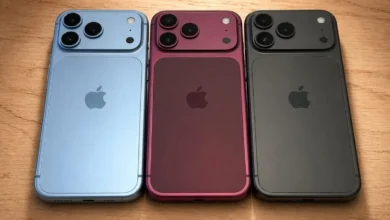
Samsung Faces New Competitive Reality as Apple Enters the Foldable Smartphone Market with iPhone Duo

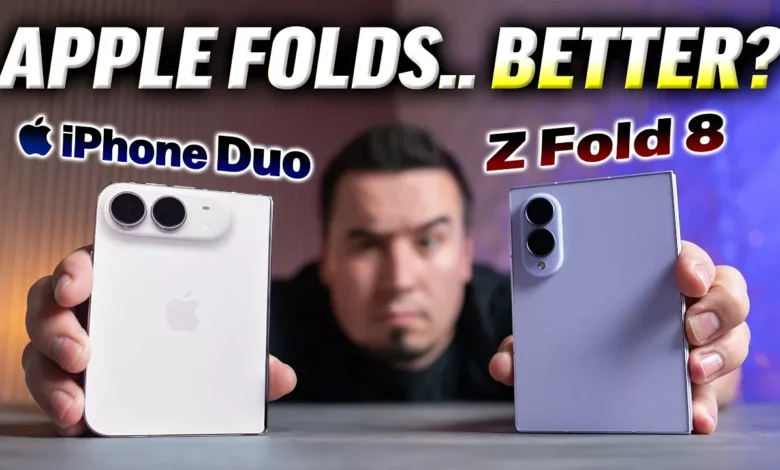
The global smartphone landscape has undergone a seismic shift following Apple’s official entry into the foldable device category. With the launch of the iPhone Duo, priced at US$1,999, the long-standing dominance of Samsung Electronics in the foldable segment is facing its most significant challenge to date. For years, the South Korean tech giant has enjoyed a near-monopoly on the foldable market, pioneering the form factor with the original Galaxy Fold in 2019. However, the introduction of Apple’s latest hardware under the leadership of CEO John Ternus has signaled a new era of competition that promises to reshape industry dynamics, consumer preferences, and market share distribution.
The Changing Market Dynamics
According to industry projections by Counterpoint Research, the arrival of the iPhone Duo is expected to capture approximately 25% of the foldable smartphone market share rapidly. This influx of a new, high-profile competitor is anticipated to compress Samsung’s market share, which previously hovered between 38% and 40%, down to approximately 32%. While Samsung retains its status as the leader in total global volume, the shift in the "ultra-premium" tier—where the iPhone Duo competes directly with the US$1,899 Galaxy Z Fold 8—is likely to impact revenue margins for both companies.
The strategic advantage for Apple lies in its massive, highly loyal user base. For years, millions of iPhone users who desired a foldable experience were forced to defect to the Android ecosystem. With the iPhone Duo, those users can now experience the cutting-edge form factor without leaving the familiar iOS environment. This development effectively plugs a critical gap in Apple’s product lineup, potentially curbing the "migration rate" of its power users to the Samsung Galaxy ecosystem.
A Chronology of the Foldable Revolution
The journey to this moment began in 2019, when Samsung introduced the first-generation Galaxy Fold. Despite early hardware setbacks, the company persevered, refining the hinge mechanism and display durability over subsequent iterations. By 2023 and 2024, Samsung had successfully transitioned from niche curiosity to mainstream commercial viability.
The timeline of the foldable race reached a boiling point in July 2026, when Samsung unveiled the Galaxy Z Fold 8 and Z Flip 8. Shortly thereafter, in September 2026, Apple made its long-awaited debut in the space. The entry of Apple represents a critical milestone, as it serves as a form of industry validation for the foldable category—a sentiment echoed by Samsung’s leadership. Rather than viewing the move as purely hostile, Samsung executives have publicly welcomed the competition, noting that Apple’s participation will likely accelerate consumer adoption of foldable technology globally.
Samsung’s Strategic Defense and Ecosystem Lock-in
Despite the pressure from Cupertino, Samsung remains in a strong defensive position. The company’s competitive edge is not limited to its foldable portfolio; rather, it is anchored in a massive, diversified global footprint. From the entry-level Galaxy A series to the flagship Galaxy S line, Samsung maintains a comprehensive hardware ecosystem that supports consistent shipment volumes regardless of fluctuations in the premium foldable segment.
Furthermore, Samsung has been aggressively courting iPhone defectors. Data from the company’s recent performance reports indicate that the number of iOS users switching to the Galaxy Z Fold 8 was 1.6 times higher than during the launch window of the Z Fold 7 and Flip 7. In the United States, 30% of Galaxy Z Flip 8 purchasers were former users of rival brands, with a significant majority identifying as first-time foldable buyers.
To lower the barrier for switching, Samsung has overhauled its Smart Switch technology. The new iteration allows iPhone users to transfer their data to a Galaxy device via a simple QR code scan, bypassing the need to install third-party applications on their current iOS device. This friction-free migration path is a key pillar of Samsung’s strategy to retain its market share against the iPhone Duo.
Consumer Insights and Product Positioning
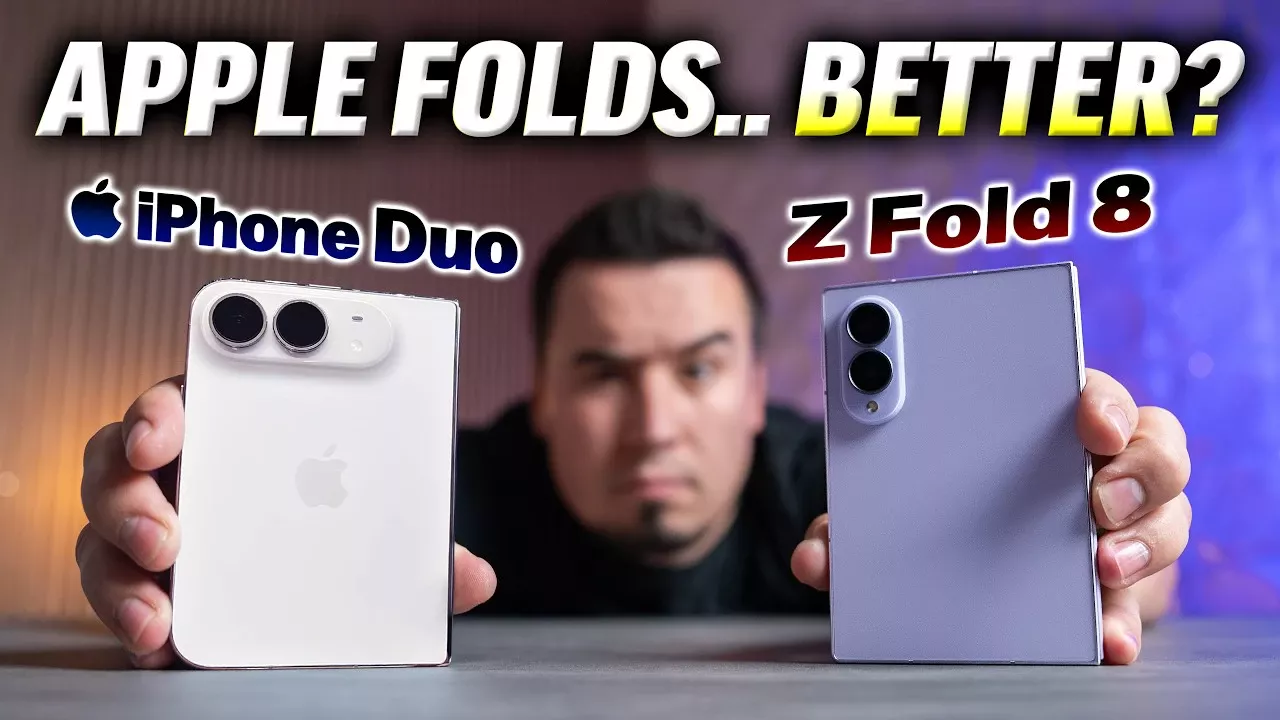
Samsung’s market research highlights distinct motivations among its user base. Galaxy Z Fold 8 buyers are primarily driven by the device’s thin, lightweight design and the enhanced multitasking capabilities of the internal display. Conversely, the "Fold 8 Ultra" demographic is composed of power users who utilize the expansive screen real estate as a primary workspace, effectively replacing the need for a standalone tablet.
While Apple focuses on the prestige and ecosystem integration of the iPhone Duo, Samsung continues to leverage its "Brand Intimacy." Metrics from the MBLM Brand Intimacy Study suggest that Samsung maintains a profound connection with its consumers, a factor that often proves resilient even when high-profile alternatives enter the market.
The Broader Competitive Landscape: The China Factor
The battle for the foldable market is not merely a duopoly between Apple and Samsung. Huawei remains a formidable force, particularly within the Chinese market. According to data released by Counterpoint Research in July 2026, Huawei continues to command significant influence, consistently challenging incumbents with advanced hardware and deep penetration in the domestic market.
The implications for the global supply chain are also profound. Rising costs for high-end components, such as advanced memory modules—often supplied by Samsung—have already led to speculation regarding the pricing structures of upcoming smartphones. As Apple adjusts its pricing to maintain margins on the iPhone Duo, the ripple effects are expected to be felt across the entire smartphone manufacturing sector.
Implications for the Future
The entry of the iPhone Duo into the foldable space is a defining moment for the smartphone industry. It signals that foldable technology has moved past the "experimental" phase and is now a core requirement for any premium hardware vendor.
For consumers, this increased competition is likely to drive further innovation in hinge technology, display longevity, and software optimization. For investors and industry analysts, the coming quarters will be critical in determining whether Apple can replicate its historical success in other categories, such as the tablet and wearable markets, or if Samsung’s head-start in foldable engineering will prove to be a structural moat that is too deep for even Apple to easily cross.
As the market matures, the differentiation between devices will likely move away from the basic ability to fold and toward the integration of generative AI, specialized software experiences, and seamless cross-device interoperability. Samsung, with its established "Galaxy AI" initiatives, is banking on the fact that its early adoption of AI-integrated hardware will keep it one step ahead of the competition.
Ultimately, the battle for the foldable crown is only beginning. While Apple’s entry undoubtedly shrinks the room for error for every other manufacturer, the sheer scale of Samsung’s global operations, coupled with its aggressive retention strategies and deep-rooted manufacturing expertise, ensures that the rivalry will remain intense for years to come. The consumer remains the primary beneficiary of this race, as the pace of innovation in the mobile sector reaches a velocity not seen since the early days of the smartphone revolution.
Related posts: