3 Fakta Menteri PU Beri Hadiah Umrah jika Bisa Buktikan Aisyah Zakkiyah Keponakannya : Okezone Economy

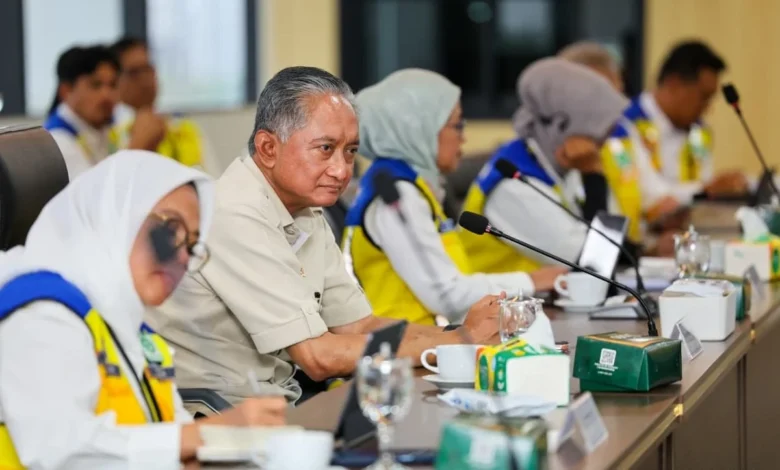
JAKARTA – Minister of Public Works (PU), Dody Hanggodo, has vehemently denied allegations circulating that Aisyah Zakkiyah, a Commissioner at state-owned construction giant PT Pembangunan Perumahan (PP) Tbk, is his niece. In an extraordinary public statement made on Saturday, July 18, 2026, Minister Hanggodo not only dismissed the claims but also issued a unique challenge, offering a family Umrah pilgrimage to anyone who can substantiate the familial link. This dramatic response underscores the intense scrutiny faced by public officials and state-owned enterprises (SOEs) in Indonesia regarding transparency and good corporate governance.
The accusations, which began to surface through various informal channels, suggest a potential conflict of interest and raise concerns about nepotism in the appointment of high-ranking officials within SOEs. Such allegations are particularly sensitive in Indonesia, where public trust in institutions has often been challenged by historical issues of corruption, collusion, and nepotism (KKN). Minister Hanggodo’s direct and assertive refutation, culminating in a significant personal wager, aims to decisively quash these rumors and reaffirm his commitment to ethical conduct.
The Accusation and Minister Hanggodo’s Resolute Denial
The core of the controversy revolves around Aisyah Zakkiyah’s position as a Commissioner at PT PP Tbk, one of Indonesia’s largest and most strategic state-owned construction companies. Commissioners in Indonesian SOEs play a crucial oversight role, ensuring the company adheres to good corporate governance principles, financial health, and strategic objectives set by the government as the ultimate shareholder. Their appointments are typically subject to rigorous selection processes, often involving a "fit and proper test" by relevant ministries and sometimes parliamentary oversight. The insinuation that Ms. Zakkiyah’s appointment might have been influenced by a familial connection to a powerful cabinet minister like Dody Hanggodo immediately triggered public and media interest.
Minister Dody Hanggodo, known for his pragmatic approach to infrastructure development, addressed the media directly at the Presidential Palace complex in Jakarta. His demeanor was reportedly firm, leaving no room for ambiguity regarding his stance. "I give a challenge, if you can prove it, I will give you Umrah for your whole family," Dody declared, as quoted by media outlets present. This statement was a direct response to questions from journalists regarding the persistent rumors. The challenge itself is highly unusual for a public official, signifying the minister’s extreme confidence in his denial and his determination to clear his name and that of Ms. Zakkiyah from any suspicion of impropriety.
The Significance of the Umrah Challenge
The offer of an Umrah pilgrimage for an entire family is not a trivial reward in Indonesia, a country with the world’s largest Muslim population. Umrah, a non-mandatory but highly revered pilgrimage to Mecca, Saudi Arabia, carries deep religious and cultural significance. For many Indonesian families, an Umrah trip is a lifelong aspiration, often requiring years of saving. By offering such a profound reward, Minister Hanggodo elevates his denial beyond a mere verbal statement, transforming it into a solemn pledge that leverages a deeply respected cultural and religious value. This move is likely intended to underscore the sincerity and truthfulness of his claim, aiming to resonate strongly with the Indonesian public.
Analysts suggest that Minister Hanggodo’s unconventional response could be a calculated move to draw a clear line under the allegations. In an era of rapid information dissemination, where rumors can quickly gain traction, a bold and memorable gesture might be more effective than a standard press release in capturing public attention and conveying a message of transparent defiance. It also places the onus of proof squarely on those making the allegations, challenging them to provide concrete evidence rather than relying on unsubstantiated whispers.
Background Context: Nepotism, SOEs, and Public Trust
The allegations against Minister Hanggodo and Ms. Zakkiyah emerge against a broader backdrop of persistent public concern over nepotism and cronyism within Indonesia’s extensive network of state-owned enterprises. SOEs play a colossal role in the Indonesian economy, spanning critical sectors such as infrastructure, banking, energy, mining, and telecommunications. Their strategic importance and significant financial resources make appointments to their boards of directors and commissioners particularly sensitive.
Historically, the appointment of individuals to key positions within SOEs has sometimes been perceived as influenced by political patronage or familial ties rather than purely merit-based selection. This perception has fueled public cynicism and is a recurring theme in calls for greater transparency and accountability in governance. The reformasi era, which began in 1998, explicitly aimed to eradicate KKN, making any hint of nepotism a highly charged issue for public officials.

The Ministry of Public Works, under Minister Dody Hanggodo, is at the forefront of the nation’s ambitious infrastructure development agenda. This includes massive projects in roads, bridges, dams, and housing, many of which involve PT PP Tbk as a key contractor. The perceived integrity of the ministry and its leadership is therefore paramount to maintaining public confidence in the execution of these vital national projects. Any cloud of suspicion over the minister’s personal integrity or his influence over SOE appointments could potentially undermine the credibility of these initiatives.
PT Pembangunan Perumahan (PP) Tbk: A Pillar of National Development
PT Pembangunan Perumahan (Persero) Tbk, or PT PP Tbk, is a venerable state-owned enterprise with a long history of contributing to Indonesia’s infrastructure landscape. Established in 1953, it has grown into one of the country’s leading construction and investment companies, involved in projects ranging from high-rise buildings and airports to industrial facilities and infrastructure development. As an SOE, its operations are not only driven by commercial objectives but also by a mandate to support national development goals.
The role of a Commissioner at PT PP Tbk is one of significant responsibility. Commissioners are typically appointed by the General Meeting of Shareholders (GMS), with the Ministry of SOEs acting on behalf of the government. They are expected to provide independent oversight of the company’s management (the Board of Directors), ensuring compliance with legal frameworks, ethical standards, and strategic plans. A Commissioner’s role demands integrity, expertise, and independence from operational management. Therefore, any suggestion that such an appointment might be based on familial connections rather than professional merit directly challenges the principles of good corporate governance that PT PP Tbk, like all SOEs, is legally and ethically bound to uphold.
Chronology of the Allegations and Official Response
The precise origin of the rumors regarding Aisyah Zakkiyah’s alleged familial tie to Minister Hanggodo remains somewhat unclear, but they appear to have gained traction through social media channels and informal political discourse in the weeks leading up to Minister Hanggodo’s statement.
- Early July 2026: Unsubstantiated rumors begin to circulate, primarily online, suggesting a familial relationship between Aisyah Zakkiyah and Minister Dody Hanggodo, linking it to her position at PT PP Tbk. These rumors likely played on existing public sensitivities regarding SOE appointments.
- Mid-July 2026: The allegations intensify, prompting inquiries from some media outlets and political observers. The issue starts to move from informal channels into the mainstream public discourse.
- July 17, 2026: Minister Dody Hanggodo is confronted by journalists at the Presidential Palace complex in Jakarta regarding the persistent rumors.
- July 18, 2026: Minister Hanggodo issues his definitive public denial, accompanied by the unprecedented Umrah challenge, aiming to decisively counter the allegations. The story is widely reported by national media, including Okezone, highlighting the minister’s direct quote and the unique nature of his response.
Inferred Statements and Reactions from Related Parties
While no immediate official statements from other parties were reported alongside Minister Hanggodo’s challenge, it is possible to infer potential reactions based on standard protocols and public expectations:
- PT PP Tbk: The company would likely issue a statement reaffirming its commitment to good corporate governance and transparency in all appointments. A spokesperson for PT PP Tbk, or even the Board of Directors, might emphasize that Aisyah Zakkiyah’s appointment as Commissioner followed all established procedures, including a thorough "fit and proper test" conducted by the relevant authorities (e.g., the Ministry of SOEs), and was based purely on her professional qualifications, experience, and integrity. Such a statement would aim to protect the company’s reputation and ensure public confidence in its leadership.
- Ministry of State-Owned Enterprises (SOEs): As the primary overseer of SOEs, the Ministry of SOEs would likely support the integrity of its appointment processes. A ministry official might reiterate that all Commissioner appointments are subject to stringent vetting to ensure independence and competence, and that any allegations of impropriety are taken seriously and can be investigated if concrete evidence emerges. They might also implicitly welcome Minister Hanggodo’s transparency.
- Anti-Corruption Bodies/Good Governance Advocates: Organizations dedicated to promoting transparency and fighting corruption in Indonesia would likely issue cautious but positive remarks. They might commend Minister Hanggodo for his directness and willingness to address the allegations publicly. However, they would also emphasize the broader need for systemic transparency in SOE appointments, advocating for clear, public criteria and oversight mechanisms to prevent any future perception of nepotism, regardless of the outcome of this specific challenge. They might also point out that while a public challenge is a unique gesture, robust institutional checks and balances remain the most reliable defense against KKN.
- Public Sentiment: Initial public reaction would likely be mixed. Many would appreciate Minister Hanggodo’s bold and direct approach, viewing it as a sign of confidence and honesty. Others might remain skeptical, emphasizing that such public challenges, while dramatic, do not replace independent investigations or stronger institutional safeguards. However, the unique nature of the Umrah reward would undoubtedly spark widespread discussion and debate across social media and traditional forums.
Broader Impact and Implications for Governance
Minister Dody Hanggodo’s unprecedented Umrah challenge carries several significant implications for governance and public trust in Indonesia:
- Setting a Precedent for Public Officials: This move could potentially set a new standard for how public officials in Indonesia choose to respond to serious allegations of impropriety. Rather than issuing standard denials, some might be inspired to adopt more direct, even dramatic, methods to clear their names and challenge accusers. This could be a double-edged sword: while it promotes transparency, it also places a high personal burden on officials.
- Reinforcing the Importance of Evidence: By demanding proof and offering a substantial reward, Minister Hanggodo emphasizes the need for accusers to back their claims with concrete evidence. This can help combat the spread of unsubstantiated rumors and misinformation, encouraging more responsible public discourse.
- Spotlight on SOE Governance: The incident inevitably refocuses public attention on the appointment processes within state-owned enterprises. It reinforces the ongoing pressure on the government and SOE management to ensure that these crucial positions are filled purely based on merit, competence, and integrity, free from political interference or familial ties. This could lead to calls for even greater transparency in appointment criteria and selection committees.
- Public Trust and Accountability: Ultimately, the resolution of this issue will impact public trust. If no credible evidence emerges to link Ms. Zakkiyah to Minister Hanggodo as his niece, the minister’s reputation for integrity would be strengthened. Conversely, any future revelations that contradict his strong denial would severely damage public confidence in his office and the government at large. This incident serves as a stark reminder of the constant need for accountability and ethical conduct from those in public service.
- Cultural Resonance: The use of an Umrah pilgrimage as a reward taps into deep cultural and religious values, making the minister’s statement particularly resonant within Indonesian society. It highlights how cultural elements can be integrated into political discourse to convey sincerity and conviction.
In conclusion, Minister Dody Hanggodo’s bold challenge to prove a familial link to PT PP Tbk Commissioner Aisyah Zakkiyah represents a pivotal moment in the ongoing national conversation about transparency, good governance, and accountability in Indonesia. While the immediate focus is on the veracity of the familial claim, the incident serves as a powerful reminder of the vigilance required to maintain public trust in state institutions and state-owned enterprises, and the lengths to which public officials may go to defend their integrity against allegations of nepotism. The nation now awaits whether anyone will step forward to claim the extraordinary Umrah prize, or if Minister Hanggodo’s decisive stance will indeed put an end to the swirling rumors.