The automotive landscape in Indonesia has undergone a transformative shift as of September 2026, with the market for electric vehicles (EVs) moving decisively toward affordability and mass-market adoption. Once considered a luxury segment reserved for high-end consumers, the entry-level EV market has expanded rapidly, driven by favorable government policies, increased localization of manufacturing, and competitive pricing strategies from global automotive giants. Consumers now have a diverse array of options at the 100 million Indonesian Rupiah (IDR) price point, marking a significant milestone in the country’s transition toward sustainable urban mobility.
This development follows years of regulatory groundwork, including the implementation of the Presidential Regulation (Perpres) No. 55 of 2019, which accelerated the battery-based electric vehicle program. By September 2026, the cumulative effect of tax incentives, luxury goods sales tax exemptions for EVs, and the proliferation of charging infrastructure has made small, urban-centric electric cars a viable proposition for the average Indonesian household.
The Evolution of the Entry-Level EV Market
The emergence of these affordable models is not accidental; it is the result of a strategic pivot by major manufacturers. Following the successful introduction of early compact EVs, companies have optimized supply chains to bring down the cost of lithium-ion batteries, which historically accounted for nearly 40% of an EV’s total production cost.
Industry analysts observe that by late 2026, the "100 million range" has become the new battleground for market share. These vehicles, often categorized as A-segment city cars, are designed specifically for dense urban environments like Jakarta, Surabaya, and Bandung. They offer a compact footprint for easy parking, regenerative braking systems for stop-and-go traffic, and significantly lower maintenance costs compared to internal combustion engine (ICE) counterparts, which require regular oil changes and complex drivetrain servicing.
Deep Dive: Leading Contenders in the 100 Million IDR Segment
As of September 2026, three models stand out for their market presence, reliability, and technological integration.
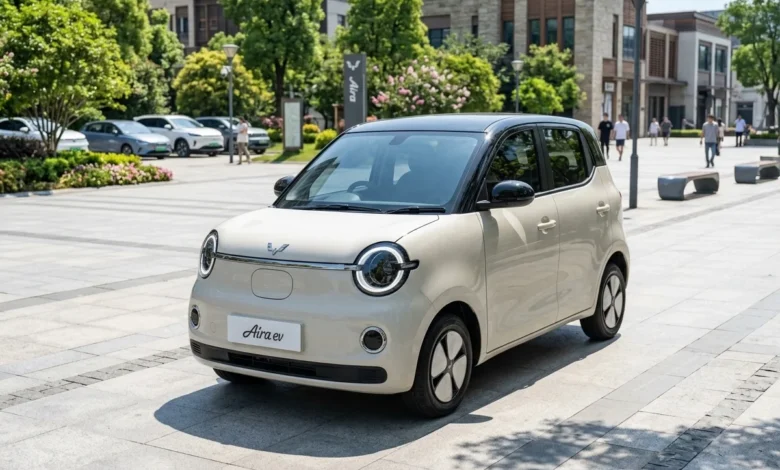
1. Wuling Aira EV: The Urban Standard-Bearer
The Wuling Aira EV has cemented its position as a household name in the Indonesian EV market. Priced at IDR 155 million for the Standard Range and IDR 175 million for the Long Range (OTR Jakarta), it is widely regarded as the benchmark for accessibility.
The Standard Range variant provides a 205 km range (CLTC), sufficient for most daily commutes, while the Long Range variant extends this to 301 km. The four-door configuration makes it highly practical for small families. Wuling’s strategy has focused heavily on after-sales support, providing comprehensive battery warranties that mitigate consumer anxiety regarding long-term ownership. By establishing a robust network of authorized service centers, the manufacturer has successfully addressed the primary barrier to entry for many first-time EV buyers: the fear of technical obsolescence.
2. VinFast VF 3: The Subscription-Based Innovation
Vietnamese manufacturer VinFast has introduced a unique pricing model with the VF 3 that disrupts the traditional "all-in" purchase structure. With an entry price of IDR 156 million without the battery, it offers a lower initial capital requirement. However, consumers must factor in the long-term cost of battery leasing or the option to purchase the battery separately for a total price of approximately IDR 230.13 million.
This model is designed for consumers who wish to manage their cash flow differently or those who prefer the flexibility of upgrading battery technology in the future. VinFast’s entry into the Indonesian market reflects the broader regional trend of decoupling battery ownership from vehicle ownership, a practice intended to lower the barrier to purchase and ensure that the vehicle remains economically viable throughout its lifecycle.
3. BYD Atto 1: The Technological Challenger
The BYD Atto 1, positioned at the upper end of the affordable spectrum with a starting price of IDR 199 million for the Standard variant, represents a higher tier of engineering. Utilizing BYD’s proprietary Blade Battery technology, which is globally recognized for its high energy density and superior safety profile, the Atto 1 offers a range of 300 km (NEDC).
The vehicle’s inclusion of fast-charging capabilities allows it to reach an 80% charge in less than an hour, making it suitable not only for city driving but also for short inter-city trips. As a major player in the global battery industry, BYD’s competitive pricing in Indonesia signals an aggressive intent to dominate the local market by leveraging vertical integration in their supply chain.
Chronology of Market Acceleration
The timeline of this growth began in earnest between 2022 and 2024, when manufacturers tested the waters with premium models. By 2025, the focus shifted to "localization," where companies were required to meet domestic component level (TKDN) requirements to qualify for government subsidies.
By Q3 2026, the infrastructure began to catch up with demand. The PLN (State Electricity Company) accelerated the deployment of Public Electric Vehicle Charging Stations (SPKLU) across major commercial hubs. This synergy between government policy, private investment, and consumer demand has created a self-sustaining cycle where higher adoption leads to better economies of scale, further driving down prices.
Industry Reactions and Market Implications
Automotive industry experts at the Association of Indonesia Automotive Industries (GAIKINDO) have noted that the shift toward 100 million IDR EVs is not just a trend but a necessary evolution. "The ability to produce a reliable, safe, and efficient vehicle at this price point demonstrates the maturity of the Indonesian automotive supply chain," noted a senior analyst.
The primary implication of this shift is the potential reduction in national fuel consumption. With the Indonesian government continuing to phase out fuel subsidies, the transition to EVs offers a long-term solution for citizens to insulate themselves from the volatility of global oil prices. Furthermore, the localized production of these vehicles is fostering a new ecosystem of engineers, technicians, and supply chain managers specialized in electric propulsion, positioning Indonesia as a potential regional hub for EV manufacturing.
Ownership Considerations: A Data-Driven Perspective
While the purchase price is the primary headline, prospective buyers must perform a Total Cost of Ownership (TCO) analysis. This includes:
- Charging Efficiency: Electricity costs per kilometer are approximately 70-80% cheaper than the cost of gasoline for equivalent travel distances in urban areas.
- Maintenance: EVs possess fewer moving parts than ICE vehicles. The absence of spark plugs, transmission fluids, and exhaust systems significantly reduces scheduled maintenance costs.
- Battery Longevity: Modern lithium iron phosphate (LFP) batteries, as used in the Atto 1 and Aira EV, are designed to last for over 2,000 charge cycles, often outlasting the intended use-case of the vehicle itself.
- Resale Value: While the market for used EVs is still developing, the standardization of battery technology is expected to stabilize future resale values.
The Broader Impact on Urban Mobility
The proliferation of these vehicles is also influencing urban planning. Municipal governments are beginning to offer incentives for EV owners, such as exemptions from the "Odd-Even" traffic policy in Jakarta and preferential parking spots in major shopping malls. These non-monetary benefits further increase the attractiveness of these 100 million IDR models.
However, challenges remain. The primary concern among industry observers is the disparity in charging infrastructure outside of major metropolitan areas. While the 100 million IDR cars are perfect for urban environments, their range limitations and the current distribution of charging stations make them less suitable for long-distance travel across the archipelago. Consequently, the government is currently prioritizing the expansion of the charging network along the Trans-Java toll road and other critical arterial routes to address "range anxiety."
Looking Ahead: The Future of Affordable Electrification
As we look toward the remainder of 2026 and into 2027, the market is expected to become even more competitive. Rumors suggest that several other manufacturers are preparing to launch even lower-cost models, potentially targeting the sub-100 million IDR segment by further simplifying features and utilizing more cost-effective battery chemistries.
For the Indonesian consumer, this is a golden age of choice. Whether the priority is the brand reliability of Wuling, the innovative business model of VinFast, or the technological prowess of BYD, the options available today provide a practical, sustainable, and economically sound path toward the future of transportation.
In conclusion, the availability of these electric vehicles signifies more than just a change in how people get from point A to point B. It represents a fundamental shift in the nation’s economic and environmental priorities. As the market continues to evolve, the focus will likely shift from merely "providing an alternative" to "setting a new standard" for what an affordable, high-quality vehicle should look like in the 21st century. Consumers are encouraged to visit showrooms, test drive these models, and consider the long-term benefits of making the switch to electric power. By participating in this transition, Indonesian motorists are not only optimizing their personal finances but also contributing to the national goal of carbon neutrality by 2060.