Joint Search and Rescue Divers Penetrate Submerged Cabins of Sunken KM Virgo Transport 8 in the Java Sea and Discover Numerous Trapped Victims

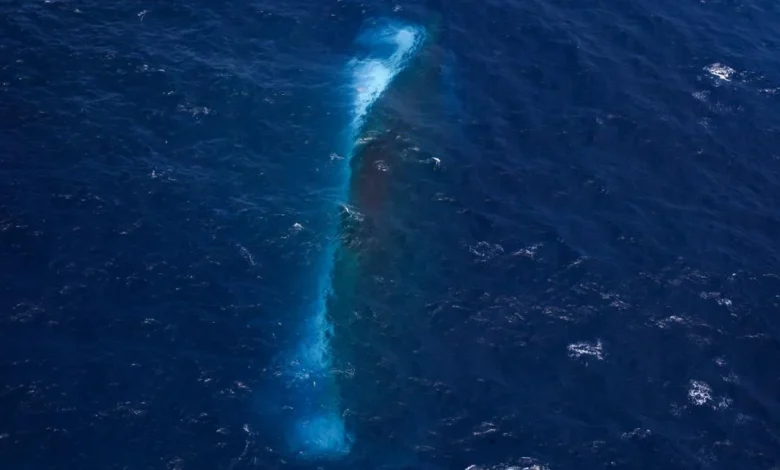
The harrowing search and rescue operation surrounding the tragic sinking of the motor vessel KM Virgo Transport 8 in the Java Sea has entered a critical and emotionally charged phase. On the tenth day of the ongoing disaster response, a specialized team of joint rescue divers successfully breached the submerged hull of the vessel, cutting through window glass to access passenger cabins where numerous victims were found trapped. The grim discovery has intensified efforts to recover the remaining missing individuals, though rescue teams face formidable challenges posed by shifting wreckage, underwater currents, and zero-visibility conditions inside the vessel.
Speaking at a press conference held late Tuesday evening at the Trisakti Port in Banjarmasin, South Kalimantan, the Head of the Banjarmasin Class A Search and Rescue Office, I Putu Sudayana, who serves as the SAR Mission Coordinator, provided detailed updates on the operation. He confirmed that the primary focus of the rescue teams has now shifted decisively toward the ship’s interior compartments, particularly the passenger cabins, following the visual confirmation of multiple bodies trapped inside the wreck.
According to Sudayana, the operation on Tuesday involved coordinated efforts to break through the reinforced glass of several cabin windows to create entry points for the divers. While the strategy successfully granted access to previously sealed compartments, it also revealed the complex physical barriers complicating the extraction process. Several of the identified victims remain wedged between structural elements or cabin furniture, rendering immediate retrieval impossible without specialized cutting tools and cautious maneuvering to avoid disturbing the unstable wreckage.
"Our focus is locked onto the interior compartments, where we can clearly see numerous passengers trapped inside the cabins," Sudayana stated during the briefing. "Earlier today, our personnel attempted to extract a few of the victims using retrieval lines, but it proved unsuccessful. It appears that some victims are pinned inside the vessel by debris or structural shifts. We will resume these efforts tomorrow, and we sincerely hope the evacuation proceeds smoothly."
Anatomy of a Complex Underwater Operation
The operation inside the murky depths of the Java Sea is far from a standard recovery mission. It requires meticulous coordination among elite maritime response units. The joint diving contingent currently deployed at the site comprises highly trained personnel from the Basarnas Special Group (BSG), the Indonesian Navy’s Underwater Demolition Force (Kopaska) and Fleet Command II (Pangkoarmada II), alongside commercial diving contractors such as PT Jasalindo and various auxiliary maritime security elements.
The complexity of the task was starkly underscored on Tuesday morning. Before encountering severe underwater visibility issues, the elite diving teams managed to locate and successfully evacuate three deceased victims from the interior of the vessel. However, as the day progressed, environmental conditions deteriorated rapidly. The churning of sediment caused by the divers’ movements, combined with incoming tidal shifts, turned the surrounding water opaque. Simultaneously, bottom currents intensified to a velocity that threatened the safety of the divers, forcing mission commanders to call a temporary halt to the underwater extraction efforts.
"To continue the evacuation, we are severely hampered by turbid water conditions driven by increasingly strong ocean currents," Sudayana explained. "Because of this, the diving team was ultimately unable to retrieve the victims who had already been visually located inside."
Despite the setbacks, operational planning for the eleventh day of the search was finalized on Tuesday night. Divers are scheduled to re-enter the water at first light, capitalizing on potential windows of calmer hydrological conditions. The search will prioritize both economy and executive class passenger accommodations, where passenger densities were highest at the time of the disaster.
Beyond the passenger quarters, mission coordinators are drafting contingency plans to inspect the vessel’s vehicle deck. Transport vessels operating along this crucial maritime corridor routinely carry mixed cargo, including commercial trucks, private automobiles, and motorcycles. Sudayana noted that the violent dynamics of the sinking have left vehicles piled haphazardly against one another due to the ship settling at an abnormal list. Inspecting the vehicle hold will require extreme caution, as shifting cargo poses a lethal hazard to divers operating in confined spaces.
"The vehicles inside the cargo hold are severely displaced and stacked on top of one another because the ship’s final resting position is completely compromised," Sudayana emphasized. "We will inspect and operate in that area only if conditions are deemed completely safe. This search and rescue operation must strictly prioritize the safety of the personnel on the ground and underwater."
Casualty Statistics and Operational Timeline
The disaster involving KM Virgo Transport 8 unfolded under severe weather conditions in the Java Sea, sending shockwaves through Indonesia’s maritime transportation sector. According to the official manifest, the vessel was carrying a total of 243 individuals when it encountered distress.
As of Tuesday at 22:00 WITA, official data released by Basarnas paints a sobering picture of the catastrophe. Out of the 243 people accounted for in the initial records, 126 individuals have been formally located. Of this total, 108 passengers and crew members survived the ordeal, enduring hours adrift before being rescued by passing commercial vessels and emergency response teams. Tragically, the confirmed death toll has risen to 18 as recovery operations progress inside and around the wreck.
Crucially, 117 individuals remain unaccounted for, keeping the extensive search and rescue apparatus on high alert. The vast discrepancy between the number of survivors, confirmed fatalities, and missing persons explains the unrelenting urgency driving the deep-water dive teams, who are racing against time and biological decomposition rates in a tropical marine environment.
The chronology of the disaster highlights the monumental scale of the emergency response. In the immediate aftermath of the distress signal, naval assets, coast guard vessels, and regional search and rescue teams were mobilized across a wide sector of the Java Sea. The initial days of the operation were dominated by surface sweeps, aerial surveillance, and the rescue of survivors clinging to life rafts and debris. As surface search parameters yielded fewer live rescues, the operation transitioned into a subsurface recovery phase, culminating in the precise location of the main wreckage resting on the seabed.
The past several days have seen engineering assets, sonar-equipped vessels, and saturation-adjacent diving teams converge on the site. The breakthrough achieved on Tuesday—physically penetrating the passenger cabins—represents the most significant tactical milestone since the localization of the hull, offering families of the missing a fragile glimmer of closure as recovery efforts transition from hope of survival to the solemn duty of repatriation.
Broader Implications for Maritime Safety and Regulation
The sinking of KM Virgo Transport 8 has reignited intense national discourse regarding maritime safety standards, regulatory oversight, and passenger manifest accuracy across the Indonesian archipelago. As an island nation heavily reliant on ferry networks and commercial shipping for inter-island connectivity, Indonesia has historically faced scrutiny over maritime incidents stemming from unpredictable weather patterns, vessel overloading, and adherence to safety protocols.
Experts in maritime logistics and disaster management point out that incidents involving vessels carrying both passengers and heavy vehicles present unique operational challenges during emergency evacuations. The rapid shifting of cargo on vehicle decks can destabilize a ship’s center of gravity within minutes, drastically reducing the time crew members and passengers have to deploy life-saving equipment or execute orderly abandon-ship procedures.
Furthermore, the complexities encountered by the joint diving teams—such as locked or jammed cabin doors, reinforced windows, and obstructed interior corridors—underscore the critical need for rigorous compliance with international and domestic naval architecture standards. Ensuring that emergency escape routes remain unobstructed and that structural modifications do not impede rapid egress is a lesson that regulatory bodies will likely revisit once the final investigative reports are published.
In the wake of the disaster, transportation authorities and law enforcement agencies are expected to conduct a comprehensive inquiry into the root causes of the sinking. Investigators will scrutinize meteorological data from the night of the incident, evaluate the vessel’s maintenance history, verify cargo weight distributions against authorized loading limits, and review the operational decisions made by the ship’s command personnel.
For the families of the 117 still missing, systemic debates offer little immediate comfort. Their focus remains fixed on the operational updates broadcast daily from the Trisakti Port. As Wednesday’s dawn breaks over the Java Sea, the nation watches anxiously, hoping that favorable weather will allow the joint diving teams to safely navigate the submerged labyrinth of KM Virgo Transport 8, bring their loved ones home, and finally close one of the most painful chapters in recent Indonesian maritime history.