Earl Spencer and the Shadow of the Crown: Unearthing the Fractured Legacy of the House of Windsor

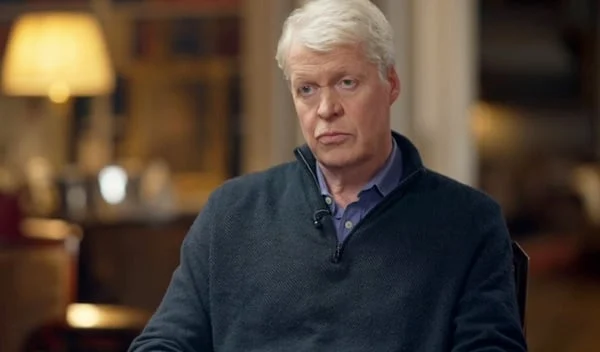
The relationship between the British Royal Family and the family of the late Diana, Princess of Wales, has long been a subject of intense public scrutiny, historical analysis, and emotional debate. Nearly three decades after the tragic death of the Princess in 1997, the narrative of that period is being revisited with startling candor by her younger brother, Charles Spencer, the 9th Earl Spencer. Through his latest literary efforts and public disclosures, the Earl has leveled serious allegations against the institution of the monarchy, specifically regarding the treatment of his sister and the subsequent handling of her two sons, Prince William and Prince Harry. These revelations, which have sparked a firestorm of media commentary and institutional pushback, offer a rare, unfiltered look into the internal dynamics of the British aristocracy and the emotional toll of royal life.
The Genesis of a Modern Royal Grievance
At the center of this controversy lies a series of claims regarding the immediate aftermath of Diana’s death. During the somber days leading up to the funeral, the world witnessed the sight of young Princes William and Harry walking behind their mother’s coffin through the streets of London—an image that remains etched in the collective memory of a nation. Earl Spencer has now contended that this arrangement was far from a unified decision. He asserts that he vehemently opposed the participation of the young princes in the funeral procession, arguing that the psychological burden of such a spectacle was too great for children who had just lost their mother.
According to excerpts from his recent writings, these objections were met with hostility. Spencer alleges that then-Prince Charles, now King Charles III, reacted with "seething anger" during a telephone conversation. Furthermore, the Earl recounts a dismissive comment attributed to the future monarch, in which the sentiment was expressed that the family would "soon forget her." While these claims have been vehemently denied by sources close to the Palace, they have reopened long-standing wounds regarding the emotional culture of the Royal Family and the perceived lack of empathy afforded to Diana during her lifetime and beyond.
A Chronology of Tension: From Althorp to Westminster
To understand the weight of Earl Spencer’s allegations, one must look back at the historical arc of the Spencer-Windsor relationship. The Spencer family, possessing a lineage that arguably rivals the antiquity of the Royals, has been entwined with the British establishment for centuries. Charles Spencer, born on May 20, 1964, grew up alongside Diana at the Althorp estate, a sprawling property in West Northamptonshire that has served as the family seat since 1508.
The timeline of the current friction is rooted in the 1990s, a decade defined by the "War of the Waleses." Key milestones include:
- 1981: The marriage of Lady Diana Spencer to the Prince of Wales, a union that initially promised a modern era for the monarchy but rapidly deteriorated under intense public and private pressure.
- August 1997: The death of Princess Diana in a car crash in Paris, which prompted a global outpouring of grief and a subsequent crisis of confidence in the Royal Family.
- September 1997: The funeral at Westminster Abbey, where Earl Spencer delivered his famous eulogy, famously describing his sister as the "most hunted person of the modern age" and pledging to protect her sons from the pressures that had driven her to despair.
- 2024: The publication of new material from the Earl, in which he reflects on the "gaslighting" he claims to have experienced from the institution, signaling a definitive end to any perceived rapprochement between himself and the King.
The Concept of Gaslighting and the Institutional Response
The term "gaslighting" has become central to the current discourse. By using this descriptor to characterize the response from Buckingham Palace—which suggested that the Earl’s memory was clouded by grief—Spencer has shifted the narrative from a private family dispute to a broader discussion about power dynamics. In the eyes of the Earl, the Palace’s attempt to dismiss his recollections as the result of a "brother’s pain" is a calculated effort to invalidate his testimony and preserve the dignity of the monarchy.
The Palace, for its part, has historically operated under a policy of "never complain, never explain." However, the severity of the charges—essentially accusing the head of state of manipulating the truth—has forced a reaction. Official responses from royal aides have consistently emphasized that the events of 1997 were handled with the utmost sensitivity and that the recollections of the Earl do not align with the records or memories of those present at the time. This clash of narratives highlights a fundamental divergence: the personal, subjective experience of the bereaved brother versus the institutional, objective, and often sanitized version of history maintained by the Crown.
Historical Context and Background: The Earl’s Perspective
Earl Spencer’s background lends a particular weight to his critiques. Educated at Eton College and Magdalen College, Oxford, his life has been characterized by high-level engagement with the press and the public. His tenure as a correspondent for NBC News from 1986 to 1996 gave him a professional understanding of media scrutiny, an experience that likely informs his current decision to speak out. Having authored multiple books on history and his own lineage, he is a man who deals in archives and records, making his current effort to correct the "official" record of his sister’s life a deeply deliberate act.
His family’s history—deeply tied to the British aristocracy—affords him a unique vantage point. With Queen Elizabeth II as his godmother and a pedigree that stretches back centuries, Spencer is not an outsider looking in; he is an insider who has chosen to turn against the grain. His defense of his sister’s memory is, in his view, a fulfillment of the vow he made at her funeral: to ensure her legacy is not subsumed by the very institution that she felt betrayed by.
Analysis of Implications: The Legacy of a House Divided
The implications of this public rift are multifaceted. Firstly, it challenges the stability of the monarchy’s image during a sensitive transition period under King Charles III. As the King seeks to modernize the institution, the resurfacing of the Diana era—and the accusations of systemic coldness—serves as a reminder that the past remains an active, unhealed element of the present.
Secondly, the tension affects the current standing of the younger generation of royals. Prince Harry, in his own memoir Spare, has mirrored many of the sentiments expressed by his uncle, criticizing the lack of institutional support and the emotional distance of the family. The alignment between the Earl and the Duke of Sussex suggests that the grievances regarding the treatment of Diana are not merely the musings of a disgruntled brother, but part of a persistent generational trauma that continues to color the relationship between the Sussexes and the rest of the Royal Family.
Finally, there is the question of historical truth. In an era where the public is increasingly skeptical of institutional narratives, Earl Spencer’s revelations invite a re-examination of the 1990s. The challenge for historians will be to reconcile these personal testimonies with the official records of the period. Whether or not these allegations are accepted as definitive, they have successfully ensured that the conversation surrounding Princess Diana is no longer controlled solely by those who wish to protect the reputation of the Crown.
Conclusion: A Legacy Defined by Struggle
The conflict between Earl Spencer and the Royal Family is more than just a clash of personalities; it is a fundamental struggle over who gets to define the narrative of the late 20th-century monarchy. By choosing to speak out, the Earl has positioned himself as the guardian of his sister’s memory, even at the cost of his standing within the upper echelons of British society. As the debate continues, it is clear that the shadow of Princess Diana remains a powerful force, capable of unsettling the foundations of one of the world’s most enduring institutions. For the Earl, the pursuit of his version of the truth is an obligation to the past, regardless of the consequences for the future. The "belati ke jantung" or "dagger to the heart" metaphor used by the British press aptly captures the intensity of this ongoing dispute—a reminder that in the world of royalty, history is never truly in the past.