The Toyota Kijang Innova Reborn Q Diesel 2018 continues to command a significant presence in the pre-owned vehicle market, remaining a preferred choice for families seeking a blend of durability, performance, and premium comfort. As the flagship variant of the "Reborn" generation during its release year, the Type Q trim serves as the benchmark for executive-class multi-purpose vehicles (MPVs) in the Indonesian automotive landscape. Despite the introduction of newer models, the 2018 iteration remains a highly relevant asset for consumers prioritizing a proven diesel powertrain and long-term reliability.
Evolution and Market Positioning
The launch of the "Reborn" series in late 2015 marked a fundamental shift for Toyota’s legendary Kijang lineage. Transitioning from the utilitarian image of its predecessors, the Reborn series introduced a more sophisticated design language and significantly upgraded interior materials. By 2018, the Type Q variant represented the pinnacle of this transformation.
Industry analysts observe that the enduring popularity of the 2018 Innova Q Diesel stems from its unique position in the market. It effectively bridges the gap between mass-market family haulers and luxury-oriented people movers. Unlike the V or G variants, which were often utilized for fleet services or entry-level family use, the Type Q was explicitly marketed toward consumers who demanded executive features, such as captain seats and enhanced safety protocols, without sacrificing the ruggedness of a traditional ladder-frame chassis.
Mechanical Prowess: The 2GD-FTV Engine
Central to the appeal of the 2018 Innova Q is the 2.4-liter 2GD-FTV diesel engine. This unit is widely regarded by automotive engineers for its balance of power and efficiency. With a displacement of 2,393 cc, the 4-cylinder turbocharged common-rail engine delivers 149 horsepower and an impressive 360 Nm of torque.
The technical implications of this engine are significant. The high torque output at low RPMs allows the vehicle to maintain momentum even when fully loaded with passengers and cargo—a frequent requirement for Indonesian families during holiday travel. Furthermore, the 2018 model features a 6-speed automatic transmission with Sport Sequential Switchmatic, allowing drivers to manually select gears for better control on steep inclines or during high-speed overtaking maneuvers.
The durability of the 2GD-FTV platform is well-documented in the secondary market. Fleet operators and private owners alike prioritize this engine for its long-term maintenance cycles. Unlike newer, more complex turbocharged engines that may require specialized fuel treatments, the 2GD-FTV is noted for its relative tolerance of varying fuel qualities, provided that routine maintenance schedules—specifically oil changes and fuel filter replacements—are strictly adhered to.
Exterior and Aesthetic Refinement
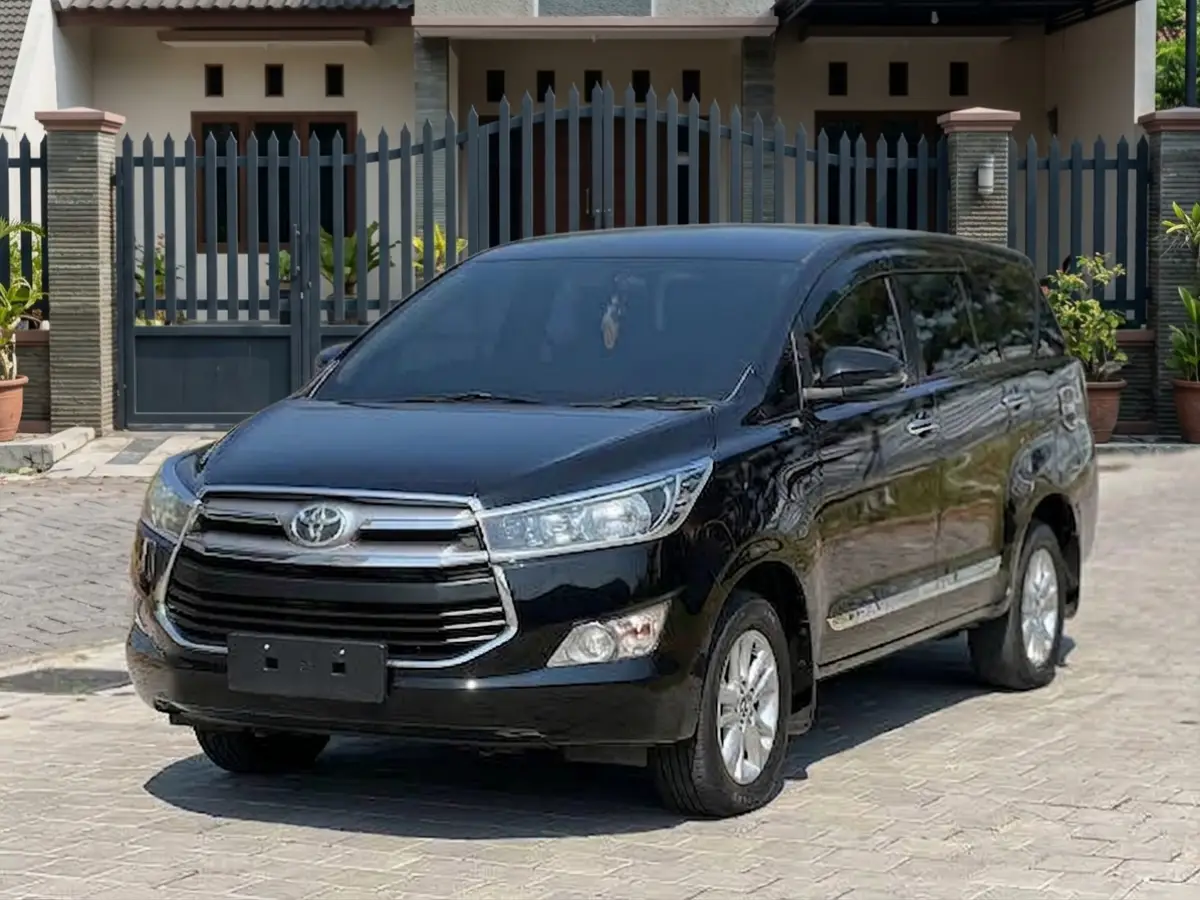
From a design perspective, the 2018 Kijang Innova Q stands apart from its siblings through distinct visual cues. The exterior features a bold, aggressive grille characterized by a combination of high-gloss black finishes and chrome trim, signaling its status as the premium offering. The lighting system utilizes LED projector headlamps, which provided superior illumination compared to the halogen setups common in its era.
The vehicle sits on 17-inch alloy wheels, which not only contribute to its aesthetic stance but also improve handling stability. The rear profile is distinguished by vertical combination tail lamps and a roof spoiler that integrates a high-mount stop lamp, lending a sporty profile that successfully avoids the "boxy" appearance of traditional MPVs.
Interior Comfort and Technological Integration
Inside the cabin, the Type Q offers an environment that prioritizes occupant comfort. The inclusion of leather upholstery and wood-panel accents elevates the interior aesthetic significantly. The second row, featuring individual captain seats, is a defining factor for potential buyers. This configuration allows for easier access to the third row and provides a more private, comfortable experience for passengers, making it ideal for long-distance travel.
Technologically, the 2018 model is equipped with an 8-inch touchscreen head unit that supports Bluetooth connectivity, navigation, and Miracast. While it may lack the advanced smartphone integration features like Apple CarPlay or Android Auto found in the latest models, the system remains functional and integrated with the vehicle’s steering wheel controls. The climate control system uses a digital touch-panel interface, maintaining a modern feel within the dashboard architecture. The 4.2-inch TFT color Multi-Information Display (MID) provides the driver with comprehensive data, including fuel efficiency, vehicle status, and maintenance alerts.
Safety and Structural Integrity
Safety is a primary area where the 2018 Innova Q outshines its contemporaries. Toyota equipped the Type Q with a robust suite of active and passive safety features. These include the Anti-lock Braking System (ABS) with Electronic Brakeforce Distribution (EBD), Vehicle Stability Control (VSC), and Hill Start Assist (HSA).
Of particular note is the 7-airbag system—encompassing front, side, curtain, and driver-knee airbags—which provided a level of protection that was rare for MPVs in this segment during that period. The inclusion of the Emergency Brake Signal (EBS) further enhances safety by warning trailing drivers during sudden deceleration. These features collectively contribute to the vehicle’s high residual value, as safety-conscious buyers are willing to pay a premium for models equipped with these advanced systems.
Market Analysis: Factors Affecting Resale Value
The resale value of the 2018 Innova Q Diesel is influenced by several market dynamics. First, the supply-demand imbalance plays a crucial role. Because the Type Q was the most expensive variant when new, fewer units were produced compared to the G or V variants. This relative scarcity, combined with high demand from families who value the captain seats and premium features, keeps prices firm.
Second, the "diesel factor" is a significant driver. In the used car market, diesel-powered Innovas consistently outperform their gasoline counterparts in terms of price retention. The reputation of the 2GD-FTV engine for longevity ensures that even units with over 100,000 kilometers on the odometer remain highly sought after.
Third, maintenance history is a major variable. In the professional judgment of automotive appraisers, units that feature a complete service record at authorized Toyota workshops command a higher market price. Buyers are encouraged to prioritize vehicles that have undergone regular, documented maintenance, as this minimizes the risk of potential turbocharger or injector issues, which are the most common (though infrequent) mechanical concerns for this model.
Economic and Practical Implications
For the modern consumer, the choice between buying a new entry-level vehicle or a pre-owned 2018 Innova Q involves a clear trade-off. Choosing the used Innova Q provides a vehicle with superior cabin space, higher build quality, and more powerful performance than most new budget-friendly SUVs or MPVs in the same price bracket.
However, prospective buyers must account for the tax and insurance implications of a vehicle with a 2.4-liter engine. While the fuel efficiency is competitive for its class, the road tax (PKB) for a 2.4-liter engine is higher than that of the 1.5-liter engines commonly found in today’s popular compact MPVs. Despite this, many owners argue that the "total cost of ownership" is offset by the vehicle’s slow depreciation and reliability.
Conclusion: A Legacy of Reliability
The Toyota Kijang Innova Reborn Q Diesel 2018 remains a cornerstone of the Indonesian used car market. It is not merely a vehicle; it is a long-term investment for families who prioritize safety, comfort, and the ability to traverse diverse terrains with ease. As the automotive industry shifts toward electrification and smaller displacement engines, the 2.4-liter turbo-diesel Innova is increasingly viewed as the "last of the greats" in terms of traditional, robust engineering.
For those currently in the market, conducting a thorough pre-purchase inspection—covering the transmission, turbocharger health, and electronic systems—is essential. When well-maintained, the 2018 Innova Q Diesel serves as a testament to Toyota’s commitment to building vehicles that not only meet the needs of the present but also endure for the future. As market trends evolve, this particular model is likely to retain its status as a benchmark, proving that true value is found not just in the latest technology, but in the proven capability to deliver comfort and reliability over years of service.