Banjir Bandang dan Longsor Menerjang Arosuka Solok: Ratusan Warga Mengungsi dan Fasilitas Publik Lumpuh Total

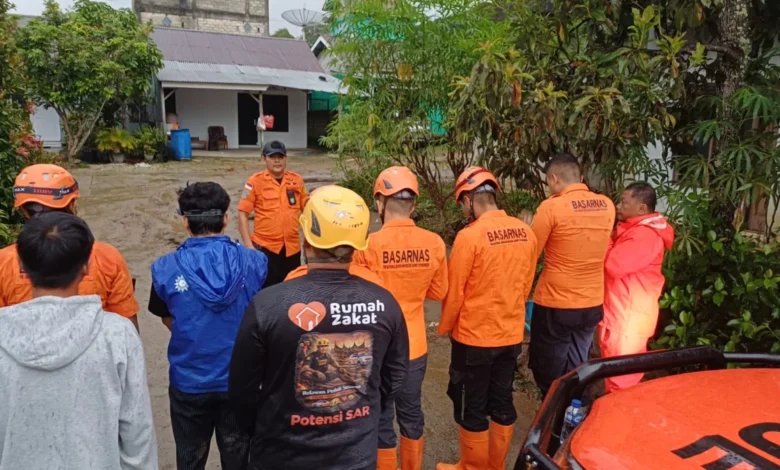
A devastating flash flood, locally known as a "galodo," struck the Arosuka region in Solok Regency, West Sumatra, on Monday, September 21, 2026, at approximately 19:45 WIB. Triggered by intense and prolonged rainfall, the deluge cascaded down from the hills surrounding the upper reaches of the Batang Laso River, carrying a destructive slurry of mud, boulders, and uprooted vegetation into the heart of the Solok Regency Government administrative complex. The event has left a trail of widespread destruction, forcing emergency evacuations and paralyzing essential infrastructure in the region.
The Chronology of the Disaster
The tragedy unfolded in the early evening hours as meteorological conditions in West Sumatra deteriorated rapidly. According to initial reports, the heavy rainfall caused instability in the soil structure of the hills above Arosuka, leading to landslides that funneled into the Batang Laso river system. The river, unable to contain the massive volume of water and debris, breached its banks, sending a violent torrent of mud and boulders directly into the Solok Regency office complex and adjacent residential neighborhoods.
By 20:00 WIB, the impact was immediate. The main Solok–Padang highway, a vital artery for regional logistics and transit, was inundated with thick layers of sediment and debris, effectively cutting off land access to the area. Throughout the night, emergency responders—including local BPBD (Disaster Management Agency) teams, the police, and the military—were mobilized to assess the damage and begin search and rescue operations. By the morning of September 22, the full scale of the catastrophe became apparent: critical administrative buildings were buried in up to 60 centimeters of mud, and residential zones had been severely compromised.
Human Toll and Displacement
The disaster has significantly impacted the local population. Official records indicate that at least four individuals sustained injuries during the event. One victim, suffering from severe trauma due to the intensity of the flood, was rushed to the Semen Padang Hospital (SPH) in Padang for specialized medical treatment. The physical impact is matched by the psychological distress of the community, as hundreds have been forced to abandon their homes.
Current data from the Solok Regency BPBD confirms that approximately 50 displaced residents have sought refuge in three emergency shelters: the Solok Police Headquarters (Mapolres), the official residence of the Deputy Regent of Solok, and the local office of the Golkar Party. While these locations provide immediate sanctuary, the long-term displacement of nearly 100 families—whose homes have been either destroyed or rendered uninhabitable by the sediment—remains a critical concern for local authorities.
Destruction of Critical Infrastructure
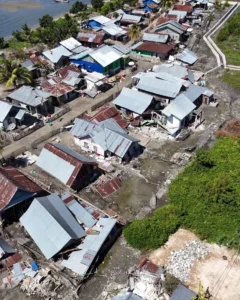
The economic and administrative implications of this disaster are profound. The Arosuka government complex, which serves as the administrative nerve center for the regency, suffered extensive damage. Specifically, the Public Works and Public Housing (PUPR) office and the Department of Village Community Empowerment (DPMN) have been classified as severely damaged, with their interiors filled with sludge and debris.
Beyond administrative buildings, the infrastructure supporting daily life has been heavily compromised. A crucial bridge serving as a primary connector for the Arosuka main road remains blocked by rubble, preventing traffic flow and complicating relief efforts. The Kayu Aro Mosque, a focal point for the local community, was also buried under landslide material. The loss of such facilities disrupts not only the governance of the region but also the social and religious fabric of the community.
Response and Recovery Operations
In the immediate aftermath, a multi-agency task force was established to manage the crisis. The operation is being spearheaded by the BPBD of West Sumatra in coordination with the Solok Regency and City administrations, the Indonesian National Armed Forces (TNI), the National Police, and humanitarian groups such as the Rumah Zakat volunteers.

As of September 22, 2026, the primary focus has shifted from initial rescue to site clearance. Three heavy-duty excavators were deployed to the most affected areas to clear the main thoroughfares and remove mud from critical government offices. However, the sheer volume of debris—a mixture of heavy boulders, trees, and dense clay—has slowed the progress of these machines.
"The priority remains the safety of the residents and the restoration of road access," stated a spokesperson for the local emergency team. "We are still in the process of mapping the exact extent of the damage to agricultural land, personal vehicles, and housing. Our teams are working around the clock, but the environmental conditions remain hazardous."
Meteorological Context and Disaster Vulnerability
The incident in Arosuka highlights the increasing vulnerability of West Sumatra to extreme hydrometeorological events. Topographically, the region is dominated by steep mountainous terrain, which, when subjected to extreme precipitation, is highly prone to landslides and subsequent flash flooding.
Meteorologists note that the period surrounding September is often characterized by transitionary weather patterns in Indonesia, which can result in localized high-intensity rainfall. While the specific trigger was the intense rain on the night of September 21, environmental analysts point to the cumulative effect of soil saturation from previous weeks of rain as a contributing factor to the hillside collapse. The incident underscores the urgent need for enhanced early warning systems and more robust land-use planning in hilly regions to mitigate the risk of future "galodo" events.
Economic and Social Implications
The economic repercussions for Solok Regency are expected to be severe. The damage to the PUPR office alone will likely delay regional infrastructure projects and maintenance schedules. Furthermore, the destruction of farmland and the disruption of the main Solok–Padang transport route will have a ripple effect on the local economy, particularly for farmers and traders who rely on the daily movement of goods.
Socially, the community is currently in a state of mourning and recovery. Despite the devastation, there has been a notable surge in local solidarity. Volunteers from various organizations have established kitchens and distribution points for basic necessities, and the local government is working to ensure that the immediate needs of the displaced, including medical care, food, and sanitation, are met.
Looking Ahead: The Road to Recovery
As the search for missing persons continues, the local government faces the daunting task of rehabilitation. The clearing of the 60-centimeter-thick layer of mud from the government complex and residential areas is a process that could take weeks, if not months. The reconstruction of the damaged bridge and the restoration of public facilities will require significant budgetary allocations and federal support.
The tragedy in Arosuka serves as a stark reminder of the unpredictable nature of natural disasters in the Indonesian archipelago. As the region moves into the recovery phase, the focus will inevitably shift toward how to better protect the population from similar events in the future. For now, however, the community of Arosuka remains united in its effort to clear the debris, support those who have lost everything, and rebuild in the face of nature’s immense power.
Officials have urged the public to remain vigilant, as the potential for secondary landslides in the upstream areas remains a possibility until the soil stabilizes. Residents in the vicinity of the Batang Laso River have been advised to follow all instructions from local authorities and to stay updated on weather alerts issued by the Meteorology, Climatology, and Geophysics Agency (BMKG). As the sun rises over the mud-caked landscape of Arosuka, the resilience of its people remains the most powerful tool in navigating this period of profound crisis.
Related posts: