United States Conducts Massive Precision Strikes on Iranian Military Infrastructure to Degrade Hostile Capabilities in the Strait of Hormuz

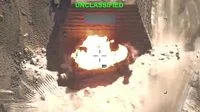
The United States military has executed a significant wave of precision airstrikes against high-value Iranian military targets, marking a critical escalation in a campaign aimed at neutralizing threats to international shipping and regional stability. According to official reports from the U.S. Central Command (CENTCOM), the latest operation lasted approximately five hours and focused on a broad array of strategic assets, including command-and-control centers, missile and drone launch sites, and sophisticated air defense networks. This most recent engagement represents the tenth consecutive night of American military action against Iranian positions, signaling a sustained effort by the Washington administration to enforce a maritime "red line" in the Middle East.
Strategic Degradation of Hostile Assets
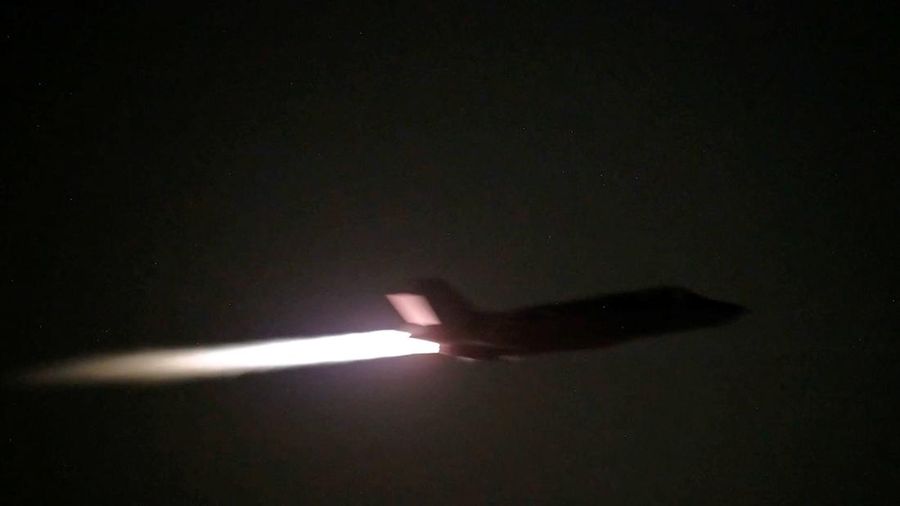
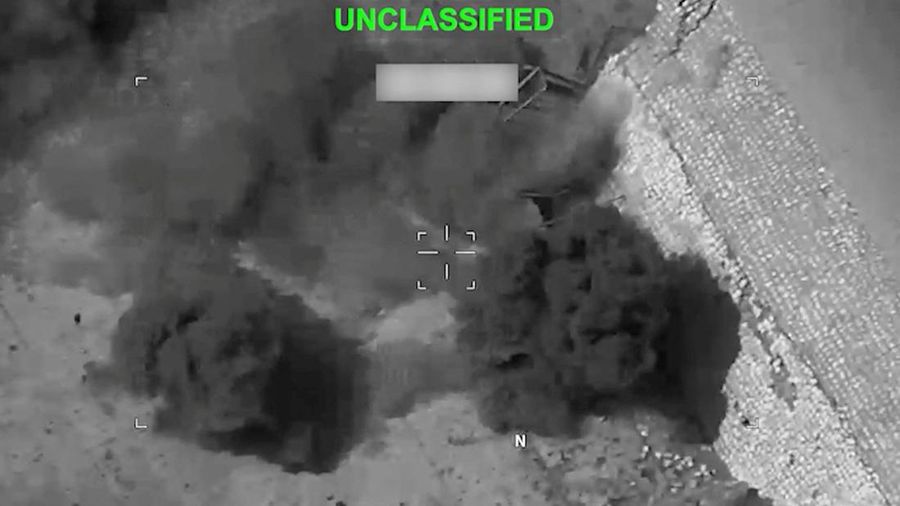
The operation, which commenced in the late hours of July 20, 2026, and extended into the early morning of July 21, was characterized by the U.S. military as a "precision strike" mission. Footage released by CENTCOM depicts U.S. fighter jets departing from undisclosed regional bases and aircraft carriers, followed by high-resolution imagery of massive explosions at military sites within Iranian territory. While the specific geographic coordinates of the strikes were not initially disclosed for operational security reasons, the Pentagon confirmed that the targets were selected based on actionable intelligence regarding their role in facilitating attacks on commercial vessels.
The primary objective of this five-hour window was the degradation of Iran’s ability to project power over the Strait of Hormuz, a narrow waterway through which approximately 20% of the world’s daily oil consumption passes. By targeting command centers, the U.S. aims to sever the communication links between Tehran’s central military leadership and frontline tactical units, particularly the Islamic Revolutionary Guard Corps (IRGC) Navy. Additionally, the destruction of drone and missile launch sites is intended to provide immediate relief to merchant mariners who have faced a barrage of unmanned aerial vehicle (UAV) attacks and anti-ship ballistic missile threats over the past several weeks.
The Ten-Day Campaign: A Chronology of Escalation
The strikes on July 20-21 were not an isolated event but rather the culmination of a ten-day sustained aerial offensive. This campaign was triggered by a series of aggressive maneuvers by Iranian-backed forces and direct IRGC interference with international tankers.
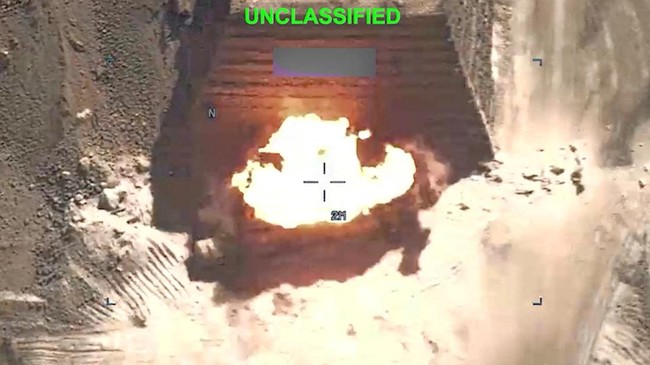
- Day 1-3: Initial U.S. responses were localized, focusing on coastal radar stations and surveillance outposts that Iran used to track commercial shipping.
- Day 4-7: The scope of operations expanded to include mobile missile launchers and storage facilities for loitering munitions (kamikaze drones).
- Day 8-9: U.S. forces began targeting air defense batteries, including the Russian-made S-300 systems and indigenous Khordad-15 units, to ensure total air superiority for subsequent waves.
- Day 10 (Current): The most comprehensive strike to date, focusing on the "nerve centers" of the Iranian military apparatus.
This chronological progression indicates a "ladder of escalation" strategy employed by the Pentagon. By systematically dismantling defensive and offensive layers, the U.S. military is attempting to force a strategic recalculation in Tehran without necessarily committing to a full-scale ground invasion.
Target Analysis: Neutralizing Command and Control
Central to the success of the latest mission was the destruction of hardened command-and-control (C2) nodes. These facilities are the brain of the Iranian military, housing the sophisticated computer networks and satellite linkups required to coordinate synchronized drone swarms and missile volleys. U.S. military analysts suggest that by neutralizing these centers, the Iranian military’s reaction time will be significantly slowed, and their ability to conduct complex, multi-domain operations will be severely hampered.
In addition to C2 nodes, the strikes targeted coastal surveillance facilities. These sites are equipped with advanced electro-optical sensors and high-frequency radar that allow Iran to monitor every vessel entering or exiting the Persian Gulf. By "blinding" these stations, the U.S. Navy and its coalition partners can move with greater stealth and provide better protection to escorted merchant convoys.
The maritime capabilities of the IRGC were also a major focus. Reports indicate that several fast-attack craft (FAC) bases and semi-submersible vessel docks were hit. These assets have frequently been used in "swarm" tactics to harass larger naval vessels and seize commercial tankers, often under the guise of legal maritime enforcement.
The Maritime Dimension: Securing the Strait of Hormuz
Washington has been explicit in its justification for these strikes: the preservation of the "freedom of navigation." The Strait of Hormuz is perhaps the most vital maritime chokepoint in the global economy. Any disruption to the flow of energy from the Persian Gulf has immediate and catastrophic effects on global oil prices, manufacturing costs, and inflation rates in both developed and developing nations.
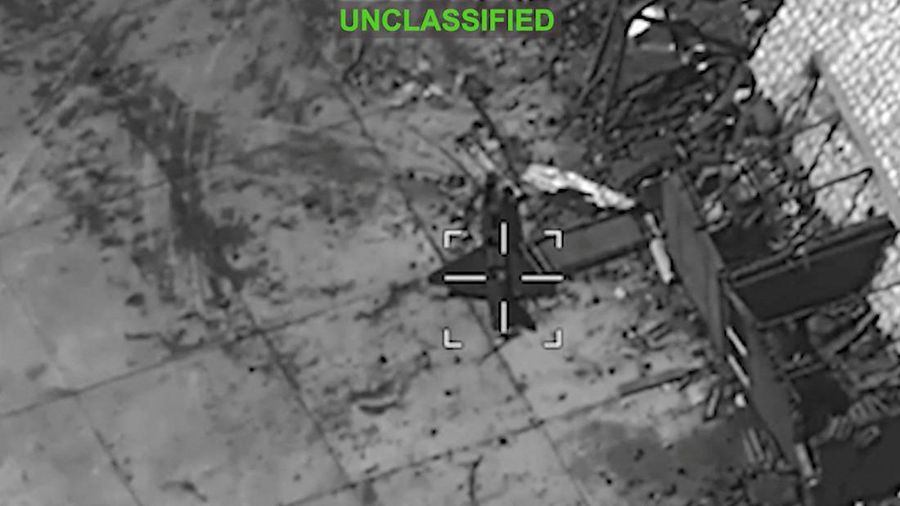
"We are seeking to degrade Iran’s ability to continue attacking commercial ships passing through the Strait of Hormuz," a spokesperson for the U.S. Department of Defense stated. The U.S. maintains that its actions are consistent with international law, specifically the right to self-defense and the protection of international waters. The deployment of precision-guided munitions (PGMs) is intended to minimize collateral damage and civilian casualties, focusing strictly on the military infrastructure that enables "state-sponsored piracy and maritime terrorism."
Regional Reactions and Diplomatic Fallout
The international response to the ten-day strike campaign has been polarized. In Tehran, the government has condemned the attacks as a "gross violation of national sovereignty" and an "act of unprovoked aggression." Iranian officials have warned that the "flames of war" could engulf the entire region if the U.S. does not cease its operations. There are concerns among diplomats that Iran may attempt to retaliate through its network of regional proxies in Lebanon, Iraq, and Yemen, potentially opening new fronts in an already volatile Middle East.
Conversely, several regional allies, including those within the Gulf Cooperation Council (GCC), have privately expressed support for the degradation of Iranian military capabilities, though many remain publicly cautious to avoid becoming direct targets of Iranian retaliation. European powers have called for de-escalation while acknowledging the necessity of protecting global trade routes.
At the United Nations, emergency sessions have been convened to discuss the crisis. While some member states have called for an immediate ceasefire, the U.S. and its closest allies have blocked resolutions that do not explicitly condemn Iranian interference with shipping.
Geopolitical Consequences and Global Energy Markets
The immediate impact of the strikes was felt in the commodity markets. Oil futures saw a sharp uptick in volatility as traders weighed the risk of a total closure of the Strait of Hormuz against the potential for the U.S. strikes to actually stabilize the region by removing the threat. Energy analysts suggest that while the strikes cause short-term anxiety, the long-term removal of Iranian "harassment infrastructure" could eventually lead to lower insurance premiums for shipping and more stable transit routes.
However, the risk of a "tit-for-tat" escalation remains high. If Iran perceives that its conventional military is being systematically destroyed, it may resort to asymmetric warfare, such as the extensive mining of the Strait or the use of "sleeper cells" to target energy infrastructure in neighboring countries. The U.S. has countered this by increasing its mine-countermeasure (MCM) capabilities in the region, deploying advanced underwater autonomous vehicles (UAVs) to sweep for explosives.
The Role of Advanced Weaponry in Precision Operations
Technical details emerging from the July 20-21 operation highlight the use of cutting-edge military technology. B-2 Spirit stealth bombers were reportedly used to penetrate deep into Iranian airspace to strike hardened underground bunkers, while F-35 Lightning II aircraft provided real-time electronic warfare support to jam Iranian radar.
Tomahawk Land Attack Missiles (TLAMs), launched from destroyers and submarines positioned in the Arabian Sea, accounted for a significant portion of the strikes on fixed infrastructure. The use of these long-range precision weapons allows the U.S. to strike targets with high accuracy while keeping its personnel out of the immediate range of Iranian coastal defense missiles.
The integration of artificial intelligence (AI) in battle management systems also played a role. CENTCOM utilized AI-driven analytics to process vast amounts of satellite imagery and signals intelligence (SIGINT), allowing commanders to identify and prioritize targets in real-time as the five-hour operation unfolded.
Long-term Strategic Outlook
As the dust settles from the tenth night of strikes, the central question remains whether this campaign will achieve a lasting deterrent effect. History in the region suggests that military strikes can delay capabilities but rarely extinguish the underlying geopolitical tensions. The U.S. administration faces the challenge of translating military success into a diplomatic framework that ensures long-term maritime security.
For now, the U.S. military remains on high alert. "Our mission is clear, and our resolve is firm," General Michael "Erik" Kurilla, Commander of CENTCOM, noted in a recent brief. "We will continue to take all necessary measures to protect the global commons and defend against those who seek to disrupt the free flow of commerce."
The world now watches closely to see if Tehran will opt for a strategic retreat to preserve its remaining military assets or if it will double down on a path of confrontation that could lead to a broader regional conflict. With the 10-day mark passed, the "new normal" in the Persian Gulf appears to be one of high-stakes military engagement, where the safety of a single oil tanker can dictate the foreign policy of superpowers.