Panduan Lengkap Harga Aki Kering Motor 2026 dan Pemeliharaan Sistem Kelistrikan Kendaraan

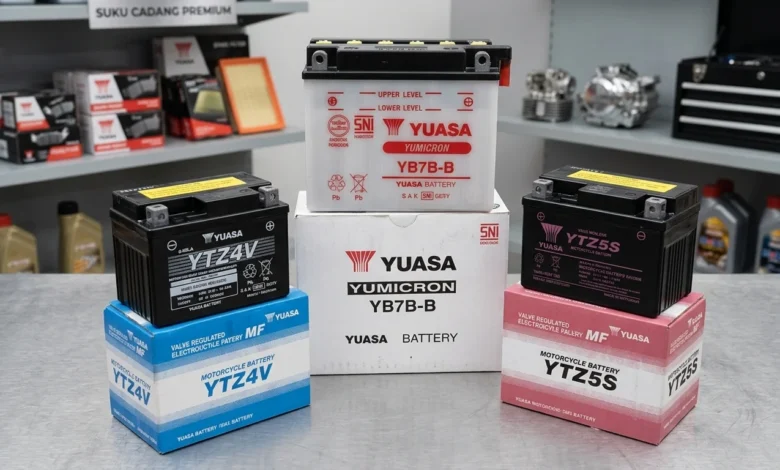
The maintenance of a motorcycle’s electrical system remains a critical aspect of vehicle ownership, particularly as modern motorcycles become increasingly reliant on electronic control units (ECU), advanced fuel injection systems, and digital instrumentation. As of 2026, the market for maintenance-free (MF) batteries—commonly referred to as "dry batteries"—has expanded significantly, offering consumers a wide array of options ranging from budget-friendly aftermarket brands to premium, high-performance units from established manufacturers such as GS Astra, Yuasa, Bosch, and Aspira. Understanding the nuances of battery selection, pricing, and longevity is essential for motorcycle owners aiming to avoid the inconvenience of a failed starter motor or electrical system instability.
Understanding the Mechanics of Maintenance-Free Batteries
The term "dry battery" is, in technical terms, a colloquialism. Maintenance-free (MF) batteries are essentially lead-acid batteries that utilize a sealed casing to prevent the evaporation of the electrolyte solution. Unlike conventional wet-cell batteries, which require periodic topping up with distilled water to account for evaporation caused by chemical reactions and heat, MF batteries employ a valve-regulated lead-acid (VRLA) design. This design immobilizes the electrolyte within a glass mat or gel, allowing the battery to be operated in various orientations without the risk of leakage.
From a mechanical standpoint, the battery acts as the primary reservoir of energy for the motorcycle. It provides the high-amperage "cold cranking" current necessary for the starter motor to overcome engine compression during ignition. Once the engine is running, the motorcycle’s alternator or magneto takes over, supplying power to the ignition system, lighting, sensors, and electronic fuel injection (EFI) components, while simultaneously recharging the battery. The efficiency of this cycle is dictated by the health of the battery’s internal plate structure and the integrity of the electrolyte.
The Evolution of Battery Technology and Industry Standards
Historically, motorcycle batteries were simple, vented lead-acid containers. However, the transition toward complex electronic systems in the early 2010s forced manufacturers to pivot toward sealed, high-durability power sources. By 2020, the industry standard had firmly shifted to MF batteries due to their reliability and convenience.
Industry analysts observe that the 2026 market is characterized by a high degree of specialization. Modern batteries are no longer one-size-fits-all; they are engineered with specific cold-cranking amps (CCA) and internal resistance ratings tailored to the compression ratios of specific engine architectures. This evolution has made the selection process more complex for consumers. Choosing an incorrectly rated battery—such as one with insufficient capacity for a high-compression sportbike—can lead to premature sulfation, where lead sulfate crystals harden on the battery plates, permanently reducing the unit’s capacity.
Comprehensive Price Guide for 2026 Motorcycle Batteries
The pricing structure for motorcycle batteries in 2026 is influenced by raw material costs, specifically lead and polymer prices, alongside brand positioning and warranty offerings. Below is an overview of the current market pricing for the most common battery specifications.
Tipe GTZ5S (Compact Matik and Underbone Models)
The GTZ5S remains the most ubiquitous battery type, powering the vast majority of entry-level and mid-range automatic and manual transmission motorcycles. Because of the high volume of production, this segment features the most competitive pricing.
| Brand | Estimated Price Range (IDR) |
|---|---|
| Wotobatt/Rainbow | Rp82,000 – Rp98,000 |
| Aspira MF | Rp172,200 – Rp210,000 |
| Bosch RBTZ-5S | Rp212,000 – Rp225,000 |
| GS Astra MF | Rp243,470 – Rp251,000 |
| Yuasa YTZ5S | Rp249,000 |
Tipe GM5Z-3B (Legacy Models)
While newer motorcycles have transitioned to the GTZ series, older generation bikes—particularly those manufactured before 2015—often utilize the GM5Z-3B standard. Availability for this type has stabilized as manufacturers maintain production for the aftermarket repair sector.
- Aspira MF: Rp150,300 – Rp167,000
Tipe GTZ6V and High-Performance Variants
For motorcycles equipped with idle-stop systems or enhanced smart power (eSP) technology, higher capacity batteries such as the GTZ6V are required. These batteries feature thicker plates and optimized chemical compositions to withstand the rapid, repetitive cycling of stop-start engine functions. Pricing for these units typically sits 15-25% higher than the standard GTZ5S due to their increased power density.
Critical Factors for Battery Selection
When purchasing a replacement battery, consumers must look beyond the brand name. The following four technical specifications are critical for ensuring compatibility and safety:
- Battery Code: The code (e.g., GTZ5S) denotes the physical size and terminal configuration. Substituting a battery with a different code often results in the battery not fitting the tray or the terminal cables being unable to reach the connectors.
- Dimensions: Even if a battery shares a similar capacity, a variance in physical dimensions can prevent the battery compartment cover from closing correctly, exposing the terminals to moisture or vibration.
- Capacity (Ah): Ampere-hour (Ah) rating represents the amount of energy the battery can store. Installing a battery with lower-than-recommended capacity will lead to frequent discharge and eventual failure.
- Terminal Position: The positive and negative terminals are not always interchangeable. Installing a battery with reversed terminal positions can cause catastrophic damage to the motorcycle’s delicate electrical system, including the potential to fry the ECU or blow the main fuse.
Implications of Usage Habits on Battery Longevity
Mechanical experts emphasize that even the highest-quality MF battery is subject to wear and tear. The average lifespan of an MF battery in tropical climates is approximately 18 to 24 months. However, several factors can accelerate degradation:
- Parasitic Draw: Modern motorcycles often have security alarms, clocks, and EFI modules that draw a small amount of current even when the bike is off. If a motorcycle remains parked for more than two weeks, these parasitic draws can deplete the battery below the threshold required to crank the engine.
- Charging System Health: A faulty regulator-rectifier can either undercharge the battery, leading to deep discharge cycles, or overcharge it, which causes the electrolyte to boil and the battery casing to swell.
- Vibration and Heat: Prolonged exposure to high heat—common in urban traffic environments—degrades the internal separators, while excessive vibration can cause internal lead plate connections to fracture.
Industry Perspective and Recommendations
Representatives from leading battery manufacturers have noted that the most frequent cause of premature battery failure is "deep discharge" caused by user error, such as leaving the headlights on or adding aftermarket accessories (e.g., high-intensity LED lights or audio systems) without upgrading the charging system to match the increased demand.
"The modern motorcycle is a precision instrument," says a representative from an automotive component distributor. "Consumers should consult their owner’s manual before purchasing a replacement. The temptation to buy the cheapest battery available often results in a higher ‘cost per mile,’ as cheaper units typically have thinner plates that cannot survive the vibrations and heat cycles of a daily-commuter motorcycle."
Broader Impact: The Shift Toward Smart Diagnostics
Looking toward the future, the automotive industry is trending toward "smart" battery management systems. Some high-end motorcycles are beginning to incorporate battery state-of-health (SoH) monitoring directly into the digital dashboard. This technology allows the rider to receive early warnings regarding the battery’s voltage levels, effectively predicting failure before the motorcycle becomes stranded.
For the average consumer, however, the most reliable diagnostic remains the "feel" of the ignition. A slow crank—where the engine sounds sluggish upon starting—is the definitive symptom of a battery nearing the end of its life. If ignored, the strain is passed to the starter motor solenoid and the starter motor itself, turning a simple battery replacement costing under Rp300,000 into a significantly more expensive repair job.
Conclusion: Best Practices for Maintenance
To maximize the life of an MF battery, owners are advised to implement a simple maintenance routine. If a motorcycle is used infrequently, the use of a "trickle charger" or "battery tender" is highly recommended. These devices maintain the battery at an optimal voltage without the risk of overcharging. Furthermore, ensuring that all electrical connections—specifically the battery terminals—are free of corrosion and tightly fastened can prevent resistance buildup, which is a leading cause of electrical gremlins in modern fuel-injected motorcycles.
As the market enters the latter half of the 2020s, the convergence of better-engineered batteries and improved consumer awareness regarding electrical system health is helping to reduce the frequency of vehicle breakdowns. By selecting the correct specifications, adhering to manufacturer recommendations, and performing periodic checks, riders can ensure that their motorcycle remains a reliable mode of transportation, regardless of the complexity of its electronic architecture.