The political landscape of Israel is currently navigating a period of profound uncertainty following a general election that has left both the incumbent government and the opposition struggling to secure a parliamentary majority. With no clear victor emerging from the ballot box, the nation finds itself locked in a legislative stalemate, prompting intense speculation regarding the potential for unprecedented coalition-building maneuvers. As the dust settles on one of the most consequential elections in the country’s history, the pivotal role played by Arab-majority parties has moved to the center of the national discourse, challenging long-standing political taboos that have historically dictated the boundaries of Israeli governance.
Electoral Deadlock and the Parliamentary Arithmetic
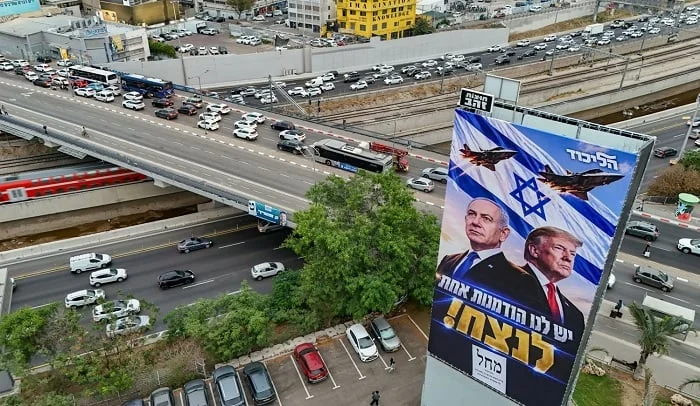
The latest round of voting, which saw a robust turnout of 77.7 percent—the highest participation rate since 1999—has yielded a fractured Knesset. As of mid-week, with approximately 80 percent of the votes tabulated, the political bloc led by incumbent Prime Minister Benjamin Netanyahu and his Likud party has secured 54 seats. While this remains the largest single-party presence in the chamber, it falls significantly short of the 61-seat threshold required to form a stable government in the 120-seat Knesset.
Conversely, the opposition coalition, which represents a diverse ideological spectrum under a Zionist banner, has secured 49 seats. This camp, spearheaded by former military chief of staff Gadi Eisenkot, incorporates a wide range of political entities, from the relatively left-leaning Democratic party led by Yair Golan to the staunchly nationalist Yisrael Beiteinu party commanded by Avigdor Lieberman. Despite the breadth of this coalition, it also remains well below the majority mark, highlighting the deep-seated ideological fractures that define contemporary Israeli politics.
The Role of Arab-Majority Parties as Kingmakers
The central dilemma facing political architects in Jerusalem is the influence of Arab-majority factions, specifically the Ra’am party and the Joint List. Together, these entities hold 17 seats, a critical mass that acts as the ultimate "kingmaker" in the current arithmetic. Historically, mainstream Zionist parties have avoided formal partnerships with these factions, citing fundamental differences regarding the nature of the state and national security policies. However, the current stalemate forces a reassessment of these boundaries.
If either the Netanyahu-led bloc or the Eisenkot-led opposition were to break the de facto taboo and integrate these 17 seats into their coalition, they would immediately clear the path to a governing majority. Such a move would be historic, effectively ending the marginalization of Arab political influence in the formation of Israeli cabinets. However, such a decision carries immense political risk, as it could alienate core bases that have historically opposed cooperation with parties that do not explicitly identify as Zionist.
Chronology of the Political Crisis
The trajectory leading to this impasse can be traced back through a series of rapid political developments:
- Pre-Election Phase: Intense campaigning focused on security, the cost of living, and the future of judicial reforms. Voter mobilization efforts reached record levels, particularly among the Arab-Israeli population, which constitutes roughly 20 percent of the total demographic.
- Election Day: Tuesday witnessed an exceptionally high turnout of 77.7 percent, signaling a deeply engaged electorate.
- Initial Counting: By Wednesday afternoon, the preliminary results confirmed that no single bloc had achieved the necessary 61-seat majority.
- Verification Period: Election officials began the exhaustive process of verifying ballots, with final tallies expected by Friday.
- Formal Certification: The official results are scheduled to be published on November 4, which will serve as the legal trigger for the presidential consultation process.
The Constitutional Path Forward
Once the final results are confirmed, the process for government formation is strictly governed by established procedure. President Isaac Herzog will initiate a series of consultations with the leaders of all parties represented in the Knesset. These meetings are intended to gauge which candidate holds the strongest chance of forming a functional government.
Following these consultations, the President will formally task a candidate with the mandate to build a coalition. This individual is granted 28 days to negotiate terms with potential partners, with the possibility of a 14-day extension should the complexity of the talks warrant it. If the candidate fails to secure a majority within this timeframe, the mandate may be transferred to another member of the Knesset. Should this secondary effort also collapse, the Knesset faces the prospect of dissolution and the scheduling of yet another general election—a scenario that would mark the nation’s return to the polls after an exhausting cycle of political instability. Throughout this transition, the outgoing cabinet remains in power as an interim government, tasked with managing daily state affairs but limited in its ability to enact significant policy shifts.
Analyzing the Implications of the Turnout
The significant surge in voter participation among the Arab population is a critical variable in this election. Achieving an estimated 80 percent turnout, this demographic has effectively signaled its intent to be a primary stakeholder in the political future of the country. For decades, Arab-Israeli voters have oscillated between high engagement and disillusionment. The recent spike suggests a shift in political strategy, moving from a policy of protest to one of active participation designed to exert influence from within the legislative structure.
From an analytical standpoint, this suggests that the era of ignoring the Arab electorate in coalition calculations may be coming to a close. If the major political blocs continue to shun these parties, they risk alienating a growing segment of the population that is increasingly capable of determining the success or failure of the national government. However, the internal challenges remain significant; the Arab-majority parties themselves are often divided on whether to integrate into a Zionist-led government or maintain a position of principled opposition.
Official Responses and Public Sentiment
While official statements from party leaders remain guarded, the rhetoric in the immediate aftermath of the election has been characterized by intense behind-the-scenes maneuvering. Supporters of the Netanyahu bloc argue that the national interest requires a government built on traditional Zionist foundations, even if it requires difficult compromises with smaller right-wing parties. Meanwhile, figures within the opposition argue that the current deadlock is a direct result of the exclusionary politics of the past, suggesting that a "government of change" must necessarily include a broader representation of the Israeli populace.
International observers and domestic political analysts are closely monitoring the situation, noting that the formation of the next government will have profound implications for Israel’s foreign policy, its relationship with neighboring states, and its approach to internal social cohesion. The question of whether the political elite will choose to prioritize traditional ideologies over the functional necessity of a stable coalition remains the most significant variable in the coming weeks.
Broader Impact and Conclusion
The current political impasse is more than a simple counting of seats; it is a stress test for the Israeli parliamentary system. The inability of the major camps to reach a majority without the participation of the Arab-majority parties forces a fundamental question: Is the Israeli political system capable of evolving to reflect the diverse realities of its electorate, or will it remain trapped in the cycle of exclusionary gridlock?
As the nation waits for the official results on November 4 and the subsequent presidential intervention, the atmosphere in Jerusalem is one of cautious expectation. Whether a breakthrough occurs that bridges the divide between Zionists and Arab-majority parties, or whether the country heads toward another round of elections, the impact on Israel’s democratic framework will be lasting. The record turnout suggests that the citizens are eager for a resolution, placing the onus on political leaders to demonstrate the statesmanship required to break the current deadlock and provide the country with the stability it requires.