McDonald’s China and Lenovo Unveil the Limited-Edition Fry Mark Wireless Mouse Crafted from Recycled Happy Meal Toys

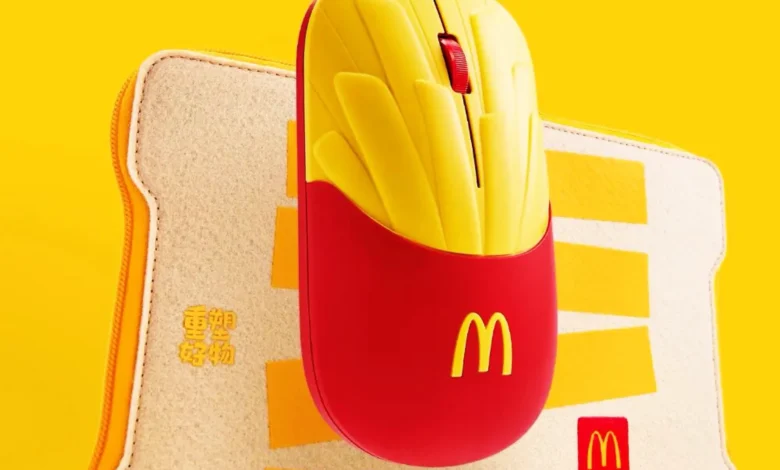
In an unexpected intersection of fast-food culture and consumer technology, McDonald’s China has partnered with global tech giant Lenovo to introduce a uniquely designed wireless computer peripheral known as the McDonald’s Fry Mark mouse. Molded in the unmistakable shape of McDonald’s iconic French fry container, this collaborative device transcends novelty status by incorporating sustainability into its core manufacturing process. More than 60 percent of the plastic utilized in the construction of the mouse’s outer casing is derived from recycled, post-consumer Happy Meal toys, reflecting a growing corporate trend toward circular economies and resource reclamation in consumer goods.
Unveiled as an ultra-exclusive collector’s item, production of the McDonald’s Fry Mark mouse has been strictly capped at 4,000 units worldwide. This limited-run strategy has immediately positioned the device as a coveted commodity among tech enthusiasts and fast-food memorabilia collectors alike. Beyond the headline-grabbing aesthetic, the partnership underscores a concerted effort by both multinational corporations to address mounting consumer scrutiny regarding electronic waste and single-use plastics. By repurposing legacy plastic components that would otherwise occupy landfills, the initiative demonstrates a tangible application of upcycling on a commercial scale.
The Genesis of the Collaboration and Environmental Framework
The development of the Fry Mark mouse represents the culmination of months of strategic planning between McDonald’s China sustainability division and Lenovo’s hardware design teams. Corporate sustainability reports indicate that both entities have faced increasing pressure to minimize their carbon footprints, prompting cross-industry partnerships that challenge traditional manufacturing norms. The project began as a conceptual exploration into how ubiquitous brand symbols could be integrated into functional technology without compromising structural integrity or user ergonomics.
Environmental groups have increasingly scrutinized the tech and fast-food sectors for their contributions to global plastic pollution. In response, modern sustainability initiatives have shifted focus from simple waste reduction to closed-loop manufacturing systems. The decision to source raw materials from discarded Happy Meal toys—items historically criticized for their short lifecycle—serves as a symbolic reclamation of childhood nostalgia turned functional utility. To further reinforce its eco-friendly credentials, the retail packaging for the mouse eschews traditional plastics entirely, opting instead for heavy-duty, biodegradable cardboard to ensure minimal environmental impact from factory floor to end-user.

Technical Specifications and Functional Versatility
Despite its playful appearance, the McDonald’s Fry Mark mouse is engineered to meet modern standards of computing convenience and hardware performance. Underneath the whimsical exterior lies a versatile wireless architecture designed to accommodate diverse user preferences and operating environments. The device features tri-mode connectivity, allowing seamless pairing via standard Bluetooth, a high-frequency 2.4 GHz USB wireless dongle, or a direct physical connection utilizing a standard wired interface.
Powering the peripheral is a rechargeable 380mAh internal lithium-ion battery, engineered to provide adequate battery life for daily office tasks or casual computing. Charging and wired connectivity are facilitated through a modern USB Type-C port, aligning with contemporary electronics standards and eliminating the need for proprietary cables. Furthermore, the retail bundle includes a thoughtful accessory: a multi-functional fabric carrying pouch that doubles as an operational mouse pad when unfolded, enhancing the product’s portability and practical utility for mobile professionals.
Market Launch, Pricing, and Consumer Reception
Released exclusively within the Chinese market, the McDonald’s Fry Mark mouse commands a retail price of 99 yuan, roughly translating to approximately $15 USD or 230,000 Indonesian Rupiah. Given the stringent production limit of just 4,000 units, initial market availability proved exceptionally scarce, triggering rapid sell-outs across official digital storefronts and generating widespread secondary market speculation.
Consumer reaction across social media platforms and technology forums has been overwhelmingly positive, driven largely by the novelty of the design and the clever integration of sustainable materials. Early reviews from tech bloggers who managed to secure review units highlight the surprisingly comfortable grip afforded by the angular fry-box chassis, despite initial skepticism regarding its unconventional geometry. The device has quickly become a viral sensation, frequently cited as an exemplary case study in effective experiential marketing that resonates deeply with digital natives and millennial consumers.

Broader Industry Implications and the Rise of Cross-Industry Merchandising
The launch of the Fry Mark mouse arrives amid a broader industry shift toward cross-industry brand collaborations, where fast-food chains leverage their cultural capital to venture into apparel, home goods, and consumer electronics. These ventures are designed to maintain brand relevance among younger, highly digitized demographics who value brand authenticity, humor, and aesthetic uniqueness. By partnering with an established hardware manufacturer like Lenovo, McDonald’s successfully bridges the gap between culinary nostalgia and productivity hardware.
From an economic perspective, such limited-edition hardware releases serve multiple corporate functions. They act as powerful marketing catalysts that generate organic digital engagement, elevate brand perception regarding environmental responsibility, and create high-margin revenue streams from low-cost raw materials. Analysts note that while the volume of 4,000 units is negligible in the context of Lenovo’s global PC accessory sales, the psychological and media impact of the campaign delivers disproportionate value in brand visibility.
Looking ahead, industry observers anticipate that the success of the McDonald’s Fry Mark mouse may pave the way for more ambitious circular-economy collaborations between technology firms and consumer-facing brands. As regulatory frameworks surrounding electronic waste and sustainable packaging become increasingly stringent worldwide, companies are incentivized to explore creative upcycling methods. Whether similar co-branded computing peripherals will see wider international distribution in the future remains to be seen, but the Fry Mark initiative has successfully established a high-profile benchmark for sustainable novelty design in the consumer technology sector.
Related posts: