Massive Student Demonstrations Expected Across Jakarta Prompt Police to Implement Security Measures and Traffic Diversions

Jakarta faces significant logistical and security challenges today as thousands of university students are expected to descend upon the capital to participate in large-scale demonstrations. The protests, which are scheduled to span critical urban corridors, including the Parliament Building (DPR RI), the Hotel Indonesia Roundabout (Bundaran HI), the National Monument (Monas) area, and the Tugu Tani intersection, have prompted local authorities to issue comprehensive traffic advisories and security protocols. The demonstration, occurring on October 28, 2026, coincides with historical commemorations of the Youth Pledge (Sumpah Pemuda), a date often associated with student activism in Indonesia.
The Scope of the Mobilization
The planned demonstrations represent a convergence of various student organizations from across the Greater Jakarta area. While the specific demands of the protesters remain multifaceted—ranging from legislative oversight to socio-economic policy critiques—the geographic footprint of the action is substantial. By targeting the DPR RI complex, protesters aim to bring their grievances directly to the seat of legislative power, while the presence at Bundaran HI and Monas signifies an attempt to capture public attention in the city’s primary economic and political centers.
Law enforcement agencies have identified these four locations as high-traffic zones. Given the volume of participants anticipated, the Jakarta Metropolitan Police (Polda Metro Jaya) has activated a tactical security framework designed to balance the constitutional right to assembly with the necessity of maintaining urban order and public safety.
Chronology of Events and Police Preparedness
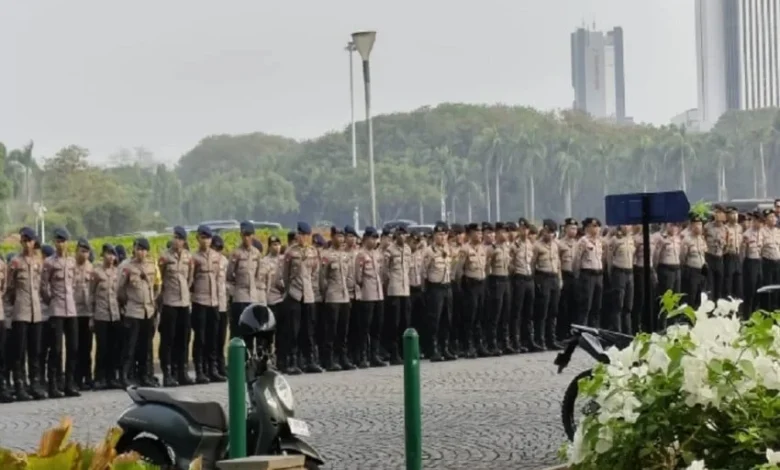
Early Wednesday morning, the Jakarta Metropolitan Police began deploying personnel across the identified protest sites. The strategy, as articulated by the Head of Public Relations for the Jakarta Police, Commissioner Bhudi Hermanto, emphasizes a preventative approach.
- 06:00 WIB: Security forces begin site preparations at the Parliament Building and the National Monument.
- 08:00 WIB: Early waves of student protesters begin to mobilize from various university campuses toward the designated assembly points.
- 09:30 WIB: Traffic flow adjustments are implemented, particularly around the Gatot Subroto corridor, to accommodate the expected influx of protesters.
- 10:00 WIB: Formal commencement of the demonstration activities, with police monitoring the flow of crowds and potential escalations.
Police presence is notably visible, but officials have underscored that the operation is primarily focused on facilitation rather than suppression. The directive from the top command emphasizes that officers should engage in dialogue-based, persuasive, and humanistic interactions with participants. This approach is rooted in the philosophy of "Police Together with the Community," which seeks to de-escalate tensions and ensure that the expression of democratic rights does not infringe upon the rights of other citizens to go about their daily routines.
Supporting Data and Traffic Implications
The impact on Jakarta’s infrastructure is expected to be significant. With the protest routes encompassing major thoroughfares, commuters are advised to expect severe congestion. Historical data from similar protests in the capital indicates that road closures around the DPR RI building can result in travel delays exceeding two hours for transit through the Sudirman-Thamrin corridor.
To mitigate this, the Jakarta Traffic Police (Ditlantas Polda Metro Jaya) has prepared a series of contingency plans:
- Gatot Subroto Corridor: Traffic will be diverted to arterial side streets should the crowd size impede the main highway.
- Sudirman-Thamrin Axis: Public transportation, including the TransJakarta bus lines, may experience route modifications to bypass the Bundaran HI area.
- Tugu Tani Intersection: This node, serving as a gateway to the central government district, will have increased traffic warden presence to prevent total gridlock.
The authorities are urging the public to utilize real-time traffic monitoring applications and to consider utilizing the Mass Rapid Transit (MRT) or Commuter Line (KRL) systems, which remain largely unaffected by the surface-level disruptions.
Official Statements and Public Duty
Commissioner Bhudi Hermanto emphasized that the preservation of public space is a collective responsibility. During his briefing, he stated, "Public space belongs to all of us. There are citizens who need to voice their aspirations, just as there are citizens who need to work, attend school, and conduct their daily business. Everyone has rights that we must respect and protect."
The police have requested that student organizers coordinate closely with law enforcement to maintain the integrity of public facilities. This includes the protection of municipal property, such as traffic signs, public seating, and landscaping, which are often targets of collateral damage during large-scale unrest. By fostering open communication channels, the police aim to prevent the misunderstandings that often arise in high-stress, high-density environments.
Sociological Context and Broader Implications
The timing of these protests—falling on the anniversary of the 1928 Youth Pledge—is not coincidental. Historically, Indonesian student movements have used this date to symbolize a revival of nationalist fervor and a demand for government accountability. The 2026 demonstrations reflect a broader trend of civic engagement among Generation Z and Millennial cohorts, who utilize social media to organize rapidly and circulate their grievances.
From an analytical perspective, these events highlight the ongoing tension between representative democracy and direct action. While the Parliament is the formal venue for debate, the reliance on street protests indicates a perceived gap in communication between the legislature and the student constituency. Experts suggest that such demonstrations serve as a "safety valve" for social frustration; however, they also pose risks to the stability of the capital’s economy.
The economic cost of large-scale protests in Jakarta—often measured in lost productivity, fuel consumption from idling vehicles, and potential damage to public assets—is a recurring topic of concern for the city administration. Nevertheless, the right to peaceful assembly remains a cornerstone of Indonesia’s post-1998 political landscape.
Ensuring a Peaceful Resolution
The police’s commitment to a "dialogical approach" is a strategic shift from the more confrontational tactics seen in previous decades. By prioritizing de-escalation, the authorities hope to maintain a situation that is "safe and conducive." This means that unless the protests transition into unlawful actions, such as the destruction of property or physical violence, the police intend to allow the demonstrations to proceed until they naturally conclude in the late afternoon.
As the day progresses, the primary challenge for the authorities will be managing the movement of large groups as they potentially converge toward a single location. The police have issued a clear call for protesters to abide by the legal time limits for demonstrations, which typically mandate the dispersal of crowds by early evening.
Conclusion: A Call for Shared Responsibility
As Jakarta navigates this day of mass mobilization, the narrative remains focused on the delicate balance between civil liberties and public order. For the students, the day is an opportunity to assert their role in the democratic process. For the citizens of Jakarta, it is a day of unavoidable disruption that requires patience and adherence to the guidance provided by the authorities.
The Jakarta Metropolitan Police continue to monitor the situation through their command center, ready to adjust traffic patterns and security deployments as the day unfolds. The key takeaway for the public is clear: maintain situational awareness, avoid the four designated protest zones if possible, and rely on official updates to navigate the city safely. Ultimately, the success of the day will be measured not just by the volume of voices heard, but by the ability of all parties—students, police, and the public—to exercise mutual respect and ensure that the city remains functional and secure throughout the process of democratic expression.