Apple Officially Releases iOS 27.2 Introducing Advanced Foldable Automation and Critical Security Enhancements for iPhone Users

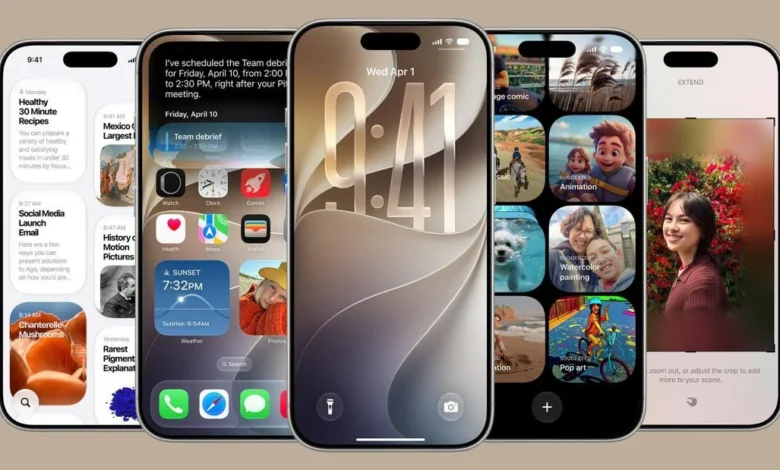
Apple Inc. officially released iOS 27.2 on Monday, October 26, 2026, marking a significant milestone in the evolution of the company’s mobile ecosystem. This update arrives just days after the global launch of the iPhone Duo, Apple’s first foray into the foldable smartphone market. The latest operating system build, which is now available for download to all compatible devices ranging from the iPhone 11 series to the most recent iterations, prioritizes the seamless integration of hardware-specific foldable features, expanded artificial intelligence capabilities, and a robust suite of security patches designed to mitigate emerging digital threats.
The deployment of iOS 27.2 represents a strategic shift for Apple as it adapts its software architecture to accommodate non-traditional hardware form factors. By introducing specialized triggers within the Shortcuts application, Apple is signaling a commitment to providing a more personalized and fluid user experience for those transitioning to the iPhone Duo. Furthermore, the emphasis on security updates underscores the ongoing challenge of protecting user data in an increasingly complex digital landscape, particularly as Apple Intelligence continues to deepen its integration into the core functionalities of the iOS environment.
Chronology of the Release and Integration
The rollout of iOS 27.2 follows a tightly controlled development cycle. Following the public unveiling of the iPhone Duo on October 23, 2026, Apple moved quickly to ensure that the software environment was optimized for the new hardware’s unique capabilities. Industry analysts have noted that the release of an OS update so shortly after a major hardware launch is a standard procedure for Apple, aimed at addressing day-one feedback and ensuring that advanced software features—such as those linked to Apple Intelligence—are fully operational for early adopters.
The update, delivered over-the-air (OTA), is part of Apple’s broader strategy to maintain a unified user experience across its diverse lineup. By ensuring that legacy devices like the iPhone 11 continue to receive critical security updates, Apple maintains its reputation for long-term support, even as it differentiates the feature sets available to owners of newer, AI-capable models.
Key Functional Upgrades: The Foldable Paradigm
The centerpiece of the iOS 27.2 update is the refinement of the Shortcuts application to support the iPhone Duo. Previously, automation triggers were largely limited to time-based, location-based, or state-based events (such as battery percentage or Wi-Fi connectivity). With the introduction of folding-state triggers, users can now dictate how their device reacts to the physical state of the display.
For example, a user can configure a "Work Mode" automation that automatically launches a spreadsheet application and enters "Do Not Disturb" mode the moment the device is unfolded. Conversely, closing the device can trigger a different set of actions, such as locking sensitive applications or shifting the media playback interface to the external cover display. This granular level of control is expected to be a primary selling point for the iPhone Duo, as it transforms the device from a passive screen into an active, context-aware tool.

Beyond the foldable-specific features, Apple has streamlined the Shortcuts interface. Users can now perform administrative tasks, such as renaming shortcuts or updating icons, directly from the library view. This efficiency improvement reduces the friction associated with managing complex automation workflows, a frequent request from the power-user community.
Apple Intelligence and the Future of Shortcuts
The integration of Apple Intelligence remains a central pillar of the company’s software roadmap. In iOS 27.2, the "Use Model" action within Shortcuts has been significantly bolstered. By leveraging more robust connections to the web, the system can now retrieve real-time information—ranging from financial market data to live weather updates—with greater accuracy and across a broader array of languages.
This enhancement is critical for the global deployment of Apple Intelligence. As the system learns to parse information from diverse sources, its ability to provide localized, context-aware responses increases. However, Apple has maintained a clear distinction between these high-level AI functions and standard OS features. Only devices equipped with the A17 Pro chip or newer—specifically the iPhone 15 Pro and later models—have access to the full suite of Apple Intelligence features. This hardware-software segmentation remains a point of contention for some users, yet Apple maintains that these capabilities require the specialized Neural Engine performance found only in its latest silicon.
Comprehensive Security Overhaul
While the new features capture headlines, the security patches included in iOS 27.2 are arguably the most vital components of the release. According to the security documentation released alongside the update, Apple has addressed several vulnerabilities that could have exposed user data to unauthorized access.
One of the most notable fixes concerns the Siri voice assistant. Research had identified a potential vulnerability where an attacker could theoretically bypass standard authentication protocols to access sensitive information stored on the device. Through improved input validation and stricter authorization management, Apple has closed this loop. Similar improvements have been applied to the Shortcuts application, which had previously faced scrutiny regarding how it handles user-provided permissions for third-party integrations.
Furthermore, the update addresses a vulnerability that could have allowed malicious applications to bypass certificate validation. This is a critical fix, as certificate validation is the cornerstone of secure communication between the device and web services. By fortifying these processes, Apple continues to reinforce the "walled garden" approach that has defined its privacy-first marketing strategy.
Impact on the Broader Ecosystem
The decision to include security patches for devices as old as the iPhone 11 highlights the immense scale of the Apple ecosystem. Supporting a wide range of hardware is a logistical undertaking that requires precise engineering. While older devices will not benefit from the folding-screen automations or the full breadth of Apple Intelligence, they remain protected against the latest identified security threats.
Market analysts suggest that this strategy is key to Apple’s high customer retention rates. By providing long-term security updates, the company ensures that its devices retain value in the secondary market and remain safe for users who are not yet ready to upgrade to the latest flagship models.
User Guidance and Implementation
For users looking to update, the process remains consistent with established protocols. Apple recommends that users ensure their devices are charged to at least 50% or connected to a power source, and that they have a stable Wi-Fi connection. Prior to initiating the update, it is highly recommended that users back up their data via iCloud or a physical connection to a computer to prevent any potential data loss.
To install the update, users should navigate to Settings > General > Software Update. The system will automatically check for the iOS 27.2 build and initiate the download. Given the security-critical nature of this release, Apple has urged all users to prioritize the installation.
Looking Ahead
The release of iOS 27.2 marks the beginning of a new chapter for Apple. The transition into the foldable market is no longer a speculative future but a current reality, and the software is clearly evolving to match this hardware innovation. As the iPhone Duo reaches more consumers globally, the pressure on Apple to refine its folding-state automations will likely grow.
Furthermore, the ongoing development of Apple Intelligence suggests that future updates will continue to blur the lines between traditional operating system functions and proactive, AI-driven assistance. For now, iOS 27.2 provides a stable, secure, and feature-rich foundation that bridges the gap between Apple’s established legacy and its ambitious future. While the industry continues to watch how the iPhone Duo competes in a crowded market of foldable devices, it is clear that Apple’s software prowess remains a significant competitive advantage.
As of the current date, there have been no reports of widespread bugs or installation failures associated with the iOS 27.2 update, suggesting that the initial rollout has been stable. Users are encouraged to remain vigilant for subsequent minor updates (such as 27.2.1) which typically follow to address any edge-case bugs discovered in the initial release. With this update, Apple continues its trajectory of iterative improvement, balancing the demands of high-end hardware innovation with the fundamental necessity of user security and system stability.