Lenovo Expands Its Budget Monitor Lineup with the Introduction of the 32-Inch L32-4e Featuring 144Hz Refresh Rate and AMD FreeSync

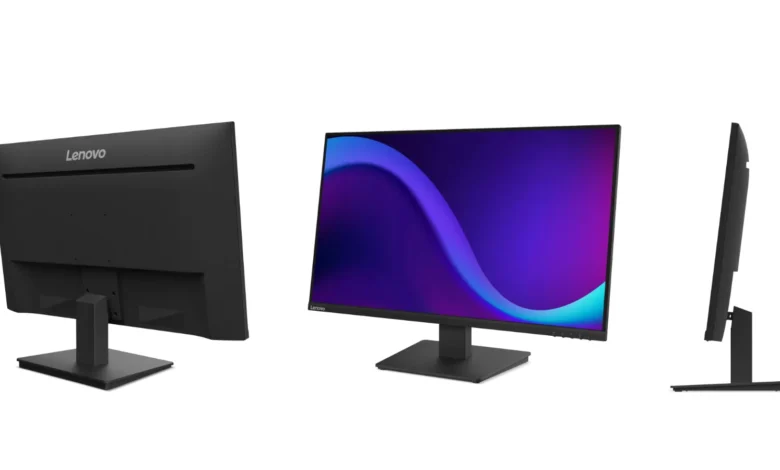
Lenovo has officially broadened its footprint in the consumer display market by expanding its popular budget-oriented “e” monitor series. Historically, this specific SKU lineup has been defined by compact, entry-level models—most notably the 24-inch L24-4e—designed to cater to budget-conscious students, remote workers, and casual users who require reliable secondary or primary displays without financial strain. However, responding to shifting consumer demands for larger screen real estate at accessible price points, the technology giant has introduced a much larger form factor to the series. The newly unveiled Lenovo L32-4e brings a sprawling 32-inch display panel to the budget category, signaling a strategic shift in how entry-level productivity and entertainment monitors are conceptualized.
The unveiling of the Lenovo L32-4e comes at a time when the global monitor market is experiencing increased competition in the sub-$200 segment. Consumers increasingly demand expansive multi-window workspaces and immersive media consumption tools, previously reserved for mid-tier or professional displays. By pushing the 32-inch size threshold into its budget bracket, Lenovo aims to capture market share among cost-sensitive buyers who refuse to sacrifice screen dimensions. While official retail pricing and global availability dates remain unannounced at the time of publication, the hardware specifications have already been formally listed on Lenovo’s official product specification databases, offering a comprehensive look at what users can expect from this new release.
Technical Specifications and Display Architecture
In order to maintain an aggressive price point appropriate for the budget segment, the Lenovo L32-4e incorporates several deliberate engineering and hardware compromises compared to its smaller, IPS-based siblings. Most notably, Lenovo has opted for a Vertical Alignment (VA) panel for the L32-4e, replacing the In-Plane Switching (IPS) technology utilized in the 24-inch L24-4e model. While IPS panels generally offer superior viewing angles and color consistency, VA panels excel in static contrast ratios, making them exceptionally well-suited for dark-room viewing and deep black levels.
The monitor features a native Full HD resolution of 1920 by 1080 pixels across its expansive 32-inch canvas, presented in a standard 16:9 widescreen aspect ratio. Because of the 1080p resolution spread across a 32-inch diagonal surface area, the pixel density is relatively low, which users should consider depending on their intended viewing distance and workflow requirements. To compensate for the panel type, Lenovo specifies a maximum brightness level of 300 nits, which is adequate for typical indoor office environments or residential study rooms.
One of the standout features of the L32-4e’s panel is its impressive static contrast ratio of 4,000:1, significantly higher than what is typically found in standard entry-level IPS monitors. Color reproduction is rated at 99% coverage of the sRGB color gamut, supported by an 8-bit color depth achieved through a 6-bit plus Frame Rate Control (FRC) dithering technique. This ensures that while the monitor is not intended for color-critical professional graphic design work, it delivers vibrant and accurate enough colors for daily web browsing, office productivity applications, and media streaming.
Gaming Capabilities and Motion Handling
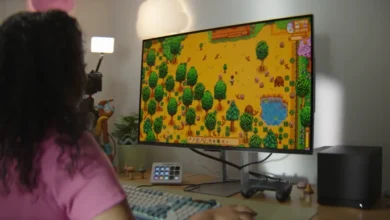
Despite its classification as a budget-oriented productivity display, the Lenovo L32-4e introduces surprisingly robust performance specifications tailored for casual gaming and smooth visual navigation. The monitor supports a maximum refresh rate of up to 144Hz, a substantial upgrade over standard 60Hz or 75Hz office monitors. This higher refresh rate ensures that system navigation, scrolling through extensive documents, and transitional animations across the operating system appear fluid and responsive.
Furthermore, the integration of AMD FreeSync technology bridges the gap between the GPU and the display, effectively mitigating screen tearing, stuttering, and input lag during fast-paced sequences. This makes the L32-4e a viable option for budget gamers who want to pair an affordable, large-format screen with entry-level graphics cards or consoles without investing in dedicated gaming hardware lines like Lenovo’s Legion series.

In terms of pixel response time, Lenovo rates the L32-4e at 4 milliseconds Gray-to-Gray (GtG) when operating under the "Extreme" response time mode. While VA panels are historically prone to ghosting or black smearing during rapid dark-to-light pixel transitions, the inclusion of overdrive modes helps mitigate these artifacts for casual gaming and video playback. However, competitive esports enthusiasts may still prefer faster IPS or OLED panels with lower motion blur profiles.
Connectivity Compromises and Ergonomic Limitations
To achieve the cost efficiencies required for the budget market, manufacturers often have to make difficult choices regarding Input/Output (I/O) ports and physical adjustability. The Lenovo L32-4e clearly reflects these cost-saving measures through its stripped-down connectivity suite. The monitor provides only a rudimentary selection of video inputs, featuring a single HDMI 1.4 port and a legacy VGA port. Notably absent from the chassis are modern connectivity standards such as DisplayPort, an integrated USB hub for peripheral passthrough, and a standard 3.5mm audio jack for headphones or external speakers.
Consequently, prospective buyers must carefully evaluate their existing hardware ecosystems. Users whose laptops or desktop graphics cards rely exclusively on DisplayPort outputs will need to invest in active or passive adapters, while audio routing must be managed directly from the host computer rather than a passthrough on the monitor itself.
The physical stand included with the Lenovo L32-4e follows a similarly minimalist design philosophy. The factory-provided stand is limited strictly to a tilt adjustment range of -5 to +22 degrees, offering no height adjustment, swivel, or pivot capabilities. For users who prefer an ergonomic workstation setup, this limitation can be easily bypassed thanks to the inclusion of standard VESA 100 x 100 mm mounting holes on the rear chassis. This enables seamless compatibility with third-party desk arms, wall mounts, and articulating monitor stands.
Industry Implications and Market Context
The introduction of the Lenovo L32-4e highlights a broader, ongoing trend within the PC peripheral industry: the democratization of large-format displays. As manufacturing processes mature and panel costs decline, hardware makers are finding innovative ways to scale up screen sizes while aggressively trimming production overhead. For consumers, this means that owning a 32-inch monitor no longer requires a significant financial investment, opening up expansive screen real estate to lower-income households, budget-conscious remote workers, and students.
However, the launch also underscores a continuing design debate regarding pixel density versus screen size at the entry level. A 1080p resolution on a 32-inch screen results in a lower pixel-per-inch (PPI) count, which may detract from text sharpness for users accustomed to high-resolution smartphone screens or 4K laptop displays. Nevertheless, for demographics prioritizing sheer screen acreage—such as elderly users requiring larger text scaling, multitasking office workers managing multiple side-by-side windows, or casual media consumers—the trade-off is often deemed acceptable in exchange for a lower price tag.
As Lenovo prepares to roll out the L32-4e to global markets, industry analysts will be watching closely to see how aggressively the company prices the device against competing entries from brands like Acer, ASUS, and AOC. While the exact retail cost and official launch schedule remain pending, the publication of the product specifications indicates that an official commercial rollout is imminent. Consumers seeking a reliable, large-screen daily driver with high-refresh-rate capabilities will soon have another compelling option to consider in the fiercely contested budget monitor sector.