Minister of Hajj and Umrah Mochamad Irfan Yusuf Addresses Allegations Regarding the Appointment of Family Members to the Ministry Staff

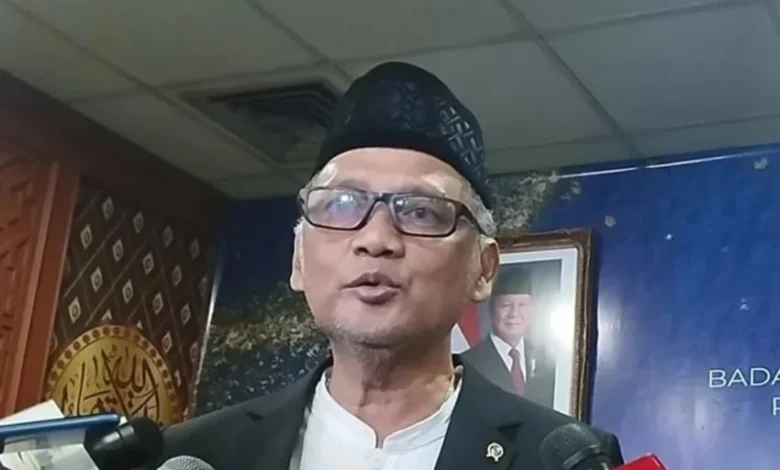
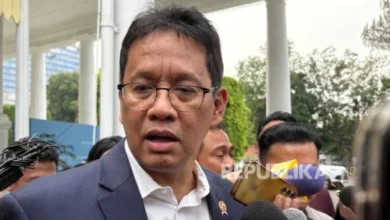
Minister of Hajj and Umrah Mochamad Irfan Yusuf, widely known as Gus Irfan, has formally addressed public concerns regarding the involvement of his family members and associates in the initial operations of the newly formed Badan Penyelenggara Haji (BP Haji). The clarification comes amidst growing public scrutiny regarding transparency, governance, and potential conflicts of interest within the ministry’s developmental phase. Addressing the media on Monday, October 26, 2026, the Minister detailed the operational constraints faced during the agency’s infancy, arguing that the reliance on personal networks was a logistical necessity rather than a breach of bureaucratic procedure.
The Genesis of BP Haji and Operational Constraints
The Badan Penyelenggara Haji (BP Haji) was established as a strategic mandate to centralize and improve the management of the Indonesian Hajj pilgrimage, a massive logistical undertaking involving the movement of hundreds of thousands of citizens to Saudi Arabia annually. According to Minister Yusuf, the organization began as a "blank slate" institution. Upon the formal inauguration of the body, the leadership faced a critical vacuum in human resources, physical infrastructure, and administrative support systems.
"When we transitioned out of the State Palace to establish the agency, we lacked everything," Gus Irfan stated. "We did not have staff, we did not have an office, and we did not have the basic tools to function." The Minister emphasized that this period was characterized by extreme urgency, as the government sought to streamline the complexities of Hajj financial management and logistical planning. Faced with these challenges, he reached out to his inner circle—specifically his son and several students from his pesantren (Islamic boarding school)—to provide immediate assistance.
Chronology of the Involvement
The involvement of the Minister’s son and his associates occurred during the critical three-to-four-month window following the agency’s inception. According to the timeline provided by the Ministry, this period was dedicated to:
- Strategic Planning: Drafting the foundational administrative bylaws and operational workflows for the new body.
- Infrastructure Setup: Sourcing temporary office space and establishing initial communication channels.
- Logistical Assessment: Beginning the preliminary audit of the existing Hajj financial management systems to ensure continuity of services.
The Minister maintains that during this foundational phase, those involved—including his son—served on a strictly voluntary basis. He explicitly stated that no salaries or government stipends were issued to these individuals during their temporary tenure. The arrangement was, according to the Minister, a "stop-gap measure" designed to prevent the total paralysis of the newly formed agency while formal recruitment processes were being finalized.
Contextualizing the Governance Debate
The controversy highlights a broader challenge faced by new government agencies in Indonesia: the tension between the need for agility in building a new institution and the rigid standards of public sector ethics. Critics argue that even if voluntary, the presence of family members in sensitive administrative roles can create a perception of nepotism, which undermines public trust in the integrity of the institution.
In the Indonesian political landscape, the appointment of family members—often referred to as politik dinasti (dynastic politics) or nepotism—is a subject of intense public discourse. However, defenders of the Minister point to the "start-up" nature of the agency. In private sector management, the use of "founding teams" consisting of trusted individuals is common practice. The question for observers is whether the same standards of flexibility should apply to state-funded organizations.
Supporting Data: The Scale of Hajj Management
To understand the scale of the crisis the Ministry faced, one must look at the financial and logistical magnitude of the Hajj. The Ministry of Hajj and Umrah has recently proposed a 2027 Hajj pilgrimage cost of Rp107.3 million per pilgrim, with the direct payment from the pilgrims themselves proposed at Rp42.9 million. This massive financial undertaking requires a high degree of administrative precision.
The complexity of managing over 200,000 pilgrims annually means that any disruption in the administrative setup could have significant implications for the cost-efficiency and quality of services provided. The government is currently under pressure to ensure that the Hajj financial fund—a substantial pool of public money—is managed with absolute transparency. This context explains why the public is particularly sensitive to any hints of non-standard hiring practices within the leadership of BP Haji.
Official Response and Legal Implications
From a legal standpoint, the appointment of individuals to public positions is governed by the State Civil Apparatus (ASN) regulations. However, the Minister’s defense rests on the argument that these individuals were not "appointed" as civil servants or official staff members receiving state salaries. Instead, they acted as a volunteer task force during an emergency-like setup phase.
Legal experts note that while there is no explicit criminal prohibition against receiving volunteer assistance in the early stages of institutional building, the administrative burden of proof lies with the Ministry to demonstrate that no government funds were misused and that these individuals did not have access to classified or sensitive government data. The Ministry has expressed its willingness to undergo internal audits to confirm that all procedural norms were followed once the agency transitioned into its formal, fully-staffed state.
Broader Impact and Implications for BP Haji
The fallout from this issue may have long-term consequences for the Ministry’s reform agenda. If the public perceives the leadership as lacking transparency, it may lead to increased scrutiny of the proposed Hajj cost structure and the management of the Hajj financial funds.
Furthermore, the incident serves as a case study for future administrative reforms in Indonesia. It raises the question of whether the government should implement a "transition team" protocol—a formal, legally protected framework for the setup of new agencies that allows for the rapid acquisition of talent without violating civil service regulations. By formalizing this process, future ministers could avoid the optics of using family members and instead rely on vetted, temporary experts.
Analysis of the Public Perception
The public response, as measured through social media and traditional news outlets, remains divided. One faction views the Minister’s explanation as a plausible, if somewhat unconventional, reaction to a bureaucratic emergency. Another faction remains skeptical, demanding a full disclosure of the names and backgrounds of all "volunteers" who assisted during that three-month window to ensure there were no underlying conflicts of interest, particularly regarding Hajj travel service providers or logistical contractors.
Moving forward, the Ministry of Hajj and Umrah must focus on demonstrating its institutional independence. With the 2027 Hajj season planning already underway, the credibility of the Minister is paramount. Any further allegations of irregular hiring could potentially derail the government’s efforts to maintain the trust of millions of prospective pilgrims who are currently contributing to the Hajj fund.
Conclusion
Minister Mochamad Irfan Yusuf’s clarification regarding the early staffing of BP Haji provides a glimpse into the chaotic nature of institutional creation. By characterizing the involvement of his son and students as a necessary, uncompensated, and temporary measure during a period of extreme administrative scarcity, he has attempted to neutralize the claims of nepotism.
However, in an era of heightened public awareness regarding government ethics, the Ministry of Hajj and Umrah will likely remain under close surveillance. The effectiveness of the agency in managing the upcoming Hajj season will be the ultimate test of its legitimacy. For the Ministry, the path forward involves not only successfully managing the logistical hurdles of the pilgrimage but also ensuring that the governance of the institution is, and is seen to be, above reproach. The episode serves as a reminder that in public office, the appearance of propriety is as critical as the reality of administrative necessity.