New York City Mayor Zohran Mamdani and Wife Receive Death Threats Amidst Outspoken Criticism of Israel and Gaza War

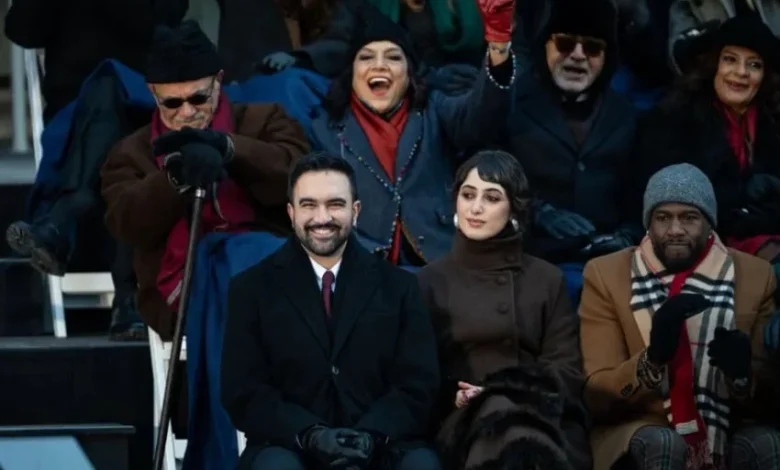
New York City Mayor Zohran Mamdani and his wife, Rama Duwaji, have recently disclosed that they have received death threats directly linked to their public statements concerning Israel and the ongoing conflict in Gaza. The revelation, made during interviews with prominent media outlets Rolling Stone and The New York Times, underscores the intense polarization surrounding the conflict and the perilous environment faced by public figures who take outspoken stances on such deeply divisive international issues. Mamdani, a prominent progressive voice, has been a vocal critic of the United States’ military aid to Israel and has condemned the killing of Palestinian civilians, escalating his criticism to call for Israeli Prime Minister Benjamin Netanyahu to face legal proceedings at the International Criminal Court (ICC) in The Hague.
The Mayor shared his personal experience with the gravity of the situation, stating, "It is difficult to prepare for death threats, but when you are ready to defend everyone, there are consequences." This statement encapsulates the profound personal cost associated with his political convictions and advocacy. Mamdani further elaborated that such threats are not new to him, having previously encountered similar intimidation during his tenure as a member of the New York State Assembly. He noted that the nature of these threats intensified and continued after his assumption of the mayoral office. Adding another layer of concern, Mamdani confirmed that his wife, Rama Duwaji, has also been subjected to criticism and threats due to her alignment with his views on Israel and Gaza, highlighting the spillover effect of political animosity onto family members of public officials.
Mamdani’s Unwavering Stance and the Escalation of Threats
Mayor Mamdani’s recent interviews provided specific insights into the nature of his critique and the subsequent backlash. In his conversation with The New York Times, he explicitly stated his belief that Prime Minister Netanyahu should be held accountable by the International Criminal Court, referencing the warrant requests issued by the ICC Prosecutor against Netanyahu and Israeli Defense Minister Yoav Gallant. These requests, made public in May 2024, sought arrest warrants for alleged war crimes and crimes against humanity in connection with the conflict in Gaza and the West Bank. Mamdani’s endorsement of this legal action places him among a growing number of international figures and human rights advocates calling for accountability on both sides of the conflict. His consistent advocacy against US military aid to Israel and his strong opposition to the killing of Palestinian civilians have been central tenets of his political platform, echoing sentiments prevalent within the progressive wing of the Democratic Party and among human rights organizations globally.
The threats, which predate his mayoral inauguration on January 1, 2026, indicate a sustained campaign of intimidation against Mamdani. His political career has been marked by a clear and consistent stance on the Israeli-Palestinian conflict, rooted in a broader commitment to human rights and international law. This consistency, while applauded by his supporters, has evidently drawn severe opposition, culminating in the reported death threats. The fact that his wife, a private citizen, has also been targeted, underscores the extreme and often personal nature of the threats faced by those in the public eye during periods of intense geopolitical tension.
Background: The Gaza Conflict and International Legal Scrutiny
The context for Mayor Mamdani’s statements and the subsequent threats is the deeply entrenched and highly emotional Israeli-Palestinian conflict, which saw a significant escalation following the October 7, 2023, attacks by Hamas on southern Israel. These attacks resulted in the deaths of approximately 1,200 people, predominantly civilians, and the abduction of over 240 hostages. In response, Israel launched a large-scale military operation in the Gaza Strip, aimed at dismantling Hamas’s military capabilities and securing the release of hostages.
The ensuing conflict has had devastating consequences for the civilian population of Gaza. According to figures from the Gaza Health Ministry, which is controlled by Hamas but whose casualty figures are often cited by UN agencies, tens of thousands of Palestinians have been killed, a significant portion of whom are women and children. The war has also led to widespread displacement, a severe humanitarian crisis marked by famine and disease, and the destruction of critical infrastructure. International organizations and human rights groups have repeatedly called for a ceasefire, unimpeded humanitarian aid access, and investigations into potential violations of international humanitarian law by all parties.
The International Criminal Court (ICC), based in The Hague, plays a crucial role in this context. Established by the Rome Statute, the ICC is a permanent international court that investigates individuals accused of genocide, war crimes, crimes against humanity, and the crime of aggression. While neither Israel nor the United States are state parties to the Rome Statute, the ICC’s jurisdiction over alleged crimes committed in the Palestinian territories has been a contentious issue. In May 2024, ICC Prosecutor Karim Khan announced he was seeking arrest warrants for Hamas leaders Yahya Sinwar, Mohammed Deif, and Ismail Haniyeh, as well as for Israeli Prime Minister Benjamin Netanyahu and Defense Minister Yoav Gallant, on charges related to the conflict. This move ignited a firestorm of international debate, with strong condemnation from Israel and the United States, who questioned the ICC’s jurisdiction and the equivalence drawn between Hamas and Israeli leadership. Mamdani’s explicit support for the ICC’s actions against Netanyahu aligns him with a perspective that prioritizes international legal accountability, regardless of geopolitical alliances.
Zohran Mamdani’s Political Trajectory and Progressive Advocacy
Zohran Mamdani’s journey to becoming the Mayor of New York City is itself a testament to the evolving political landscape of the city and the nation. An Ugandan-American, Muslim, and a self-identified democratic socialist, Mamdani first gained prominence as a member of the New York State Assembly, representing the 36th District. During his time in the Assembly, he quickly established himself as a vocal progressive, advocating for policies aimed at addressing income inequality, housing insecurity, climate change, and criminal justice reform.
His consistent and fervent support for Palestinian rights and his critique of US foreign policy in the Middle East have been hallmarks of his political identity. Mamdani’s election as Mayor of New York City, one of the most diverse and politically dynamic cities in the world, represented a significant victory for the progressive movement. His mayoral campaign resonated with a segment of the electorate eager for leadership that challenged established norms and took strong stances on both local and international issues. New York City, with its large Jewish and Arab-American populations, has historically been a microcosm of the broader Israeli-Palestinian conflict, making Mamdani’s unequivocal stance particularly significant and, for some, provocative. His background as the son of renowned academic Mahmood Mamdani, who is also a prominent critic of Western foreign policy, has likely shaped his intellectual and political framework.
The Broader Context of Threats Against Public Officials
The threats against Mayor Mamdani and his wife are not isolated incidents but reflect a disturbing trend of increasing hostility and intimidation directed at public officials in the United States and globally. In an era of heightened political polarization, fueled by social media and a fragmented information landscape, elected representatives and their families are frequently subjected to harassment, doxing, and credible threats of violence. Data from organizations like the FBI and the U.S. Capitol Police have shown a marked increase in threats against members of Congress, federal judges, and local officials in recent years. This phenomenon undermines democratic processes, discourages public service, and creates an environment where fear can stifle legitimate political discourse.
The anonymity offered by online platforms often emboldens individuals to issue threats that they might not otherwise make in person. The proliferation of conspiracy theories and extremist ideologies further exacerbates this problem, leading some individuals to believe that violence is justified in pursuit of their political objectives. For a high-profile official like the Mayor of New York City, security protocols are extensive, involving the New York City Police Department (NYPD) and other federal agencies. However, the sheer volume and often vague nature of online threats pose a significant challenge to law enforcement agencies tasked with ensuring the safety of public figures. The fact that Mamdani’s threats began before he assumed the mayoralty indicates a persistent targeting based on his political ideology rather than solely his office.
Reactions, Implications, and the Future of Political Discourse
The revelation of death threats against Mayor Mamdani and his wife is expected to elicit a range of reactions across the political spectrum. On one hand, progressive groups, civil liberties advocates, and Palestinian advocacy organizations are likely to rally in support of the Mayor, condemning the threats as an attack on free speech and democratic principles. They may view the threats as an attempt to silence a legitimate voice critical of perceived injustices. Conversely, some pro-Israel groups and political opponents may criticize Mamdani’s rhetoric as inflammatory, potentially contributing to a hostile environment, while unequivocally condemning any form of violence or threats. The debate will undoubtedly touch upon the delicate balance between freedom of expression and the potential for speech to incite hatred or violence.
The implications for New York City politics are significant. Mamdani’s administration will face the challenge of navigating a deeply divided public while ensuring the safety of its leader. The incident could further polarize the city’s diverse communities, making consensus-building on other critical urban issues more difficult. It also raises questions about the responsibility of political leaders to foster respectful discourse, even when discussing highly contentious international affairs. The Mayor’s office, in conjunction with the NYPD, would undoubtedly be implementing heightened security measures to protect Mamdani and his family, and investigations into the origin of these threats would be paramount.
On a broader national scale, Mamdani’s experience contributes to the ongoing national debate about the limits of political dissent, the role of local leaders in foreign policy discussions, and the increasing fragility of civil discourse. It underscores how global conflicts can deeply resonate at the local level, manifesting in personal attacks and threats against elected officials. Protecting elected representatives from intimidation is fundamental to the health of any democracy. The investigation into these threats, and the broader societal response to them, will serve as a crucial test of the commitment to upholding democratic values and ensuring the safety of those who choose to serve the public, even in the face of profound disagreement. The situation with Mayor Mamdani and Rama Duwaji serves as a stark reminder of the personal risks involved in public service, especially when advocating for deeply held beliefs on contentious global issues.