New Delhi, India – The Indian government has formally requested WhatsApp to postpone the rollout of its new username feature, citing significant concerns that the functionality could exacerbate the risk of online fraud and misinformation campaigns. The apprehension stems from observations, first reported by TechCrunch, that a considerable number of proposed usernames bear striking resemblances to prominent political figures and celebrities within India, creating a fertile ground for impersonation and deception.
The government’s primary worry is that the username feature, designed to simplify user identification by allowing people to be found and contacted without needing to share their phone number, could be exploited by malicious actors. For instance, usernames such as "indiamodi" and "shahrukh.actor" have been flagged as nearly identical to the names of India’s Prime Minister Narendra Modi and the globally renowned Bollywood actor Shah Rukh Khan, respectively. This level of similarity, experts suggest, could easily mislead unsuspecting users into believing they are interacting with the genuine individuals or their official representatives, thereby opening avenues for phishing scams, fraudulent schemes, or the dissemination of false narratives.
Background: The Evolution of WhatsApp and the Username Feature
WhatsApp, a ubiquitous messaging platform with over two billion active users worldwide and a significant presence in India, has historically relied on phone numbers as the primary identifier for its users. This model, while ensuring a degree of accountability, has also presented challenges in terms of privacy and discoverability. The introduction of a username feature, mirroring functionalities seen on other social media platforms like Instagram and Twitter (now X), aims to address these limitations.
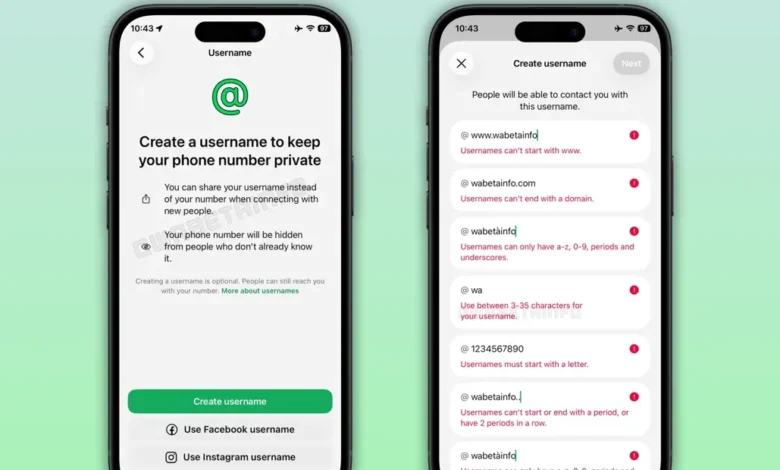
The proposed username system would allow users to select a unique handle, such as "@username," which would then be linked to their WhatsApp account. This would enable individuals to be found and contacted on the platform without revealing their personal phone number, enhancing privacy for those who wish to maintain a degree of anonymity. Furthermore, it could facilitate easier communication with businesses, public figures, and organizations that may not want to publicly share their direct phone numbers.
However, the very ease of association and the potential for creating easily recognizable handles are precisely what have raised alarms in India. The country, with its vast digital landscape and a rapidly growing internet user base, has also seen a surge in cybercrime. Reports from the Indian Computer Emergency Response Team (CERT-In) consistently highlight the prevalence of online fraud, phishing attacks, and the spread of misinformation as significant challenges. The government’s proactive stance is therefore rooted in a desire to preemptively mitigate risks within this complex digital ecosystem.
Chronology of Concerns and Official Response
The specific timeline of the government’s intervention is not entirely clear from the initial reports, but the concerns likely coalesced as WhatsApp began its internal testing or pre-launch preparations for the username feature. TechCrunch’s initial observation of potentially problematic usernames, followed by the Indian government’s formal request, marks a critical juncture in the feature’s development and deployment.
WhatsApp, a subsidiary of Meta Platforms, has responded to these apprehensions, aiming to allay fears and demonstrate that robust safeguards are being implemented. According to statements attributed to the company, WhatsApp has acknowledged the potential for misuse and has indicated that it has already established measures to reserve usernames for public figures, VIPs, and celebrities.
"People are making false claims about booking popular or famous usernames," a WhatsApp spokesperson was quoted as saying, implicitly addressing the concerns about individuals attempting to fraudulently claim prominent handles. "This is not true; only legitimate account owners can book famous public figure names." This assurance was reiterated by Meta, WhatsApp’s parent company, when contacted by TechCrunch.
The company’s strategy appears to involve a proactive reservation system for prominent individuals. This means that before the feature is fully accessible to the general public, WhatsApp would likely identify and allocate specific usernames to verified public figures. This approach is common on many social media platforms, where verification processes are in place to authenticate the identities of prominent accounts.
However, the specifics of this reservation system remain somewhat opaque. It is unclear how many variations of names and identities are covered under this "blocklist" or reservation mechanism. The government’s continued apprehension suggests that the existing measures may not be perceived as entirely sufficient to prevent all forms of impersonation. The potential for malicious actors to exploit subtle variations in spelling, the addition of numbers, or supplementary words to mimic famous names remains a significant concern. For example, while "NarendraModi" might be reserved, a username like "Narendra_Modi_Official_2024" or "RealNarendraModi" could still be created and potentially used for deceptive purposes.
Supporting Data and Broader Context
The government’s caution is amplified by the sheer scale of WhatsApp’s user base in India. As of early 2024, India boasts the largest number of WhatsApp users globally, estimated to be well over 400 million. This massive user penetration makes any new feature with potential security vulnerabilities a matter of national concern.
Furthermore, the prevalence of online scams in India is a well-documented issue. The Reserve Bank of India (RBI) has repeatedly issued warnings about various forms of digital fraud, including phishing, sextortion, and impersonation scams. These scams often leverage social engineering tactics, where perpetrators build trust by impersonating known individuals or organizations. The username feature, by allowing for more recognizable and potentially personalized identifiers, could inadvertently provide scammers with more sophisticated tools to execute these tactics.
Data from cybersecurity firms also paints a concerning picture. A report by McAfee in 2023 indicated a significant rise in cyber threats targeting Indian internet users, with social media platforms being frequently exploited. The report highlighted how fake profiles and impersonation tactics are commonly used to lure victims into financial scams or to spread misinformation.
The challenge of managing usernames is not unique to WhatsApp. Platforms like Instagram and Facebook, also owned by Meta, have grappled with similar issues. However, the nature of WhatsApp’s communication – often perceived as more intimate and direct due to its messaging-centric approach and the historical reliance on phone numbers – might amplify the impact of impersonation. When a message appears to come from a username that closely resembles a trusted figure, the immediate assumption for many users might be that it is indeed that person, leading to a less critical evaluation of the message’s content.
Analysis of Implications and Potential Ramifications
The Indian government’s request to delay the username feature has several significant implications:
- User Protection and Trust: The primary implication is the government’s commitment to safeguarding its citizens from online fraud. By intervening, India is signaling its proactive approach to digital security and its intention to ensure that new technologies do not compromise user trust.
- Platform Responsibility: This move places a spotlight on the responsibilities of technology platforms like WhatsApp. It underscores the need for robust identity verification, sophisticated fraud detection mechanisms, and transparent policies for managing user identities, especially for public figures.
- Feature Rollout Delays: The delay, if enforced, could impact WhatsApp’s global rollout plans for the username feature. This could lead to a staggered launch or necessitate significant adjustments to the feature’s design and implementation to meet regulatory requirements in countries like India.
- Precedent for Other Nations: India’s action could set a precedent for other countries that are also grappling with the challenges of online fraud and misinformation. Other governments might follow suit by scrutinizing similar features or demanding stricter safeguards from social media companies.
- Balance Between Innovation and Security: The situation highlights the ongoing tension between technological innovation and the imperative of maintaining a secure digital environment. While usernames offer convenience and enhanced privacy options, their potential for misuse necessitates careful consideration and stringent preventative measures.
WhatsApp’s Position and Path Forward
WhatsApp’s defense of its existing safeguards suggests a belief that the current measures are adequate. However, the government’s persistent concerns indicate a potential gap in perception or in the effectiveness of these measures. The company’s commitment to reserving names for public figures is a crucial step, but the devil is often in the details. The ability for users to create slightly altered but still recognizable usernames could be the very loophole that malicious actors exploit.
The path forward will likely involve intense dialogue between the Indian government and WhatsApp/Meta. Possible outcomes include:
- Enhanced Verification Processes: WhatsApp may need to implement more rigorous verification protocols for accounts that wish to claim usernames resembling public figures, potentially requiring official documentation or multi-factor authentication.
- Stricter Username Policies: The company might need to revise its policies regarding acceptable username formats, possibly prohibiting certain types of variations or the use of specific keywords that could be used for impersonation.
- Improved Reporting and Takedown Mechanisms: WhatsApp could enhance its systems for users to report impersonation attempts and expedite the process of taking down fraudulent accounts.
- Collaborative Monitoring: A more structured collaboration between WhatsApp and Indian cybersecurity agencies could be established to monitor for suspicious username registrations and activities in real-time.
The introduction of usernames on WhatsApp is a significant technological evolution for the platform. However, as India’s concerns illustrate, such advancements must be carefully balanced with the paramount need for user safety and the integrity of digital communication. The ongoing dialogue and potential adjustments to the feature’s design will be crucial in determining whether WhatsApp can successfully navigate these complex challenges and launch its new functionality in a way that fosters trust rather than fear. The global digital community will be watching closely to see how this critical issue unfolds.