Pantai Wohkudu: A Sanctuary of Serenity and Seclusion on Yogyakarta’s Southern Coast

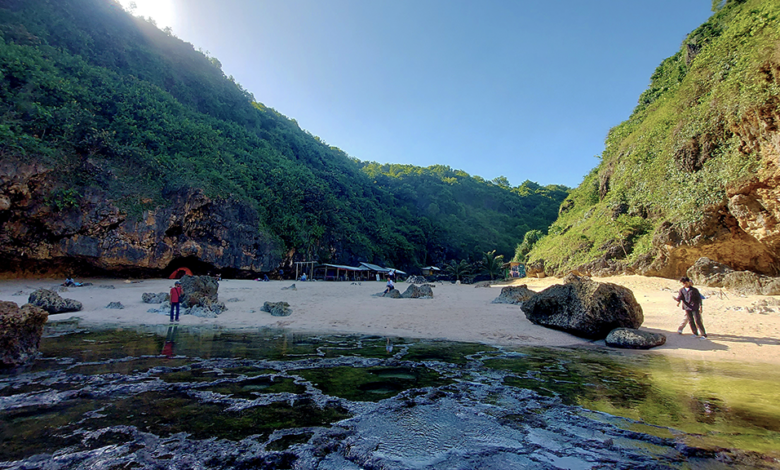
Pantai Wohkudu, nestled within the dramatic coastal landscape of Gunungkidul, Yogyakarta, offers a unique escape for travelers seeking tranquility and an unspoiled natural environment. This hidden gem, characterized by its secluded cove embraced by towering karst cliffs and a pristine stretch of white sand, has become an increasingly popular destination for those looking to disconnect from the digital world and reconnect with nature. The absence of mobile phone signal within its vicinity is not a deterrent but rather a defining feature, enhancing the serene ambiance and offering a genuine opportunity for digital detox. This article delves into the geographical location, accessibility, unique attractions, and practical considerations for visitors planning a trip to Pantai Wohkudu.
Unveiling the Location and Geography of Pantai Wohkudu
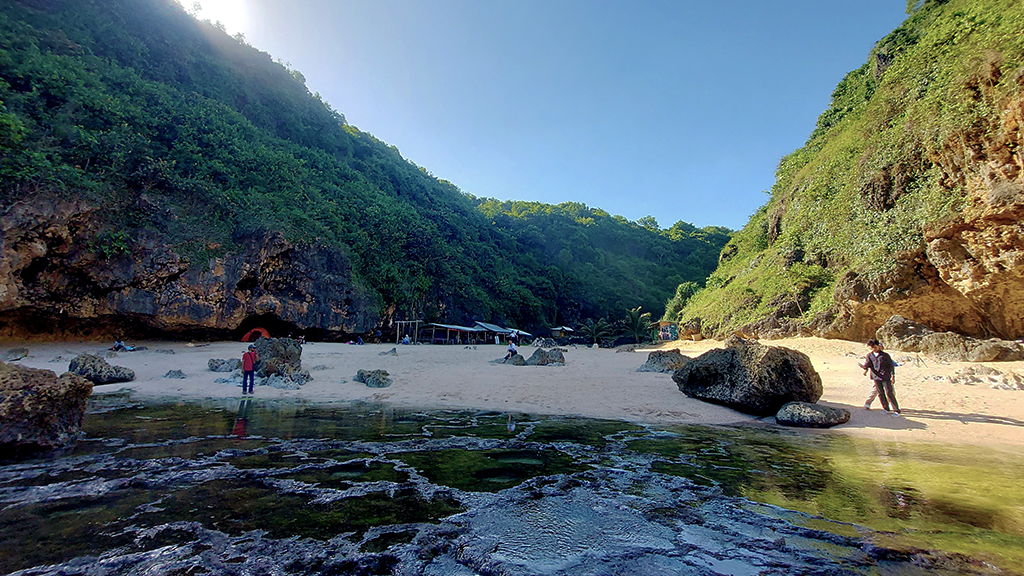
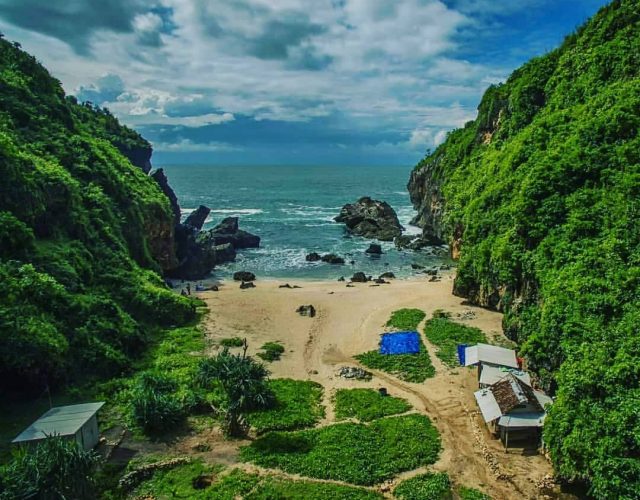
Pantai Wohkudu is strategically situated in Padukuhan Wiloso, also known as Wiroso, within Desa Girikarto, Kecamatan Panggang, Kabupaten Gunungkidul, in the Special Region of Yogyakarta. Its exact coordinates place it along the rugged southern coastline of Gunungkidul, a region renowned for its abundance of undiscovered beaches and dramatic geological formations. Unlike many of the more expansive beaches in the area, Pantai Wohkudu is best described as a small, intimate cove. Its shoreline measures approximately 20 to 25 meters in length, tightly flanked by imposing coral cliffs that rise to an estimated height of 20 meters. This distinctive geographical layout, with the cliffs acting as natural sentinels, imbues Pantai Wohkudu with a singular character, setting it apart from other coastal destinations in Gunungkidul. The unique enclosure formed by these cliffs not only provides a sense of privacy but also offers natural protection from strong winds, a crucial factor for those considering camping at the location.
Proximity to Neighboring Attractions: A Tale of Two Beaches
For visitors exploring the southern coast of Gunungkidul, Pantai Wohkudu’s proximity to Pantai Kesirat, also known as Tanjung Kesirat, is a notable advantage. The distance between these two coastal points is a mere 1 to 3 kilometers, making them easily combinable into a single itinerary. Pantai Kesirat, being more accessible and widely recognized, often serves as a starting point for excursions to Pantai Wohkudu. Travelers frequently opt for a dual-destination visit, experiencing the contrasting atmospheres of both beaches within a single day. While Pantai Kesirat offers a more popular and readily accessible experience, ideal for a relaxed afternoon, Pantai Wohkudu provides a sanctuary of profound quietude and natural immersion, catering to those in search of genuine healing and an escape from crowds. This complementary pairing allows tourists to appreciate the diverse coastal offerings of Gunungkidul, from the more developed to the remarkably untouched.
Navigating the Path: The Trek to Pantai Wohkudu
The journey to Pantai Wohkudu is an integral part of its allure, presenting a moderate challenge that filters out casual visitors and rewards the determined with a sense of discovery. The access is bifurcated into two distinct stages. The initial phase involves traversing a narrow, single-lane asphalt road. This pathway is characterized by the typical undulating terrain of Gunungkidul, featuring steep ascents and descents that require careful navigation, particularly for motorbikes and cars. The winding nature of the road and limited illumination as dusk approaches necessitate heightened vigilance.
The second stage, and arguably the most distinctive, involves a trek from the designated parking area to the cove itself. This walk spans approximately 500 to 600 meters and typically takes between 10 to 20 minutes on foot. The path is unpaved, consisting of rocky terrain that slopes downwards. It is bordered by dense bushes and teak forests, contributing to the feeling of venturing into a secluded natural enclave. A small, unmarked intersection is often encountered midway, where simple directional signs are present. Attentive observation is crucial at this point to ensure the correct route is followed, as straying can lead to disorientation.
For those traveling from Yogyakarta city center, the journey to Pantai Wohkudu typically takes between 1 to 2 hours by road, covering a distance of approximately 42 kilometers.
The Malioboro to Wohkudu Transit: A Detailed Chronology
Starting a journey from the iconic Malioboro street in Yogyakarta to Pantai Wohkudu requires careful planning and an understanding of the travel time involved. The estimated driving duration from Malioboro to the vicinity of Pantai Wohkudu is between 2 to 2.5 hours. This is followed by the 10 to 20-minute trek from the parking area to the beach. Therefore, visitors should allocate a total of approximately 2.5 to 3 hours before they can finally set foot on the sands of Pantai Wohkudu.
The most commonly adopted route involves heading towards Panggang, utilizing either Jalan Imogiri Barat or Jalan Wonosari as the primary arteries. From there, travelers are directed towards Desa Girikarto. The road conditions in this region are notably winding, emphasizing the need for physical freshness and a well-maintained vehicle. Particular attention should be paid to the braking system and tires due to the presence of numerous sharp descents along the route.
Economic Considerations: Entrance Fees and Associated Costs
The financial outlay for visiting Pantai Wohkudu is generally considered modest, aligning with its status as a less commercialized destination. Visitors are typically required to pay a nominal entrance fee, a parking fee for their vehicles, and additional charges if they intend to engage in overnight camping. These costs are significantly lower compared to more developed beaches like Indrayanti or Baron, which boast more comprehensive facilities and management structures.
However, it is important to note that the exact figures for these fees are subject to change based on the local management’s policies. Relying solely on information from the internet, including this article, as definitive cost benchmarks is not advisable. The most reliable approach is to prepare sufficient cash for the visit and inquire directly with the officials or local residents stationed at the entrance post or parking area upon arrival. This ensures accurate and up-to-date information regarding the required payments.
The Enchantment of Camping at Pantai Wohkudu: An Unforgettable Experience
One of the primary draws for visitors to Pantai Wohkudu is the opportunity for overnight camping. The beach features a relatively flat grassy area situated just before the shoreline, which appears to be naturally designed for setting up tents. Some adventurous campers opt to pitch their tents directly on the sandy stretch closer to the water’s edge, seeking to immerse themselves in the continuous symphony of crashing waves throughout the night.
The protective embrace of the two flanking cliffs provides a significant advantage for campers, acting as a natural shield against strong gusts of wind. This offers a more secure camping environment compared to exposed beaches without natural barriers. For those planning a campfire, bringing firewood is a necessity. The experience of spending a night under a canopy of stars, accompanied by the rhythmic sound of the ocean, is a rare and cherished memory that many other beaches seldom offer.
A crucial reminder for campers is to meticulously pack all necessary camping equipment and sufficient food supplies. The availability of food stalls in the vicinity is extremely limited, and not all are operational throughout the night. For group outings, delegating responsibilities for essential items such as tents and cooking equipment is highly recommended to avoid duplication or oversight. This proactive approach ensures a smoother and more enjoyable camping experience.
Pantai Wohkudu’s Allure: White Sands and Natural Wonders
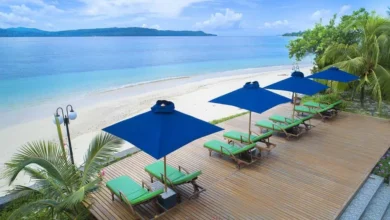
Despite its compact size, Pantai Wohkudu boasts clean white sand that creates a striking visual contrast against the verdant green of the surrounding karst cliffs. The atmosphere is inherently private and peaceful, primarily due to its smaller scale and the comparatively lower number of visitors. This seclusion fosters a feeling of having one’s own personal beach. During low tide, the rocky crevices along the shoreline reveal a vibrant ecosystem, home to crabs, snails, starfish, and sea urchins. The eastern section of the beach is also a favored spot for local fishermen, who are often seen returning with fresh catches, including lobsters.
The sunset at Pantai Wohkudu, viewed through the dramatic silhouettes of the two cliffs, is a spectacle highly sought after by photographers and casual travelers alike. The interplay of light and shadow cast by these towering rock formations creates a profoundly dramatic ambiance. The combination of high cliffs, white sand, and the vast expanse of the ocean makes this location a prime spot for capturing aesthetically pleasing photographs of Pantai Wohkudu, ideal for enthusiasts looking to curate visually appealing social media feeds.
A significant caution for visitors is to refrain from swimming at Pantai Wohkudu. The waves here can be quite powerful, and the seabed is characterized by rocky formations. It is advisable to enjoy the scenery from the edge of the water or to engage in light water play in the shallow areas.
Facilities and Visitor Testimonials: A Developing Landscape
Historically, Pantai Wohkudu was characterized by a scarcity of facilities. However, over time, improvements have been made to enhance the visitor experience. Currently, basic amenities typically include simple restrooms, a small prayer area (mushola), a parking area managed by local residents, and a few modest food stalls offering snacks and simple meals like nasi goreng. Nevertheless, visitors should temper their expectations and not anticipate the extensive facilities found at larger, more established beaches such as Baron or Indrayanti. Carrying personal provisions, including food and drinking water, remains the most prudent course of action, irrespective of the facilities encountered on-site.
Visitor reviews generally commend the tranquil, natural, and uncrowded atmosphere of Pantai Wohkudu. The most frequently cited drawbacks pertain to the challenging trekking path, particularly after rainfall, and the limited availability of amenities when compared to more popular and developed beaches.
Essential Pre-Travel Preparations for Pantai Wohkudu
To ensure a smooth and enjoyable journey to Pantai Wohkudu, it is advisable to consider several practical tips. Directional signage leading to the beach can be small and easily missed, especially at intersections after the Panggang junction. Therefore, visitors should reduce their speed and pay close attention to all road signs encountered along the way.
Given the limited facilities around the beach, particularly after sunset, it is recommended to bring personal lighting sources such as flashlights or headlamps if planning an overnight camping trip. Relying on local food stalls for sustenance should be done with caution, as their availability and operating hours can vary significantly depending on the day and the number of visitors. Carrying an adequate supply of personal food provisions is therefore strongly advised.
For those interested in fishing at the eastern cliff, known for its lobster population, it is essential to bring personal fishing gear, as rental services are not available in the vicinity. It is also important to remember that the return journey from the beach is physically more demanding than the descent. The 500 to 600-meter downhill path transforms into a steep uphill climb on the way back to the parking area. Consequently, visitors should conserve their energy and avoid depleting it entirely during photo opportunities upon arrival.
Accessing the cliffs for photography or fishing poses its own set of risks. The paths are narrow, steep, and can be slippery, especially after rain or in the early morning dew. It is recommended to only venture onto these paths if one has prior experience with similar terrain or is adequately prepared for the challenges. Most importantly, visitors are urged to bring their own trash bags and ensure they leave no waste behind, thereby preserving the pristine condition of the beach for future visitors.
Pantai Wohkudu is not a destination for those seeking opulence or comprehensive amenities. Its primary appeal lies precisely in these limitations, coupled with its challenging access and remarkably natural environment. For individuals yearning for a seaside camping experience with a high degree of privacy or a tranquil retreat far from the urban clamor, Pantai Wohkudu is a compelling addition to any itinerary for a trip to Gunungkidul. Adequate physical preparation, carrying essential supplies, and embracing the unique charm of this location will undoubtedly lead to a memorable experience, particularly when witnessing the iconic sunset framed by its distinctive cliffs.