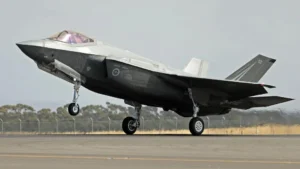
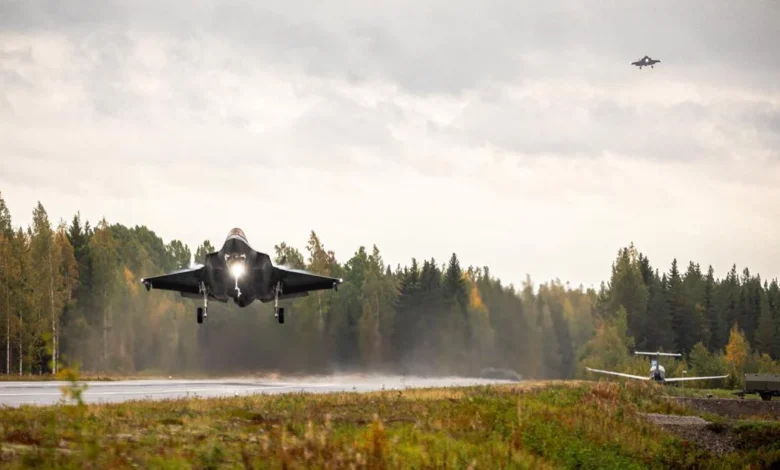
The United States Department of Defense has initiated a high-level inquiry following the reported diversion of critical components belonging to the F-35 Lightning II stealth fighter program. The parts, which were originally slated for shipment from an Australian logistics hub to the United States, were tracked to Hong Kong, raising significant questions regarding the security of the global supply chain for one of the world’s most advanced weapons platforms. While both Washington and Canberra have emphasized that there is no immediate evidence of intentional state-sponsored interception or malicious interference by Chinese authorities, the incident has highlighted the vulnerabilities inherent in the complex, multinational logistics network that sustains the F-35 program.
Chronology of the Disappearance and Discovery
The breach in the supply chain first came to light following investigative reporting by Politico, which detailed that a shipment containing specialized F-35 components—specifically including cockpit canopy materials with advanced radar-absorbent coatings and internal weapons bay door hardware—had failed to reach its intended destination in the United States. Instead, the cargo was recorded as having arrived in Hong Kong.
Following the discovery, the Pentagon’s F-35 Joint Program Office (JPO) confirmed it had been made aware of the logistical anomaly. In coordination with the United States government and the program’s prime contractor, Lockheed Martin, the JPO initiated recovery protocols to secure the hardware. While the timeline of the transit remains under internal review, officials have confirmed that the components were shipped from the Williamtown facility in Australia, which serves as a critical regional maintenance and logistics hub for the Asia-Pacific F-35 fleet.
The Complexity of the Global Supply Chain
The F-35 Lightning II is widely considered the crown jewel of modern military aviation, representing a massive collaborative effort between the United States and international partners. The program’s industrial footprint is vast, involving thousands of suppliers across multiple continents. Lockheed Martin, the primary manufacturer, manages a global sustainment strategy designed to ensure that the 19 nations currently operating or procuring the aircraft have access to a continuous flow of spare parts and maintenance expertise.
The logistics network is intentionally decentralized to maintain operational readiness. Currently, there are over 1,200 F-35 aircraft in service worldwide. To support this fleet, major regional hubs have been established to reduce transit times and ensure that local fleets remain mission-capable. The Williamtown hub in New South Wales, Australia, is one such facility, supporting the Royal Australian Air Force’s (RAAF) fleet of 72 F-35A aircraft.
However, as Alex Gatopoulos, a defense analyst, noted, the very nature of this globalized supply chain creates significant administrative and security complexity. With components manufactured by subcontractors in at least 11 countries, the chain of custody is susceptible to disruptions, whether through administrative error, commercial shipping failures, or, in the worst-case scenario, state-level espionage.
Official Responses and Damage Control
In the wake of the reports, Australian Minister of Defence Richard Marles sought to lower the temperature regarding the potential impact of the incident. During a press briefing, Marles confirmed that Australia is cooperating fully with the United States and Lockheed Martin to determine the exact cause of the diversion.
"We are reviewing everything that occurred on the Australian side," Marles stated, emphasizing that the components in question were not considered "sensitive" or mission-critical in a way that would compromise the core stealth capabilities of the aircraft. By downplaying the sensitivity of the hardware, the Australian government aims to mitigate fears that core radar-evading technology or proprietary sensor software could have been compromised.
Meanwhile, the Chinese Ministry of Foreign Affairs, when pressed for comment on the reports, stated that it had no knowledge of the incident. The lack of an official response from Beijing, combined with the silence from the Pentagon regarding the specific "why" behind the diversion, has left a void that military analysts are currently attempting to fill.
Lockheed Martin Australia, for its part, maintained a rigid stance on its security protocols. While the company refused to disclose specific shipping procedures or the details of this particular case due to strict national security regulations, it emphasized that every shipment is handled with "maximum caution" and in strict adherence to U.S. International Traffic in Arms Regulations (ITAR).
Assessing the Security Implications
The primary concern regarding this incident is not necessarily the physical hardware itself, but the broader precedent of a supply chain breach involving one of the most guarded defense technologies in history. The F-35 is famous for its "Low Observable" (stealth) technology, which relies on a combination of airframe geometry and sophisticated radar-absorbent materials. Any access to the materials used in the cockpit canopy or the weapons bay—even if the components are not "active" electronic systems—could provide foreign intelligence agencies with a window into the manufacturing tolerances and material composition that give the F-35 its stealth profile.
The incident occurs against a backdrop of intensifying concerns regarding Chinese industrial and military espionage. Washington has been increasingly vocal about the efforts of the People’s Liberation Army (PLA) to acquire Western defense technology through illicit means. Just months prior to this incident, a former U.S. Navy sailor was sentenced to 16 years in federal prison for selling sensitive military manuals and technical specifications to a Chinese intelligence officer. Such cases have fueled a climate of heightened vigilance within the Pentagon.
The Question of Accountability
A critical issue emerging from the investigation is the lack of centralized control over the logistics process. While Lockheed Martin manages the supply chain under the umbrella of the U.S. military, officials from the Australian Department of Defence have previously indicated that Canberra does not exercise direct control or oversight over the export logistics of F-35 components originating from their own domestic hubs. This delegation of authority to the prime contractor and international logistics firms appears to be a focal point of the current inquiry.
Questions are being raised as to whether the commercial shipping channels utilized for these parts are sufficiently vetted, or if the "globalized" nature of the program has outpaced the security infrastructure required to protect its assets.
Broader Impact on Defense Cooperation
The incident is unlikely to derail the F-35 program, which remains central to the defense strategies of both the U.S. and its allies. However, it will almost certainly trigger a comprehensive audit of all logistics procedures involving the Asia-Pacific hub. For Australia, which has invested billions into the F-35 program to modernize its air force, the incident represents an embarrassing, albeit manageable, logistical failure.
For the United States, the incident serves as a stark reminder of the "gray zone" risks in military sustainment. In an era where supply chain resilience is as vital as frontline firepower, the ability to ensure that components move from point A to point B without being intercepted or diverted is a fundamental requirement of national security.
As the Pentagon continues its investigation, the focus will likely shift to strengthening the oversight of third-party logistics providers and tightening the chain of custody for all shipments, regardless of how "non-sensitive" the components may appear. Until the full details of the diversion are made public—or at least addressed through enhanced security measures—the incident will remain a case study in the perils of modern military logistics. Whether the diversion was a simple case of a cargo ship being routed through an international transit port due to administrative error or something more calculated, the event has effectively sounded a warning bell for defense planners across the globe.
Related posts: