Historical Chronology and Discovery
The documented history of Goa Lowo—literally translated as "Bat Cave"—dates back to 1931. While local communities had long been aware of the cave’s existence, it was during this period that it gained wider recognition as a geological site of interest. For several decades, the cave remained largely undisturbed, serving primarily as a habitat for thousands of bats and other cave-dwelling fauna.
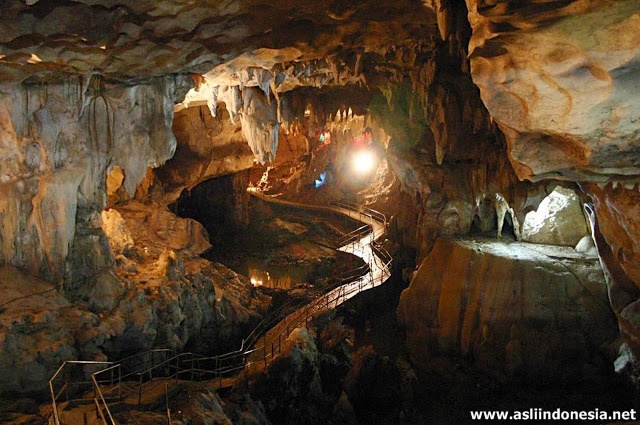
It was not until 1984 that the local government of Trenggalek officially designated the site as a managed tourism object. This transition marked a significant shift in how the cave was perceived; it moved from being a remote, wild landscape to an infrastructure-supported destination. Over the ensuing decades, authorities implemented various improvements, including the installation of lighting, pathway reinforcements, and safety measures, to allow public access to the cave’s expansive galleries.
Geological Significance and Natural Architecture
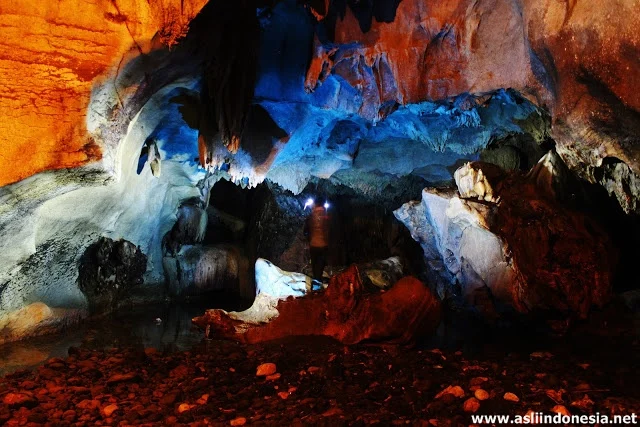
The geological profile of Goa Lowo is characterized by its massive scale and intricate formation of secondary minerals. Spanning a total estimated length of approximately two kilometers, the cave system is a prime example of a tropical karst landscape. Currently, the local management permits public exploration of the first 850 meters of the cave, while the remaining stretch is largely preserved for scientific research and specialized subterranean exploration, specifically involving underground river systems.
One of the most notable features of the cave is the presence of "living" stalactites and stalagmites. In geological terms, these formations are considered active because the process of mineral deposition via water seepage continues to this day. Unlike "dead" caves, where moisture has ceased to flow, the active status of these formations allows for the slow but consistent growth of these speleothems.
Visitors frequently observe distinct, naturally occurring rock formations that have been identified by their resemblance to organic or man-made objects. Among the most documented are shapes that locals and guides liken to turtles, lions, birdcages, and traditional Javanese monuments like the Tugu Buceng. These formations are the result of thousands of years of chemical weathering and carbon dioxide-rich water dripping through limestone cracks, creating the sculptural aesthetics that define the interior of the cave.
Strategic Location and Accessibility
Goa Lowo is situated in Watuagung, a strategic area within the Watulimo District that has become a hub for eco-tourism in East Java. The accessibility of the site has been a priority for the local transport department, which has ensured that the primary routes are paved and maintained.
Travelers approaching from the center of Trenggalek typically follow a route that transitions from urban road networks into the rural landscapes of the southern hills. The journey involves traversing routes such as the Dongko-Kampak road and the Kampak-Watulimo connector. While the roads are generally in good condition, the topography of the region requires drivers to exercise caution due to the frequent elevation changes, winding paths, and varying road widths.
For those planning transit, three primary routes are identified by local transport authorities:
- The route via Jl. Raya Bandung-Prigi (35 km, approximately 57 minutes).
- The route via Jl. Raya Boyolangu and Jl. Raya Bandung (35.7 km).
- The route via Jl. Ki Mangun Sarkoro and Jl. Raya Bandung (37 km).
The preference for the first route is due to its efficiency and the relative quality of the infrastructure, which allows for a smoother transit for tourist buses and private vehicles.
Economic and Tourism Impact
The management of Goa Lowo has instituted a tiered pricing structure to support the ongoing maintenance and preservation of the cave’s fragile ecosystem. Currently, the entrance fee is set at IDR 20,000 for weekdays, increasing to IDR 25,000 for weekends and national holidays. This fee structure is designed to offset the costs of electricity for the internal lighting systems, pathway security, and the preservation of the cave’s internal atmosphere.
The impact of the cave on the local economy is substantial. As a flagship tourist destination, it supports a variety of secondary businesses, including local food stalls, souvenir shops, and the provision of tour guide services. By centralizing tourist activity in the Watulimo District, the cave contributes to the broader development goals of the Trenggalek Regency, which seeks to balance industrial growth with sustainable tourism.
Environmental Stewardship and Preservation
The management of a site as vast as Goa Lowo requires constant environmental vigilance. The introduction of artificial lighting, while necessary for tourism, must be carefully balanced with the need to prevent the growth of algae on the limestone surfaces, a phenomenon often referred to as "lampenflora."
Furthermore, the existence of the underground river system necessitates strict regulations on human activity within the deeper, unlit sections of the cave. The regional environmental department emphasizes that the preservation of the cave’s humidity and temperature is essential for the continued survival of the bat colonies and the delicate mineral growth. Educational programs for visitors are often implemented to discourage the touching of stalactites, as oils from human skin can disrupt the mineral deposition process.

Regional Development and Future Outlook
The Trenggalek government continues to view the site as a key pillar in its tourism roadmap. There have been ongoing discussions regarding the potential for further scientific study in the unexplored 1.2 kilometers of the cave. Such research could offer insights into the hydrogeological history of the region and potentially uncover new archaeological data, as many caves in this region have historically served as early human shelters.
Local authorities and tourism boards are also looking into enhancing the digital infrastructure around the site to improve the visitor experience. This includes better information dissemination regarding safety protocols and geological education, moving beyond the simple "attraction" model toward a more holistic, educational, and sustainable model of tourism.
Socio-Economic Implications
The existence of a landmark like Goa Lowo provides a stabilizing effect on the local community of Watuagung. By providing steady employment through tourism-related services, the cave acts as an economic buffer, reducing the reliance on traditional agriculture. Moreover, the site has become a focal point for regional branding, with the Trenggalek administration frequently using the image of the cave to promote the regency as an adventure and nature-based travel destination.
The challenges moving forward remain centered on the balance between capacity and conservation. As tourism numbers grow, the stress on the cave’s infrastructure increases. Managing the flow of visitors during peak holiday seasons is critical to ensuring that the site does not suffer from physical degradation. Consequently, the local government has indicated that future expansions will be focused on "green" infrastructure, minimizing the footprint of human activity while maximizing the educational value for the public.
In summary, Goa Lowo remains a jewel of East Javanese natural heritage. Its combination of historical depth, geological complexity, and accessibility makes it a significant site for both local recreation and scientific interest. As it moves into its ninth decade of service as a tourist destination, the focus remains on ensuring that its status as the longest and largest cave in Southeast Asia is matched by an equal commitment to its long-term preservation and sustainable management. The cave continues to invite travelers to witness the slow, rhythmic transformation of the earth, standing as a testament to the natural wonders contained within the limestone hills of Trenggalek.
Related posts: