
Government Greenlights Eid al-Fitr 2021 Mudik Amid Public Health Warnings and Strict Mitigation Plans

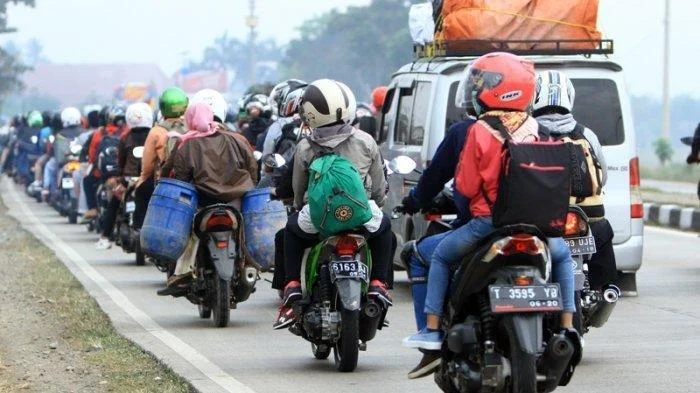
The Indonesian government officially announced that citizens would be permitted to travel to their hometowns for the annual Eid al-Fitr homecoming, widely known as mudik, for the Islamic calendar year 1442 H (2021). This landmark decision marked a distinct departure from the sweeping travel bans enacted during the onset of the global COVID-19 pandemic in 2020. However, the policy immediately triggered widespread debate among public health experts, epidemiologists, and policymakers regarding the delicate balance between economic mobility, cultural traditions, and epidemiological safety.
Chronology and Official Policy Announcement
The official stance of the executive branch regarding the 2021 mudik exodus was crystallized on Tuesday, March 16, 2021. During a formal working session between the Ministry of Transportation and Commission V of the House of Representatives (DPR RI), Minister of Transportation Budi Karya Sumadi formally addressed the status of the upcoming holiday season. He stated clearly that the Ministry of Transportation would not prohibit citizens from returning to their hometowns, differentiating the stance from an active government recommendation to travel.
Minister Sumadi emphasized that while the ministry lacks the regulatory mandate to issue official travel advisories urging people to move, it does hold the authority to regulate, supervise, and secure the transportation networks. Following the parliamentary hearing, the Ministry of Transportation outlined a collaborative framework with the national COVID-19 Task Force. The primary objective of this inter-agency coordination was to construct a robust operational mechanism that would prevent the annual migration from becoming a major vector for viral transmission into rural communities and residential provinces.
Through announcements on official communication channels, including his personal social media platforms, Minister Sumadi underscored that the government would proactively consult with regional administrations, health authorities, and transportation operators. The central strategy relied on intensifying health screening requirements, improving contact tracing capabilities, and enforcing strict compliance protocols across all commercial and private transit corridors.
Comprehensive Terms and Conditions for Travel
To operationalize the 2021 mudik policy safely, the Ministry of Transportation, in coordination with the COVID-19 Task Force, introduced a series of stringent conditions and protocols for travelers. These measures were designed to mitigate the inherent contagion risks associated with the movement of millions of citizens across the archipelago.
First, the enforcement of rigorous health protocols—commonly referred to in Indonesia as 3M (wearing masks, maintaining physical distance, and washing hands)—became mandatory across all phases of the journey. This oversight applied universally from departure terminals, during transit aboard vehicles, vessels, and aircraft, to the final arrival at destinations.
Second, transport authorities anticipated massive passenger surges at critical infrastructure hubs. To counteract overcrowding, officials mandated enhanced tracing mechanisms and shortened validity periods for mandatory pre-departure screening tools, such as rapid antigen tests and polymerase chain reaction (PCR) swabs.
Third, public and private transportation providers were subjected to heightened regulatory scrutiny. Measures included mandatory and regular disinfection of transport facilities and infrastructure, strict limitations on passenger capacity to enforce physical distancing, and tightly regulated operational schedules. Minister Sumadi repeatedly appealed to public self-awareness, stressing that the success of the containment strategy heavily depended on individual compliance with health guidelines. Despite these frameworks, the precise operational blueprint continued to evolve through iterative consultations between the Ministry of Transportation and relevant stakeholders leading up to the holiday.
Epidemiological Concerns and Expert Warnings
The government’s decision to permit the 2021 mudik was met with considerable skepticism and pessimism from epidemiological experts and public health professionals. Critics argued that despite the rollout of national vaccination campaigns, the epidemiological baseline remained fragile, and the potential for uncontrolled viral transmission persisted.
Dr. Riris Andono Ahmad, an epidemiologist from Universitas Gadjah Mada (UGM), provided critical analysis regarding the rationale behind the government’s policy. He noted that the decision appeared to be predicated on the assumption that the national immunization coverage was sufficiently advanced to control community transmission. However, Dr. Andono Ahmad countered that the presence of vaccination coverage alone did not provide an absolute shield against outbreaks if public adherence to health protocols collapsed. He warned that if travelers abandoned preventive behaviors, the transmission dynamics of SARS-CoV-2 would mirror pre-vaccination conditions.
A central point of contention raised by public health experts involved the choice of transportation modalities. Dr. Andono Ahmad highlighted that public transportation systems offered superior safety margins compared to private vehicles because terminals, stations, and airports were systematically equipped with advanced screening technologies, such as the domestically developed GeNose C19 breathalyzer test and rapid antigen diagnostic tools.
Conversely, long-distance travel conducted via private automobiles and motorcycles posed a profound surveillance challenge. Without centralized checkpoints and rigorous oversight, private transit served as a primary vector for unmonitored viral transmission into regional districts and remote villages. Consequently, health authorities strongly encouraged citizens to utilize regulated public transportation networks, which facilitated government oversight and contact tracing in the event of localized outbreaks.
The Illusion of Post-Vaccination Immunity in Public Spaces
A recurring challenge identified during the policy formulation phase was public complacency among vaccinated individuals. Public health officials and academic researchers repeatedly emphasized that receiving a COVID-19 vaccine did not render an individual entirely immune to infection, nor did it eliminate the capacity to transmit the virus to vulnerable populations in public spaces.
Dr. Andono Ahmad stressed that strict adherence to health protocols remained non-negotiable, irrespective of an individual’s vaccination status. He voiced professional concern that the macro-level risks associated with the 2021 mudik season warranted a complete postponement of the traditional exodus. His projections indicated that by the time Eid al-Idul Fitr 2021 arrived, the national pandemic emergency would not have concluded, and population-wide vaccination coverage would still fall short of the threshold required to achieve herd immunity.
Broader Implications and Socio-Economic Trade-Offs
The policy dynamics surrounding the 2021 mudik debate reflected a broader, ongoing dilemma faced by governments worldwide: balancing the imperative of public health preservation with the socio-economic and psychological necessities of population mobility. For millions of Indonesians, mudik represents a deeply ingrained cultural and religious tradition vital for social cohesion and familial bonding after months of pandemic-induced isolation.
However, the decision to keep borders open for homecoming travel placed immense pressure on local healthcare infrastructures in rural provinces, which historically possessed fewer medical resources, intensive care units, and specialized personnel compared to major metropolitan centers like Jakarta, Surabaya, and Bandung. The reliance on novel screening technologies like GeNose and expanded testing mandates represented an administrative effort to reconcile these competing pressures. Ultimately, the 2021 mudik period served as a critical stress test for Indonesia’s pandemic management architecture, highlighting the complexities of enforcing compliance in a decentralized nation of over 270 million people navigating an ongoing global health crisis.