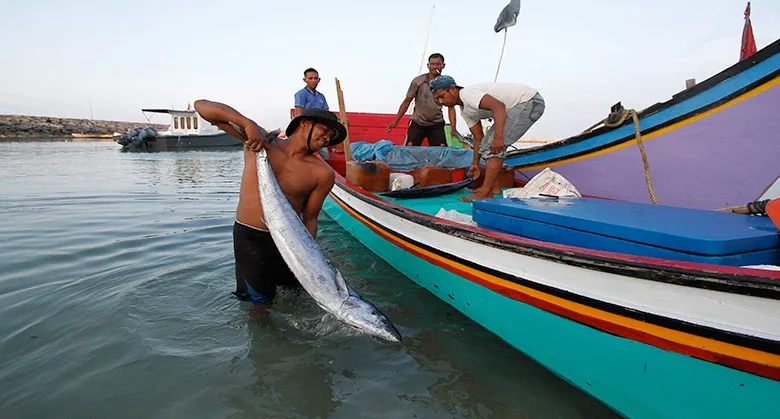
JAKARTA – The Indonesian government has officially announced a special fuel price of Rp15,000 per liter for fishing vessels ranging from 30 to 200 gross tons (GT), a significant policy intervention aimed at supporting the nation’s vital fisheries sector. The directive, issued by President Prabowo Subianto, seeks to mitigate the escalating operational costs faced by medium-scale fishing enterprises, thereby ensuring the sustainability and competitiveness of the industry. Coordinating Minister for Economic Affairs Airlangga Hartarto confirmed the new pricing structure, emphasizing its role in bridging the significant cost disparity between heavily subsidized fuel for small-scale fishermen and the previously high market rates for larger vessels. The policy, effective Sunday, July 19, 2026, marks a pivotal moment in the government’s commitment to strengthening one of the archipelago nation’s most crucial economic pillars.
Background: Indonesia’s Maritime Economy and the Role of Fisheries
As the world’s largest archipelagic state, Indonesia boasts immense maritime resources, with its fisheries sector playing a multifaceted role in the national economy. The sector contributes substantially to the Gross Domestic Product (GDP), provides employment for millions of people across coastal communities, and is fundamental to the nation’s food security. Indonesian waters are home to a rich diversity of fish, crustaceans, and mollusks, making the country one of the leading global producers of seafood. However, the sector is also characterized by significant challenges, including illegal, unreported, and unregulated (IUU) fishing, issues of sustainability, and, critically, the fluctuating and often prohibitive cost of operational inputs, predominantly fuel.
Small-scale fishermen, typically operating vessels under 10 GT, have historically benefited from highly subsidized fuel, often a biodiesel blend like B50, which was previously priced at Rp6,800 per liter. This support system acknowledges their role in artisanal fishing and their limited economic capacity. In contrast, larger commercial fishing fleets have typically relied on non-subsidized fuel, which saw prices soar to Rp21,300 per liter prior to this new policy. This vast price differential created an unsustainable economic burden for medium-sized vessels, which, despite their significant contribution to the national fish supply, found themselves caught between the benefits of small-scale subsidies and the full brunt of market prices. The economic viability of these mid-sized operations, crucial for transporting catch from remote fishing grounds to larger markets and processing facilities, was increasingly jeopardized, threatening the entire fisheries supply chain.
The Policy Unveiled: Addressing High Operational Costs
The newly established special fuel price of Rp15,000 per liter for vessels between 30 and 200 GT is designed to specifically address this gap. These vessels, often engaged in longer fishing expeditions and equipped with more advanced gear, represent a significant portion of Indonesia’s commercial fishing fleet. They bridge the gap between artisanal methods and large-scale industrial operations, contributing significantly to both domestic consumption and export markets. The prohibitive cost of fuel, which can account for up to 60-70% of a fishing trip’s total operational expenses, had severely curtailed their profitability and operational range. Many medium-sized vessel owners were forced to reduce fishing days, cut down on crew wages, or even moor their vessels indefinitely, leading to job losses and a reduction in the overall fish supply.
President Prabowo Subianto’s directive underscores a strategic vision to bolster key economic sectors and ensure national resilience. The emphasis on "keberlanjutan usaha sektor perikanan" (sustainability of the fisheries business sector) highlights a commitment not just to immediate relief but to fostering long-term stability and growth. The administration recognizes that a robust fisheries sector is integral to national food security, job creation, and export diversification. The special fuel price is therefore not merely a subsidy but an investment in the foundational infrastructure of Indonesia’s maritime economy.
Airlangga Hartarto’s Statement and Contextualizing Fuel Prices
Coordinating Minister for Economic Affairs Airlangga Hartarto, a key figure in the policy’s formulation and announcement, articulated the government’s rationale. "The government has set a special fuel price for fishing entrepreneurs using vessels sized between 30 and 200 GT at Rp15,000 per liter," Hartarto stated. He elaborated on the preceding market conditions that necessitated this intervention: "Previously, B50 fuel specifically for fishermen under 30 GT had been provided at Rp6,800. Meanwhile, the price of non-subsidized fuel had surged to Rp21,300 per liter." This stark contrast illustrates the economic squeeze faced by mid-sized operators.
The term B50 refers to a biodiesel blend containing 50% fatty acid methyl ester (FAME) derived from palm oil and 50% diesel fuel. Indonesia, a major palm oil producer, has actively promoted biodiesel to reduce reliance on fossil fuels and absorb domestic palm oil production. While B50 has been a successful initiative for small-scale fishermen, extending a similar, albeit adjusted, support mechanism to larger vessels demonstrates a pragmatic approach to energy policy within the fisheries sector. The Rp15,000 price point for the 30-200 GT category is a calculated compromise, offering substantial relief from the non-subsidized rate while acknowledging the larger scale of these operations compared to artisanal fishing. It also reflects a differentiated approach to subsidies, recognizing the diverse needs and economic capacities within the vast fishing community.
Chronology of Policy Development and Implementation
The journey towards this special fuel price policy was likely multifaceted, involving extensive inter-ministerial coordination and economic analysis. While the public announcement was made on July 19, 2026, the groundwork would have begun much earlier, possibly stemming from:
- Early 2026: Initial assessments by the Ministry of Maritime Affairs and Fisheries (KKP) and the Ministry of Energy and Mineral Resources (ESDM) regarding the escalating operational costs in the fisheries sector, particularly for medium-sized vessels. Discussions with fishermen associations likely highlighted their increasing distress.
- March-April 2026: Inter-ministerial meetings, possibly chaired by the Coordinating Minister for Economic Affairs, to analyze the economic impact of high fuel prices on the fisheries supply chain and explore potential policy interventions. This would involve fiscal impact assessments and logistical planning.
- May 2026: A formal proposal is presented to President Prabowo Subianto, outlining the challenges and proposed solutions, including a tiered fuel subsidy structure.
- June 2026: Presidential directive issued, instructing relevant ministries to finalize the policy details, including pricing, eligibility criteria, and distribution mechanisms.
- Early July 2026: Finalization of the policy framework, including discussions with state-owned enterprises like Pertamina, which would be responsible for fuel distribution.
- July 17, 2026: The official announcement of the policy and the Rp15,000/liter price is prepared for public dissemination.
- July 19, 2026: Public announcement by Coordinating Minister Airlangga Hartarto, detailing the policy and its immediate implications.
- Post-July 2026: Expected phased implementation, including the establishment of designated fuel stations (SPBN) or specific distribution channels for these eligible vessels, along with robust monitoring systems.
The Economic Imperative: Why Target Medium-Sized Vessels?
Medium-sized fishing vessels (30-200 GT) are crucial to Indonesia’s overall fisheries ecosystem. They are often equipped for longer voyages, allowing them to access richer fishing grounds farther from shore. Their capacity enables them to bring larger hauls back to port, supplying a significant portion of the fish consumed domestically and destined for export processing plants. Unlike small-scale vessels that primarily serve local markets, these vessels are integral to the national food supply chain, connecting remote fishing communities with urban centers and international markets.

The fuel consumption of these vessels is substantial, far exceeding that of smaller boats. A single fishing trip can consume thousands of liters of fuel, making fuel costs the dominant factor in their profitability. When fuel prices spike, these vessels are disproportionately affected, leading to:
- Reduced Fishing Days: Operators shorten trips or reduce the frequency of outings to save on fuel, leading to lower catch volumes.
- Shrinking Margins: Even with good catches, high fuel costs erode profits, making the business unsustainable.
- Increased Fish Prices: To offset costs, some operators might pass on expenses to consumers, leading to higher seafood prices in markets.
- Investment Stagnation: Owners become hesitant to invest in vessel upgrades, maintenance, or new technology, hindering modernization and efficiency.
By targeting this specific category, the government aims to stabilize a critical segment of the fishing industry, preventing widespread economic hardship among operators and ensuring a consistent supply of fish. This strategic intervention supports not only the vessel owners and their crews but also countless ancillary businesses, from ice producers and net repairers to fish processors and transporters.
Statements from Stakeholders: Relief and Expectations
The announcement has likely been met with a mixture of relief and cautious optimism from various stakeholders.
- Ministry of Maritime Affairs and Fisheries (KKP): Officials from KKP, perhaps led by Minister Sakti Wahyu Trenggono (assuming he is still the minister in 2026), would likely welcome the policy as a vital step towards enhancing the welfare of fishermen and ensuring sustainable resource management. They might emphasize the importance of balancing economic support with conservation efforts, ensuring that the reduced costs do not lead to unsustainable fishing practices or overfishing. The KKP would also likely play a crucial role in monitoring fishing quotas and enforcing regulations.
- Fishermen Associations: Representatives from national fishermen associations, such as the Indonesian Fishermen’s Association (Himpunan Nelayan Seluruh Indonesia/HNSI), would express profound relief. "This policy is a breath of fresh air for our members who have struggled with exorbitant fuel prices for too long," a spokesperson might state. They would, however, also call for transparent and efficient implementation, urging the government to ensure adequate supply at designated points and to prevent any diversion or misuse of the subsidized fuel. They might also advocate for further support in areas like access to finance, cold chain infrastructure, and market access.
- Economic Analysts: Experts would likely offer a balanced perspective. While acknowledging the immediate economic relief for fishermen, they might also raise concerns about the fiscal burden on the state budget. "While necessary for sector stability, the government must ensure robust monitoring to prevent market distortions and leakage," an economist might advise, stressing the need for clear eligibility criteria and effective enforcement. They might also analyze the potential impact on inflation and the broader economy, considering both the benefits of stable fish prices and the cost of the subsidy.
- Pertamina (State Oil Company): As the primary distributor, Pertamina would face significant logistical challenges. They would likely emphasize their readiness to execute the policy, detailing plans for expanding or dedicating specific fuel stations (SPBN) and ensuring adequate stock. "We are committed to supporting the government’s policy and will work diligently to ensure smooth and equitable distribution to eligible fishermen," a Pertamina representative might affirm, while also highlighting the complexities of reaching remote coastal areas.
Broader Implications: Economic, Social, and Environmental
The implementation of this special fuel price carries wide-ranging implications across economic, social, and environmental spheres.
-
Economic Impact:
- Reduced Operational Costs and Increased Profitability: This is the most immediate benefit, allowing fishermen to operate more frequently and profitably.
- Stable Fish Prices: By reducing a major input cost, the policy could help stabilize or even lower consumer prices for fish, contributing to food security and controlling inflation.
- Increased Fish Supply: More economically viable fishing operations could lead to a greater supply of fish in the market.
- Fiscal Burden: The government will incur a substantial cost for this subsidy, necessitating careful budget management and potentially reallocations from other sectors.
- Economic Multiplier Effect: A healthier fisheries sector can stimulate growth in related industries, such as shipbuilding, net manufacturing, ice production, and seafood processing.
-
Social Impact:
- Improved Livelihoods: Enhanced profitability directly translates to better incomes for vessel owners, captains, and crew members, improving their quality of life.
- Job Security: Stable operations mean more secure employment for fishing communities.
- Food Security: Consistent and affordable fish supply contributes to the nutritional well-being of the Indonesian population.
- Reduced Urban Migration: Thriving coastal economies can reduce the pressure for rural-to-urban migration.
-
Logistical Challenges:
- Distribution Network: Ensuring that fuel reaches remote fishing ports and designated SPBNs without disruption is a significant logistical undertaking.
- Monitoring and Prevention of Leakage: A robust system is essential to prevent subsidized fuel from being diverted to other industries or sold on the black market at higher prices, which would undermine the policy’s intent and create unfair competition. This often involves digital tracking, strict licensing, and regular inspections.
-
Environmental Considerations:
- Risk of Increased Fishing Effort: While economic support is crucial, a potential unintended consequence could be an increase in fishing effort, which, if not managed, could lead to overfishing and depletion of fish stocks.
- Sustainable Management: The policy must be complemented by stringent enforcement of fishing quotas, gear restrictions, and marine protected areas to ensure long-term sustainability. The KKP’s role in this aspect is paramount.
- Biodiesel Impact: Continued use of biodiesel (B50) contributes to reducing greenhouse gas emissions compared to pure fossil diesel, aligning with Indonesia’s climate commitments, though concerns about palm oil sustainability remain.
Monitoring and Enforcement: Ensuring Policy Effectiveness
The success of this policy hinges critically on effective monitoring and rigorous enforcement. The government must establish clear guidelines and implement robust mechanisms to ensure that the subsidized fuel reaches only eligible vessels and is used for its intended purpose. Key measures would include:
- Digital Registration and Tracking: Requiring all eligible 30-200 GT vessels to be registered in a central database, potentially linked to vessel tracking systems (VMS) to monitor their movements and fuel consumption patterns.
- Designated Fuel Stations (SPBN): Expanding the network of SPBNs specifically for eligible fishing vessels, possibly with a separate category for 30-200 GT vessels.
- Quota System: Implementing a monthly or trip-based fuel quota for each registered vessel, based on its size, engine capacity, and typical operational range.
- Inter-Agency Task Force: Establishing a collaborative task force involving KKP, ESDM, Pertamina, local governments, and law enforcement agencies to conduct regular inspections and respond to reports of misuse.
- Public Reporting Mechanism: Creating an accessible channel for fishermen and the public to report instances of fraud or diversion of subsidized fuel.
Looking Ahead: Future of Fisheries Subsidies and Sustainability
The special fuel price for medium-sized fishing vessels is a significant, albeit single, component of a broader strategy to develop Indonesia’s maritime sector. Moving forward, the government will likely need to:
- Regular Policy Review: Periodically assess the effectiveness of the subsidy, its fiscal impact, and its consequences for the fisheries ecosystem. Adjustments may be necessary based on global fuel prices, domestic economic conditions, and the health of fish stocks.
- Holistic Support: Complement fuel subsidies with other forms of support, such as access to affordable financing for vessel modernization, training in sustainable fishing practices, development of cold chain logistics, and market access initiatives.
- Promote Technology and Efficiency: Encourage the adoption of more fuel-efficient engines and fishing technologies to reduce long-term reliance on subsidies.
- Strengthen Data Collection: Invest in better data collection on fish stocks, fishing effort, and economic indicators to inform future policy decisions and ensure sustainable management.
- Address Climate Change Impacts: Develop strategies to help fishermen adapt to the impacts of climate change on marine ecosystems and fish migration patterns.
In conclusion, the Indonesian government’s decision to implement a special fuel price of Rp15,000 per liter for fishing vessels between 30 and 200 GT represents a critical intervention to stabilize a vital economic sector. While providing much-needed relief to thousands of fishermen and contributing to national food security, the policy also underscores the ongoing challenge of balancing economic development with environmental sustainability and prudent fiscal management. Its long-term success will depend on robust implementation, vigilant monitoring, and a commitment to continuous adaptation in the dynamic global and local contexts of the fisheries industry.