US pushes for NATO 3.0 transformation to shift focus toward Indo-Pacific and counter China

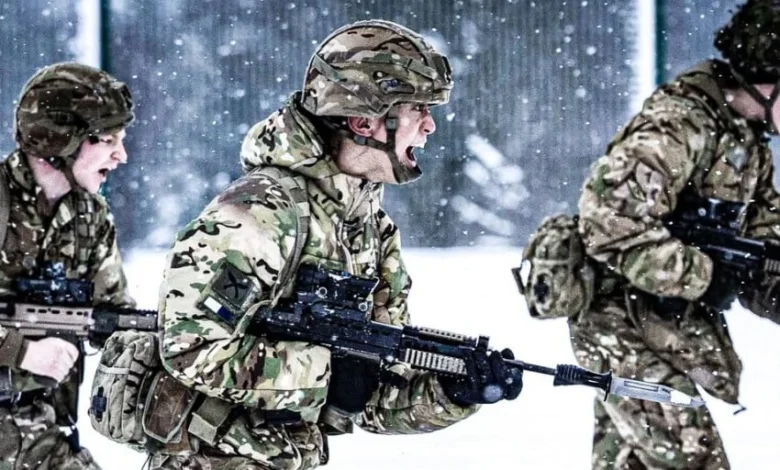
The United States is spearheading a fundamental shift in the architecture of the North Atlantic Treaty Organization (NATO), advocating for a new strategic framework dubbed "NATO 3.0." This initiative, championed by high-level American strategists including Elbridge Colby, the former Deputy Assistant Secretary of Defense for Strategy and Force Development, represents a departure from the post-Cold War security arrangement. The core of this proposed evolution is a recalibration of responsibilities: Washington is signaling to its European allies that they must urgently accelerate their rearmament efforts and assume the primary burden for conventional defense on the European continent. This pivot is designed to allow the United States to reallocate its finite military and financial resources toward the Indo-Pacific theater, where the U.S. government increasingly perceives the most significant long-term challenge to its national security: the rise of the People’s Republic of China.
The Conceptual Foundation of NATO 3.0
The term "NATO 3.0" serves as a shorthand for a restructured alliance that prioritizes the principle of "flexible realism." Under this framework, American foreign policy would be guided strictly by a correlation between available national resources and strategic objectives. For decades, the United States has served as the primary security guarantor for Europe, maintaining a significant troop presence and logistical infrastructure designed to deter Russian aggression. However, the architects of the new strategy argue that this "unlimited" commitment model is no longer sustainable.
Elbridge Colby, in a series of communications via social media platform X, has been a vocal critic of the established status quo. He posits that the current approach, which has persisted for a generation, fails to account for the dramatic shift in global power dynamics. According to the tenets of NATO 3.0, the United States would remain a member of the alliance but would transition from a "first responder" to a "reserve force." The burden of conventional deterrence against Russia—including ground forces, air defenses, and artillery—would shift onto the shoulders of European nations. In this scenario, Washington would focus its naval, aerospace, and intelligence capabilities on the Indo-Pacific, preparing for potential contingencies involving Taiwan or maritime disputes in the South China Sea.
Chronology of the Strategic Pivot
The movement toward a restructured NATO is not an isolated event but rather the culmination of trends that have been building for over a decade.
- 2011–2014: The "Pivot to Asia" was formally announced by the Obama administration, signaling an intent to prioritize the Pacific. However, the 2014 annexation of Crimea by Russia forced the U.S. to re-engage deeply in European security.
- 2017–2020: During the Trump administration, the U.S. began applying unprecedented pressure on NATO members to meet the 2% GDP spending target for defense, fundamentally changing the conversation regarding burden-sharing.
- 2022: The full-scale invasion of Ukraine by Russia dramatically increased the urgency of European rearmament, highlighting both the successes and the systemic weaknesses in European defense industrial capacity.
- 2023–2024: The U.S. political discourse, driven by the Biden administration’s National Security Strategy and echoed by influential strategists, has solidified the focus on the "China Challenge" as the defining feature of 21st-century geopolitics.
- Late 2024: The emergence of the NATO 3.0 discourse represents the policy-level articulation of this long-term shift.
Supporting Data and Defense Expenditures
The argument for NATO 3.0 is underpinned by stark economic and military data. For years, the United States has accounted for the vast majority of NATO’s total defense spending. According to data from the Stockholm International Peace Research Institute (SIPRI) and NATO’s own statistical reports, the U.S. defense budget frequently exceeds the combined spending of all other NATO members.
While many European nations have recently increased their budgets in response to the war in Ukraine—notably Germany’s Zeitenwende or "turning point" policy, which pledged a €100 billion special fund for the Bundeswehr—a significant gap remains. Analysts point out that European militaries often suffer from fragmentation, lack of interoperability, and critical shortages in ammunition stockpiles. The U.S. argument is that if Europe does not reach a state of self-sufficiency in conventional deterrence, the alliance risks being overwhelmed if Washington is forced to fight a two-front conflict simultaneously in Europe and the Pacific—a scenario the U.S. military is currently not configured to manage.
Official Responses and Internal Tensions
The proposal has elicited a complex range of reactions across European capitals. In the United Kingdom and Poland, there is a general acknowledgment that Europe must do more to secure its own backyard. Officials in Warsaw have frequently argued that the "Eastern Flank" of NATO requires a robust, locally managed defense posture, as the threat from Moscow is viewed as existential.
Conversely, some officials in Brussels and Paris have expressed concerns regarding the "de-coupling" of American security guarantees. The fear among some NATO members is that if the U.S. reduces its conventional footprint in Europe, the credibility of the nuclear umbrella—the ultimate deterrent—could also be questioned. Critics of the NATO 3.0 concept argue that it could encourage Russia to test the resolve of the alliance, assuming that the U.S. would be hesitant to intervene in a European theater if it is preoccupied with a conflict in the Pacific.
Furthermore, there is a debate over industrial capacity. European defense contractors have struggled to ramp up production of 155mm artillery shells and advanced air defense systems to the levels required to sustain a high-intensity, prolonged conflict. Without sustained U.S. logistical and industrial support, European military leaders admit they would face significant challenges in a worst-case scenario.
Broader Impact and Implications
The implementation of NATO 3.0 would signify the most profound change in Western security architecture since the end of the Cold War. The implications are multi-faceted:
1. Re-industrialization of European Defense: If the U.S. successfully shifts the burden, European nations will be forced to move toward a "war-economy" model. This involves not only increased budgets but the consolidation of defense procurement, cross-border military industrial collaboration, and potentially the revival of conscription or expanded reserve forces in countries that have historically relied on professional, smaller militaries.
2. The China-Russia Nexus: The pivot acknowledges that Moscow and Beijing are increasingly aligned. By focusing on the Indo-Pacific, Washington is essentially trying to prevent a scenario where the two powers can distract the U.S. simultaneously. However, critics argue this might actually encourage Russia to deepen its military cooperation with China to ensure that the U.S. remains stretched thin.
3. The Future of U.S. Isolationism vs. Global Leadership: The move toward NATO 3.0 also reflects a shifting political mood within the United States. Regardless of which party holds power, there is a growing consensus that the U.S. cannot afford to be the world’s policeman while facing domestic economic challenges and an increasingly assertive China. This shift suggests that the era of the United States underwriting European security without conditions is coming to an end.
Conclusion
The "NATO 3.0" proposal is not merely a tactical adjustment; it is a strategic necessity driven by a changing world order. As Washington recalibrates its priorities toward the Indo-Pacific, Europe is being handed a challenge that is as much political as it is military. The success of this transition will depend on whether European nations can overcome internal divisions to forge a unified, coherent defense identity. If they succeed, the alliance may emerge more resilient and better prepared for the realities of the 21st century. If they fail, the resulting security vacuum could fundamentally alter the balance of power on the European continent and diminish the influence of the transatlantic partnership on the global stage. As the debate continues, the world watches to see if the West can modernize its oldest and most successful alliance to meet the daunting challenges of a new era.