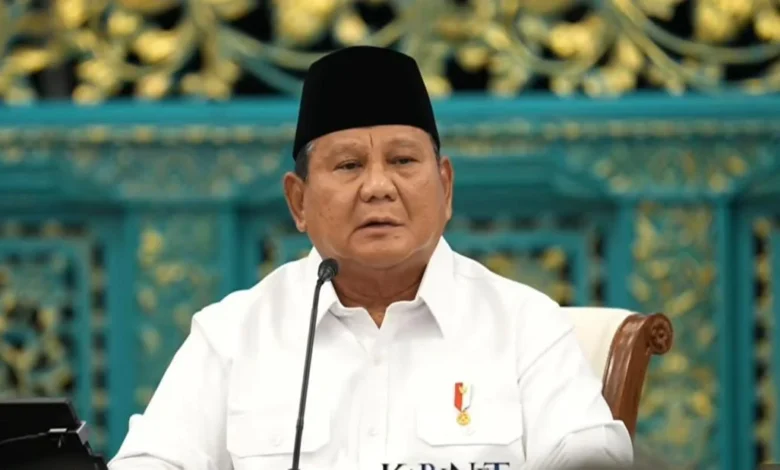
The President’s remarks, delivered at the Jakarta Convention Center (JCC) Senayan on Thursday evening, July 23, 2026, underscored a potential softening of the political landscape following the intensely contested 2024 presidential election. His statement about PDI Perjuangan, a party currently positioned outside his ruling coalition, was interpreted by many political observers as a strategic move to foster national unity and potentially broaden the base of government support.
"So, brothers and sisters, competition is good. Contesting is good. Sometimes we part ways, that’s not a problem. Later, we will surely reunite," President Prabowo stated, addressing a large gathering of PKB cadres and leaders. He then specifically turned his attention to PDI Perjuangan, a party that had backed his opponent in the recent presidential race. "PDI Perjuangan, too, actually has the same heart as us, truly, try to check, dig into their hearts. It’s actually the same," he reiterated, drawing a nuanced distinction between political rivalry and fundamental ideological alignment.
Prabowo further elaborated on this perceived alignment by invoking the nation’s founding principles and figures. He highlighted the 1945 Constitution, a document central to Indonesian statehood and meticulously crafted by the nation’s founding fathers, including Sukarno, the revered first President and the ideological progenitor of PDI Perjuangan. "This 1945 Constitution was made by Bung Karno, Bung Hatta, our nation’s founders. Their hearts were the same," he asserted, implying that the shared commitment to the foundational legal framework and national ideology transcended current political differences. This reference was a powerful rhetorical device, tapping into a deep well of national pride and historical legacy that resonates strongly across the political spectrum, particularly with PDI Perjuangan’s base.
In a lighter moment that nevertheless carried political undertones, President Prabowo playfully suggested that PDI Perjuangan’s current stance might simply be due to their not having conducted an "Ijtima Ulama" – a traditional consultative meeting of Islamic scholars and leaders, a practice often undertaken by PKB and other Islamic-leaning parties to formulate political recommendations. "Only, they haven’t made a recommendation like the Ijtima Ulama, not yet," he quipped, eliciting laughter from the audience. This jest, while seemingly innocuous, subtly highlighted the differing internal decision-making processes between the two parties and implied that a similar internal deliberation within PDI Perjuangan might lead them towards a more conciliatory position.
The Significance of the PKB Harlah and Coalition Dynamics
The 28th Harlah of PKB served as a crucial platform for President Prabowo to articulate his vision for governance and national unity early in his administration. PKB, founded in 1998 by followers of the late charismatic Muslim scholar Abdurrahman Wahid (Gus Dur), has grown into a significant political force, representing a moderate Islamic constituency. Its decision to join Prabowo’s Koalisi Indonesia Maju (KIM) was instrumental in securing a broad base of support during the 2024 presidential campaign, particularly in regions with strong Nahdlatul Ulama (NU) ties, from which PKB draws much of its support.
The event saw a robust attendance from key political figures, signaling the strength and breadth of the current ruling coalition. Vice President Gibran Rakabuming Raka, whose presence underscored the continuity and unity within the executive branch, was notably present. Alongside him were a constellation of party chairpersons and high-ranking officials from KIM member parties, including Golkar’s Chairman Bahlil Lahadalia, Democratic Party’s Chairman Agus Harimurti Yudhoyono (AHY), Prosperous Justice Party (PKS) President Al Muzammil Yusuf, and National Mandate Party (PAN) Chairman Zulkifli Hasan (Zulhas). Their collective presence served as a powerful visual affirmation of the coalition’s solidarity.
Also observed were elite party members such as Gerindra’s Daily Chairman Sufmi Dasco Ahmad, NasDem’s Treasurer Ahmad Sahroni, PAN’s Secretary-General Eko Patrio, Golkar’s Treasurer Sari Yuliati, Democratic Party’s Secretary-General Herman Khaeron, and PSI’s Deputy Chairman Isyana Bagoes Oka. Interestingly, a representative from PDI Perjuangan, Djarot Saiful Hidayat, a Chairman of the party’s Central Executive Board (DPP), was also in attendance. His presence, while standard protocol for such national events, added a layer of intrigue given Prabowo’s direct remarks towards his party.
PDI Perjuangan’s Post-Election Stance and Historical Context
PDI Perjuangan, led by former President Megawati Sukarnoputri, currently holds a unique position in Indonesian politics. Having been the ruling party for two terms under President Joko Widodo, it chose to back Ganjar Pranowo and Mahfud MD in the 2024 presidential election, placing it in opposition to Prabowo Subianto and Gibran Rakabuming Raka. Despite its historical dominance and significant legislative presence, PDI Perjuangan has maintained a stance of being "outside the government" rather than explicitly declaring itself an opposition party, a nuance reflecting the fluid nature of Indonesian political alliances.
The party’s decision to remain outside the direct ruling coalition after its candidate’s defeat was a significant development. Traditionally, major parties in Indonesia often join the winning coalition to ensure legislative effectiveness and access to government resources. However, PDI Perjuangan’s move was largely seen as an assertion of its ideological independence and a commitment to its role as a check and balance on power, particularly given its historical connection to the "people’s struggle" (perjuangan).
Historically, the relationship between Prabowo’s Gerindra Party and PDI Perjuangan has been complex and at times, cooperative. In the 2009 presidential election, Megawati Sukarnoputri (PDI Perjuangan) chose Prabowo Subianto (Gerindra) as her vice-presidential running mate. Although they did not win, this alliance demonstrated a capacity for cooperation between the two parties. Subsequent elections, however, saw them on opposing sides, particularly in 2014 and 2019 when Prabowo challenged Joko Widodo, who was then backed by PDI Perjuangan. The 2024 election further solidified this rivalry, albeit with a backdrop of shared history and constitutional commitment.
Timeline of Key Political Developments Leading to Prabowo’s Overture
- February 14, 2024: Indonesia holds its simultaneous presidential and legislative elections.
- March 20, 2024: The General Election Commission (KPU) officially declares Prabowo Subianto and Gibran Rakabuming Raka as the winners of the presidential election.
- March – April 2024: Intense political discussions and negotiations ensue as parties decide on their post-election alignment. PDI Perjuangan signals its intention to remain outside the direct government coalition.
- April 24, 2024: President-elect Prabowo Subianto meets with various political leaders, including those from parties outside his immediate coalition, signaling a desire for broad national unity.
- May 2024: The Koalisi Indonesia Maju (KIM) begins to solidify its legislative agenda and prepare for the new administration.
- October 20, 2024: Prabowo Subianto and Gibran Rakabuming Raka are inaugurated as President and Vice President of Indonesia.
- July 23, 2026: President Prabowo makes his conciliatory remarks towards PDI Perjuangan at the PKB Harlah, approximately nine months into his presidential term.
Inferred Reactions and Official Responses
While official, immediate responses from PDI Perjuangan to President Prabowo’s remarks were not extensively detailed in the original report, political analysts and past statements offer insights into potential reactions.
- PDI Perjuangan: The party is likely to respond with a measured tone, acknowledging the President’s sentiments about shared national foundations (UUD 1945, Pancasila, founding fathers) but reaffirming its current position of democratic oversight and ideological independence. They might emphasize their commitment to acting as a constructive force for the nation, whether from within or outside the government. A common PDI Perjuangan refrain is its dedication to the "spirit of reform" and checking potential abuses of power, irrespective of who holds the presidency. Djarot Saiful Hidayat’s presence at the event suggests a level of engagement and willingness to maintain communication channels, even if a full coalition is not on the immediate horizon.
- PKB and Koalisi Indonesia Maju (KIM) Members: As the host party and key coalition partners, PKB and other KIM members would likely welcome President Prabowo’s overture as a sign of his commitment to inclusive governance and national unity. They would view it as a positive step towards bridging political divides and strengthening the legislative environment. Their statements would likely reiterate support for the President’s vision and express hope for broader national consensus.
- Political Analysts: Analysts would largely interpret Prabowo’s statement as a strategic move aimed at multiple objectives. Firstly, it seeks to de-escalate political tensions and foster a more cooperative legislative environment, crucial for passing the government’s agenda. Secondly, it could be an attempt to prevent PDI Perjuangan from becoming a hardline opposition, which could complicate governance. Thirdly, it might lay the groundwork for potential future political realignments, perhaps for the 2029 general elections or regional elections, where the formidable electoral machinery of PDI Perjuangan could be a valuable asset. The reference to the founding fathers and the UUD 1945 is seen as an astute political maneuver to appeal to PDI Perjuangan’s core identity.
Broader Impact and Implications
President Prabowo’s olive branch to PDI Perjuangan carries significant implications for Indonesia’s political landscape:
- Legislative Effectiveness: A more cooperative PDI Perjuangan, even if not formally part of the coalition, could significantly ease the passage of government legislation in the House of Representatives (DPR). With PDI Perjuangan holding a substantial number of seats, its tacit support or even reduced opposition would be invaluable for implementing the government’s programs, including economic reforms, infrastructure projects, and social policies.
- Political Stability and National Unity: In a diverse archipelago like Indonesia, political stability is paramount. A gesture of reconciliation from the President towards a major political rival can contribute to a more harmonious political climate, reducing polarization and fostering a sense of national unity crucial for addressing complex national challenges. It could signal a shift towards a more inclusive political culture where dialogue and consensus are prioritized over entrenched rivalry.
- Future Political Realignment: The long-term implications could extend to future elections. Indonesian politics are known for their fluidity, and alliances often shift between electoral cycles. Prabowo’s statement could be an early signal of potential rapprochement that might lead to a grand coalition or at least more strategic cooperation in future regional or national elections.
- Role of Opposition and Democracy: The current political dynamic raises questions about the nature of opposition in Indonesia’s young democracy. If PDI Perjuangan were to move closer to the government, it could lead to discussions about the effectiveness of checks and balances. However, if such cooperation is based on shared national interests and constitutional principles, it could also be seen as a mature evolution of democratic practice, prioritizing national development over partisan strife.
- Public Perception: The public’s reception of such an overture would also be crucial. Many Indonesians yearn for political stability and a focus on socio-economic development. A move towards greater unity, particularly between two historically significant political forces, could be viewed positively by a populace tired of persistent political bickering.
In conclusion, President Prabowo Subianto’s remarks at the PKB Harlah transcend mere political rhetoric. They represent a deliberate and calculated effort to redefine the political narrative, extend an invitation for broader national cooperation, and potentially lay the groundwork for future political realignments. As his administration takes shape, the response from PDI Perjuangan and the subsequent trajectory of inter-party relations will be closely watched, shaping the dynamics of Indonesian governance for the years to come.