
Indonesia Faces Potential 18 Percent Tariff Threat from the United States Amid Global Trade Overhaul

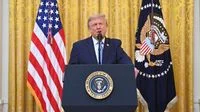
The Indonesian government is bracing for a significant shift in its economic landscape as the United States Trade Representative (USTR) announced on Wednesday, November 25, 2026, a proposal to impose an 18 percent tariff on imports from Indonesia. This move is part of a broader, aggressive trade policy shift by the administration of President Donald Trump, targeting 14 nations and economic blocs deemed to be contributing to global overcapacity and unfair trade practices that allegedly undermine American manufacturing.
The announcement, delivered by USTR representative Jamieson Greer, signals a tactical invocation of Section 301 of the Trade Act of 1974. This legislative tool grants the U.S. executive branch broad authority to investigate and retaliate against foreign trade policies that are deemed unreasonable, discriminatory, or restrictive to U.S. commerce.
The Scope of the USTR Investigation
The U.S. government’s latest action is not an isolated incident but a continuation of a rigorous investigation into countries that the USTR believes have exploited the global trade system. Beyond Indonesia, the list of targeted entities includes Bangladesh, China, India, Japan, Cambodia, South Korea, Malaysia, Mexico, Norway, Singapore, Switzerland, Taiwan, Thailand, and the European Union.
According to the USTR, these countries have, over several decades, adopted industrial strategies that prioritize manufacturing through mechanisms that distort the market. These mechanisms include wage suppression, heavy government subsidies, the utilization of inputs from non-market economies (NME), and aggressive export-oriented industrial policies. Washington argues that these strategies have eroded the U.S. manufacturing base, leading to a loss of jobs, investment, and production capacity.
The Five Pillars of Concern Regarding Indonesia
The USTR’s report specifically highlights five areas of concern regarding Indonesia’s economic policy. These points reflect a deep-seated frustration in Washington regarding the autonomy of Indonesia’s industrial growth strategies:
- Industrial Policy and Export Incentives: The U.S. contends that Indonesian government policies designed to aggressively push production and exports create an artificial advantage in global markets.
- Labor Standards and Enforcement: The USTR report points to Indonesian labor regulations, working conditions, and the perceived lack of rigorous enforcement of labor laws as factors that unfairly lower production costs compared to U.S. standards.
- Global Overcapacity and NME Integration: There is heightened concern over Indonesia’s reliance on foreign direct investment (FDI) and imports from nations categorized as "non-market economies," which the U.S. views as a conduit for circumventing fair trade norms.
- Financial Repression: The report identifies practices of financial repression—policies that channel funds to specific sectors at below-market rates—as a tool that distorts competition.
- Downstreaming (Hilirisasi) Policies: Perhaps most notably, the USTR has targeted Indonesia’s signature downstreaming program. By restricting the export of raw materials and mandating domestic processing, the U.S. believes Indonesia is unfairly capturing value-added segments of the supply chain at the expense of American firms.
Chronology of the Escalating Trade Tensions
The roots of this confrontation date back to the mid-2010s, a period when the global discourse on "structural overcapacity" gained traction among major economic powers.
- 2016-2020: During the initial term of President Trump, the U.S. began to pivot toward a protectionist stance, questioning the efficacy of the World Trade Organization (WTO) and bilateral trade deals.
- 2021-2024: Despite a change in U.S. administration, the focus on supply chain security and the threat of global overcapacity remained a bipartisan priority. Discussions at the G7, G20, and WTO forums failed to yield significant regulatory changes from manufacturing-heavy nations.
- Late 2026: Following a series of internal reviews, the U.S. government determined that traditional diplomatic channels were insufficient. The formal announcement on November 25 represents the transition from diplomatic dialogue to punitive trade measures.
Economic Implications for Indonesia
For Indonesia, the imposition of an 18 percent tariff could have immediate and far-reaching consequences. The United States remains one of Indonesia’s largest export destinations, particularly for textiles, electronics, footwear, and processed raw materials.
An additional 18 percent levy would render Indonesian goods significantly less price-competitive in the U.S. market. Economists suggest this could trigger a decline in export volumes, potentially forcing manufacturers to search for alternative markets or lower production costs even further. Furthermore, the inclusion of "downstreaming" in the USTR’s grievance list directly challenges the core of Indonesia’s current economic development strategy, which aims to move the country up the value chain from a commodity exporter to an industrial hub.
Strategic Responses and Policy Outlook
While the Indonesian government has yet to issue a formal retaliatory framework, the atmosphere in Jakarta is one of strategic assessment. Trade experts suggest that Indonesia may seek to leverage its bilateral dialogue channels with the U.S. to seek exemptions or clarify that its downstreaming policies are in alignment with national developmental goals rather than market-distorting tactics.
The USTR has framed the potential tariffs as a necessary step to "create a level playing field" for American workers. "Recognizing that statements made in G7, G20, and WTO forums have not resulted in changes, President Trump has proposed taking action to eliminate these unfair policies," said Jamieson Greer.
Analyzing the U.S. Strategy
The U.S. rationale rests on the concept of "economic security." By limiting imports from countries that rely on non-market inputs, Washington aims to reduce its dependency on complex, foreign-controlled supply chains. This is a clear indicator that the U.S. is prioritizing resilience and domestic manufacturing over the cost-efficiency gains associated with globalized trade.
For Indonesia, the situation presents a complex dilemma. On one hand, the government is committed to its industrial transformation programs. On the other, the risk of losing access to the world’s largest economy is significant. The coming months are likely to involve high-level diplomatic negotiations, as Indonesia attempts to prove that its policies are consistent with international trade obligations while navigating the protectionist currents flowing from Washington.
Broader Impact on the Global Economy
The move against Indonesia, alongside the simultaneous targeting of 13 other nations, signals a potential fragmentation of global trade. If the U.S. proceeds with these tariffs, other affected nations—particularly those in the European Union and the G20—may consider reciprocal measures. This could initiate a cycle of trade disputes that complicates global logistics and slows economic growth.
The USTR’s announcement is not merely a trade dispute; it is a fundamental shift in the architecture of international commerce. By moving to impose unilateral tariffs, the United States is signaling that the era of unfettered, WTO-led globalization is being replaced by an era of "managed trade," where nations are expected to align their internal industrial policies with the security and economic requirements of their major trading partners.
Conclusion
As the November 25 announcement reverberates through global markets, the Indonesian business community, government officials, and foreign investors are closely monitoring the next steps. The 18 percent tariff, while currently a proposal, represents a significant hurdle for Indonesia’s manufacturing sector. Whether the U.S. moves forward with these tariffs will likely depend on the effectiveness of Indonesia’s diplomatic response and the willingness of both parties to find a middle ground that balances U.S. economic security concerns with Indonesia’s right to industrial development.
For now, the global trade community waits to see if this is the start of a new, more restrictive era in international relations or if the threat of tariffs is a precursor to a new round of intense, high-stakes negotiations aimed at restructuring the rules of the global economy.