Olivia Rodrigo’s Reported New Romance with Wall Street Banker Sparks Public Interest

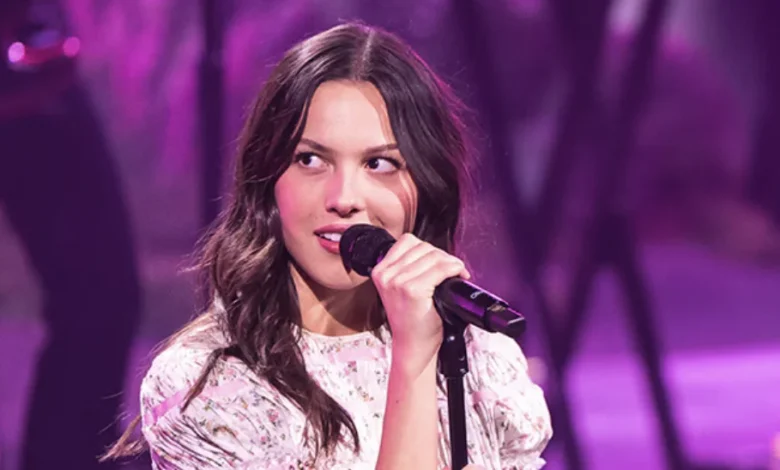
Jakarta, Indonesia – Pop sensation Olivia Rodrigo is reportedly embarking on a new romantic chapter, drawing significant attention from fans and media alike. Following her speculated split from actor Louis Partridge, the Grammy Award-winning singer has been linked to Julian Croonenberghs, a figure from the financial world, specifically a Wall Street banker. The emerging details of their apparent relationship have become a focal point of discussion across various social media platforms, marking a notable shift in Rodrigo’s public romantic life, which has historically been intertwined with fellow artists.
The initial spark of public curiosity ignited when photographs began circulating online, showing the "good 4 u" hitmaker alongside a man identified as Croonenberghs at an airport. These candid shots, captured by vigilant onlookers, depicted the pair in what appeared to be a shared journey, specifically en route from Iceland to New York. The seemingly mundane travel moment quickly transformed into a viral sensation, fueling speculation about the nature of their connection and prompting a swift investigation into the identity of Rodrigo’s new companion.
The Unveiling: A Glimpse at the Airport and Beyond
The widely circulated images, which first gained traction through platforms like X (formerly Twitter), showcased Olivia Rodrigo and Julian Croonenberghs together, confirming their presence in each other’s company. This public sighting was a pivotal moment, as it was one of the first concrete indications of a new romantic interest for the artist since her previous relationship. The casual yet intimate nature of the photographs – featuring the duo navigating an airport, a typically private setting for many – immediately captivated her extensive fanbase.
Reports quickly followed, with outlets like Page Six confirming the identity of the mysterious man as Julian Croonenberghs, a professional deeply entrenched in the financial sector. Further details emerged, indicating that Rodrigo and Croonenberghs have been frequently seen together around Brooklyn, suggesting a more established connection than a mere fleeting encounter. The contrast between Rodrigo’s high-profile, music-centric world and Croonenberghs’ background in finance immediately set this potential new relationship apart from her previous public romances, sparking a fresh wave of public discourse.
Who is Julian Croonenberghs? A Profile of the Wall Street Banker
The sudden emergence of Julian Croonenberghs into the celebrity spotlight has prompted widespread interest in his professional and personal background. Unlike Rodrigo’s former partners who hailed from acting or music production, Croonenberghs represents a distinct departure, bringing a non-entertainment industry perspective to the singer’s romantic life.
According to information available through his LinkedIn profile and other public records, Julian Croonenberghs is a highly accomplished individual in the financial sector. He is reportedly employed by HG Capital, a prominent private equity firm. Private equity firms like HG Capital are known for investing in and acquiring companies, aiming to increase their value over time before selling them, often involving complex financial strategies and significant capital. This places Croonenberghs firmly within the high-stakes world of Wall Street, a milieu vastly different from the creative industries Olivia Rodrigo inhabits.
Croonenberghs’ academic credentials further underscore his professional gravitas. He is an alumnus of Brown University, a prestigious Ivy League institution, where he pursued studies in applied mathematics and computer science. This rigorous academic foundation provides insight into his analytical capabilities and strategic thinking, skills highly valued in the financial industry. Prior to his current role at HG Capital, Croonenberghs honed his expertise as a banking analyst at Goldman Sachs, one of the world’s leading investment banking firms. His tenure at Goldman Sachs would have provided him with invaluable experience in financial analysis, market dynamics, and corporate finance, establishing a robust foundation for his career trajectory.
Beyond his impressive professional resume, Julian Croonenberghs also possesses a notable athletic background. He was a member of the US Men’s Field Hockey National Team, representing his country from 2018 to 2020. This commitment to elite-level sports speaks to his discipline, teamwork, and competitive spirit. Furthermore, his linguistic abilities add another layer to his profile, as he is reportedly fluent in both Dutch and French, indicating a broader cultural exposure and perhaps an international upbringing or significant travel experience. This multifaceted background paints a picture of a well-rounded individual whose life experiences diverge significantly from the typical entertainment industry circles.
A Shift in Relationship Dynamics: From Hollywood to Wall Street
The potential coupling of Olivia Rodrigo with Julian Croonenberghs marks a significant departure from her past romantic associations, which almost exclusively involved individuals from the entertainment industry. This shift has not gone unnoticed by the public and media, prompting discussions about the implications of a celebrity choosing a partner outside their professional sphere.
Historically, Olivia Rodrigo, since her meteoric rise to global fame, has been consistently linked with fellow artists and industry insiders. Her previous relationships, whether confirmed or rumored, often involved actors, producers, or musicians. This trend is common among celebrities, as shared experiences, work environments, and schedules often foster connections within the same industry. However, dating someone from a completely different professional world, like finance, can introduce a unique dynamic. It might offer a partner who is less susceptible to the intense public scrutiny and pressures that come with a celebrity relationship, and potentially provide a sense of normalcy or detachment from the constant glare of the entertainment spotlight.
The fascination with celebrities dating "regular" people or professionals from other fields is a recurring theme in popular culture. It often evokes a sense of relatability for the public and can be seen as a sign that the celebrity is seeking a more grounded or private personal life. For Olivia Rodrigo, whose career has been intensely scrutinized and whose music is deeply personal and often reflective of her romantic experiences, a partner outside the industry could offer a different kind of support and perspective, potentially allowing her to navigate her personal life with a greater degree of privacy and stability. This perceived change in relationship dynamics has become a central point of interest, leading many to speculate about the reasons behind this shift and its potential impact on Rodrigo’s personal and public image.
Olivia Rodrigo’s Romantic History: A Timeline of Public Scrutiny
Olivia Rodrigo’s journey to stardom has been inextricably linked with her personal life, particularly her romantic relationships. Her early career saw her rise to prominence through Disney’s "High School Musical: The Musical: The Series," where her on-screen chemistry with co-star Joshua Bassett quickly translated into real-world dating rumors, setting a precedent for public interest in her love life.
Joshua Bassett (circa 2020): The alleged relationship with Joshua Bassett, her "High School Musical: The Musical: The Series" co-star, became a cultural phenomenon. While never officially confirmed by either party, the speculative breakup between Rodrigo and Bassett was widely believed to be the inspiration behind her record-breaking debut single, "Driver’s License." The song’s raw emotionality and specific lyrical references ignited a media frenzy and a passionate fan debate, catapulting Rodrigo into global superstardom and cementing the public’s fascination with her romantic narrative. This period established a pattern where her personal experiences were deeply interwoven with her artistic output, making her relationships a subject of intense public and media scrutiny.
Adam Faze (2021-early 2022): Following the "Driver’s License" phenomenon, Olivia Rodrigo was publicly linked to producer Adam Faze. The relationship was first reported in July 2021, with sources indicating they were "casually dating" but becoming more serious. Faze, at 29, was several years older than Rodrigo, then 18. Their romance was relatively low-key compared to the Bassett speculation, but still attracted media attention. The couple reportedly split in early 2022, with sources citing that they had "grown apart." Their separation was also handled with relative discretion, yet it continued to feed the public’s appetite for news about Rodrigo’s romantic life.
Zack Bia (2022): In the spring of 2022, Rodrigo was seen spending time with music executive and DJ Zack Bia, then 26. Their romance was confirmed by various reports, with sources suggesting they had been dating for several months. Bia, known for his connections within the music and fashion industries, represented another link to the entertainment world. However, this relationship proved to be short-lived, reportedly ending by August 2022. The brevity of this romance indicated the challenges of maintaining a private relationship under constant public scrutiny, especially for a young artist navigating immense fame.
Louis Partridge (2024): Most recently, Olivia Rodrigo was linked to British actor Louis Partridge, known for his role in "Enola Holmes" and "House of Guinness." The pair’s relationship became public around late 2023 and early 2024, with paparazzi photos capturing them together in London and New York. Their romance seemed to be relatively public, with the couple photographed holding hands and embracing. However, rumors of a split began circulating earlier in 2024 after they were no longer seen together in public, suggesting their relationship had quietly concluded. This relationship continued the pattern of Rodrigo dating within the acting profession, making the transition to Julian Croonenberghs all the more noteworthy.
Each of these relationships, whether confirmed or rumored, has contributed to the ongoing narrative surrounding Olivia Rodrigo’s personal life. Her fans, many of whom are young and deeply invested in her music, often view her romantic experiences as the direct inspiration for her chart-topping hits, creating a unique dynamic between her artistry and her personal journey.
The Intersection of Art and Life: Music and Relationships
Olivia Rodrigo’s artistic identity is profoundly intertwined with her personal experiences, particularly her romantic relationships. Her two highly acclaimed albums, "SOUR" (2021) and "GUTS" (2023), are celebrated for their raw honesty, vulnerability, and piercing insights into young love, heartbreak, and self-discovery. This deep connection between her life and her lyrics has created a unique dynamic where her audience often interprets her songs as direct reflections of her romantic journey.
"SOUR," her debut album, was largely defined by its exploration of heartbreak, jealousy, and the painful aftermath of a first love. Tracks like "Driver’s License," "traitor," and "good 4 u" became anthems for a generation, articulating complex emotions with an authenticity that resonated globally. The album’s narrative was widely speculated to be inspired by her alleged relationship and subsequent split from Joshua Bassett, turning her personal experiences into a collective cultural touchstone. This set a precedent where every subsequent romantic link or breakup would be viewed through the lens of potential songwriting material.
Her sophomore album, "GUTS," continued this tradition, albeit with a slightly more mature and angsty perspective on navigating young adulthood, fame, and relationships. While still featuring breakup anthems like "vampire" and "bad idea right?," the album also delved into themes of self-doubt, societal pressures, and the complexities of growing up. Fans and critics alike continued to dissect the lyrics, attempting to connect specific songs to her more recent relationships with Adam Faze, Zack Bia, or Louis Partridge. This constant analysis highlights the intense pressure on Rodrigo to live a life that not only fuels her creative process but also satisfies the public’s demand for authentic storytelling.
The prospect of a new relationship with Julian Croonenberghs, a figure outside the entertainment industry, naturally raises questions about its potential impact on her future music. Will a more stable, perhaps more private, relationship lead to a shift in her songwriting themes? Could it inspire songs that explore different facets of love—perhaps less about heartbreak and more about contentment, growth, or the challenges of balancing a high-profile career with a grounded personal life? Or will the fundamental complexities of human connection continue to be her muse, regardless of her partner’s profession? This ongoing interplay between her lived experiences and her artistic output remains a central fascination for her audience and a testament to her unique voice as a songwriter.
Social Media Buzz and Public Reaction
The news of Olivia Rodrigo’s rumored relationship with Julian Croonenberghs instantly ignited a firestorm of discussion across social media platforms, particularly X (formerly Twitter) and TikTok. The "perbincangan di media sosial" (social media discussion) was swift and widespread, reflecting the immense public interest in the pop star’s personal life.
The reactions varied widely, encompassing a spectrum of emotions and opinions. Many fans expressed surprise at the identity of her new partner, given his background outside of Hollywood. Comments ranged from "Who is Julian Croonenberghs?" to "Olivia Rodrigo dating a Wall Street banker? That’s a plot twist!" This initial curiosity quickly led to deeper dives into Croonenberghs’ profile, with fans sharing details about his education, career, and even his field hockey history. The fact that he is not a celebrity made him an intriguing figure, prompting a collective effort by fans to piece together his story.
Supportive messages also flooded timelines, with many fans expressing happiness for Rodrigo and wishing her well in her new relationship. There was a sense of excitement about this new chapter for the singer, with some speculating that a partner outside the industry might offer her more privacy and stability. Memes and humorous observations also proliferated, often playing on the juxtaposition of Rodrigo’s pop-punk aesthetic with the stereotypical image of a "Wall Street banker."
However, the discussion also touched upon the persistent scrutiny of Rodrigo’s personal life. Some users commented on the intense public pressure she faces, with every relationship becoming a major news event. This highlights the double-edged sword of celebrity in the digital age, where fan engagement can be both a source of immense support and overwhelming intrusion. The public’s immediate reaction underscores the powerful connection between Olivia Rodrigo and her fanbase, who remain deeply invested in her journey, both personal and professional.
The World of Private Equity and Wall Street
Julian Croonenberghs’ professional sphere, Wall Street and private equity, stands in stark contrast to the glitz and glamour of Hollywood. Understanding this environment provides crucial context for his background and the nature of his work.
Wall Street, synonymous with the financial district of New York City, represents the heart of the American financial industry. It is a world driven by high finance, investments, mergers, acquisitions, and the constant ebb and flow of global markets. Professionals in this sector, often referred to as "bankers," engage in a wide array of activities, from advising corporations on financial strategies to managing vast sums of capital. The culture is typically characterized by long hours, intense competition, high stakes, and significant financial rewards.
Private equity is a specific segment within this financial landscape. Firms like HG Capital, where Croonenberghs is reportedly employed, specialize in investing in private companies or buying out public companies, taking them private. They aim to improve the performance of these companies, often through strategic changes, operational efficiencies, or financial restructuring, before eventually selling them for a profit. This involves extensive due diligence, complex financial modeling, and a deep understanding of various industries. A "private equity professional" or "banker" in this context would be involved in identifying investment opportunities, executing deals, and monitoring portfolio companies.
The public perception of Wall Street and private equity professionals is often mixed. While admired for their intelligence and financial acumen, they can also be stereotyped as intensely focused, driven by profit, and sometimes detached from mainstream culture. This perception forms an interesting contrast with the world of pop music, which often champions emotional expression, artistic freedom, and a more bohemian lifestyle. The juxtaposition of these two worlds in the context of Olivia Rodrigo’s new relationship adds a layer of intrigue and fuels public curiosity, highlighting the distinct paths and values that might converge in their personal lives.
Implications for Olivia’s Public Persona and Career
The reported relationship between Olivia Rodrigo and Julian Croonenberghs carries several potential implications for her public persona and career trajectory. This development could mark a significant turning point in how the public perceives her, both as an artist and as an individual.
Firstly, a relationship with someone outside the entertainment industry might signal a desire for more normalcy and privacy in her personal life. For a young star whose early career was heavily defined by the public dissection of her alleged teenage heartbreak, finding a partner who operates outside that intense spotlight could offer a much-needed sense of grounding. This might lead to a more controlled narrative around her relationships, potentially allowing her to focus more exclusively on her music and artistry without the constant distraction of celebrity gossip.
Secondly, this new dynamic could subtly shift her public image. While still a pop icon, dating a professional from a different world might project an image of maturity, independence, and a broader range of interests beyond the confines of Hollywood. It could demonstrate a willingness to explore connections that are not dictated by industry proximity, potentially broadening her appeal to different demographics.
From a creative standpoint, as discussed earlier, a stable and perhaps more private relationship could influence her songwriting. While heartbreak has been a powerful muse, exploring themes of contentment, mature love, or the challenges of balancing a high-profile career with a private life could lead to new artistic directions and lyrical depth. This evolution could be welcomed by fans who have grown with her and are eager to see her artistic boundaries expand.
However, the immense public fascination with Rodrigo ensures that scrutiny will likely continue, regardless of her partner’s profession. The challenge will be for her to navigate this intense interest while maintaining a healthy personal life. The media’s and fans’ insatiable curiosity about her relationships is a testament to her significant cultural impact, and this new chapter with Julian Croonenberghs will undoubtedly remain a topic of keen observation as her career continues to flourish.
In conclusion, Olivia Rodrigo’s reported new romance with Wall Street banker Julian Croonenberghs represents a fascinating development in the life of one of pop music’s most influential young stars. From the initial airport sighting to the subsequent revelation of Croonenberghs’ accomplished background, the story has captivated public attention, sparking discussions about celebrity relationships, privacy, and the evolving narrative of a global icon. As Rodrigo continues to navigate her meteoric career, this new chapter in her personal life will undoubtedly be observed with keen interest, both for its immediate implications and its potential long-term influence on her artistry and public persona.